

TL;DR
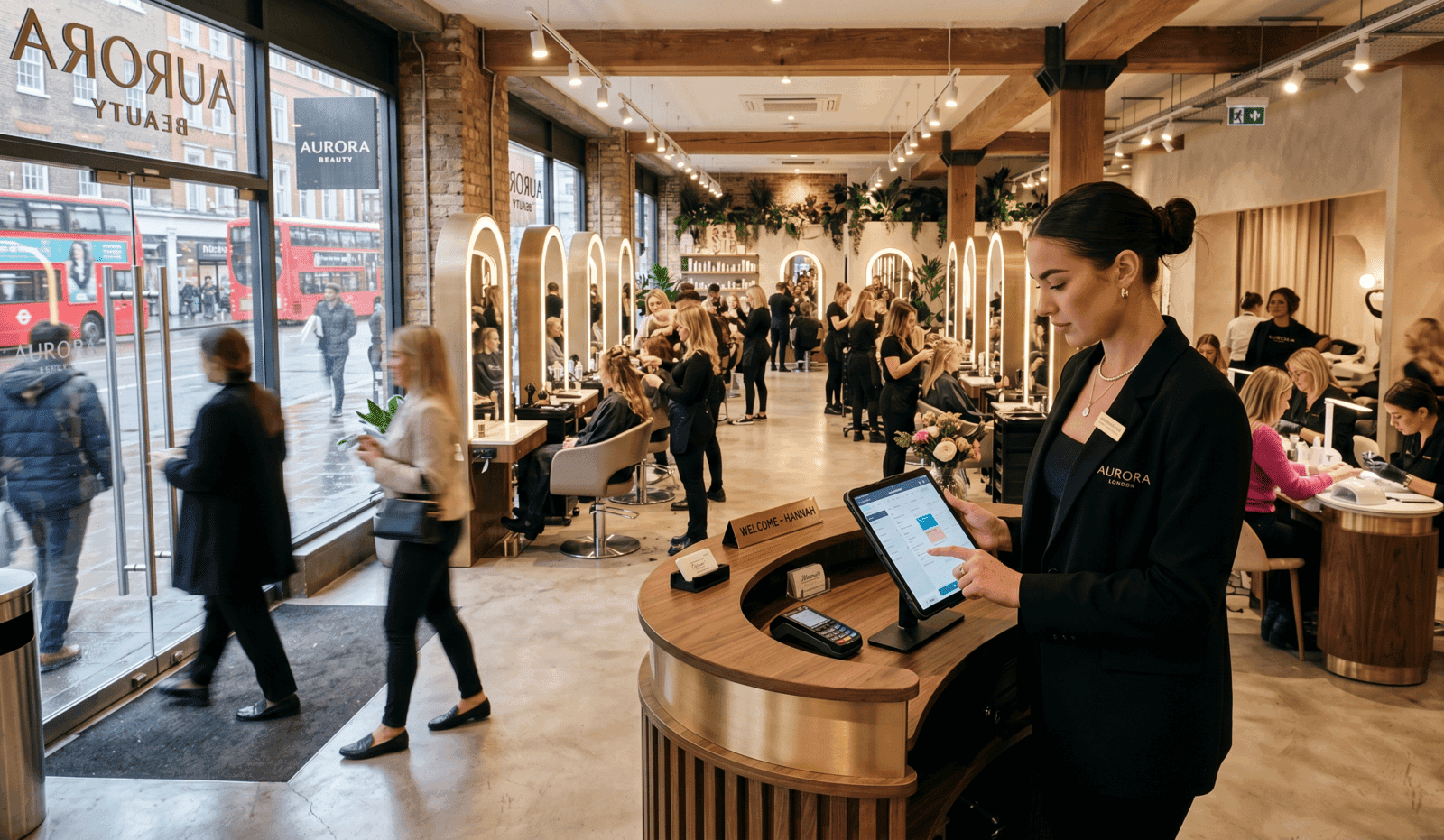
**Walk-in wait times at beauty salons come down to three things: how clients join the queue, how informed they are while they wait, and how well staff can see and manage the list in real time. **
Self check-in via QR code removes the front-desk bottleneck. Automated SMS notifications free clients to wait anywhere. A live queue display cuts interruptions. Together, these changes reduce both actual and perceived wait time without touching your schedule or headcount.
A walk-in who waits 10 minutes feeling informed and comfortable will rate the experience very differently from one who waits the same 10 minutes hovering near the front desk with no idea what's happening.
The wait time itself isn't always the problem. The experience around it usually is.
What actually causes long wait times for beauty salon walk-ins?
Long waits rarely come from a single problem. They're usually a combination of small inefficiencies that compound during busy periods.
- Manual check-in at the front desk. When every walk-in has to speak to a receptionist to join the queue, one busy arrival creates a backlog instantly. The receptionist is handling the phone, a client at the chair, and three people at the door simultaneously. Something gives.
- No visibility into the queue. Paper lists and verbal estimates leave clients in the dark. They don't know where they stand, so they hover, and interrupt staff repeatedly. Each interruption slows the whole system down.
- Unpredictable service times. A trim that turns into a restyle, a nail set that takes longer than quoted, a lash fill that runs over: beauty services are harder to time precisely than restaurant tables. Without buffer time built into the schedule, one overrun cascades through the whole queue.
- Walk-ins and appointments competing for the same chairs. Without a clear system for who gets priority, staff make ad hoc decisions that feel unfair to clients and create friction.
How does self check-in reduce wait times at a beauty salon?
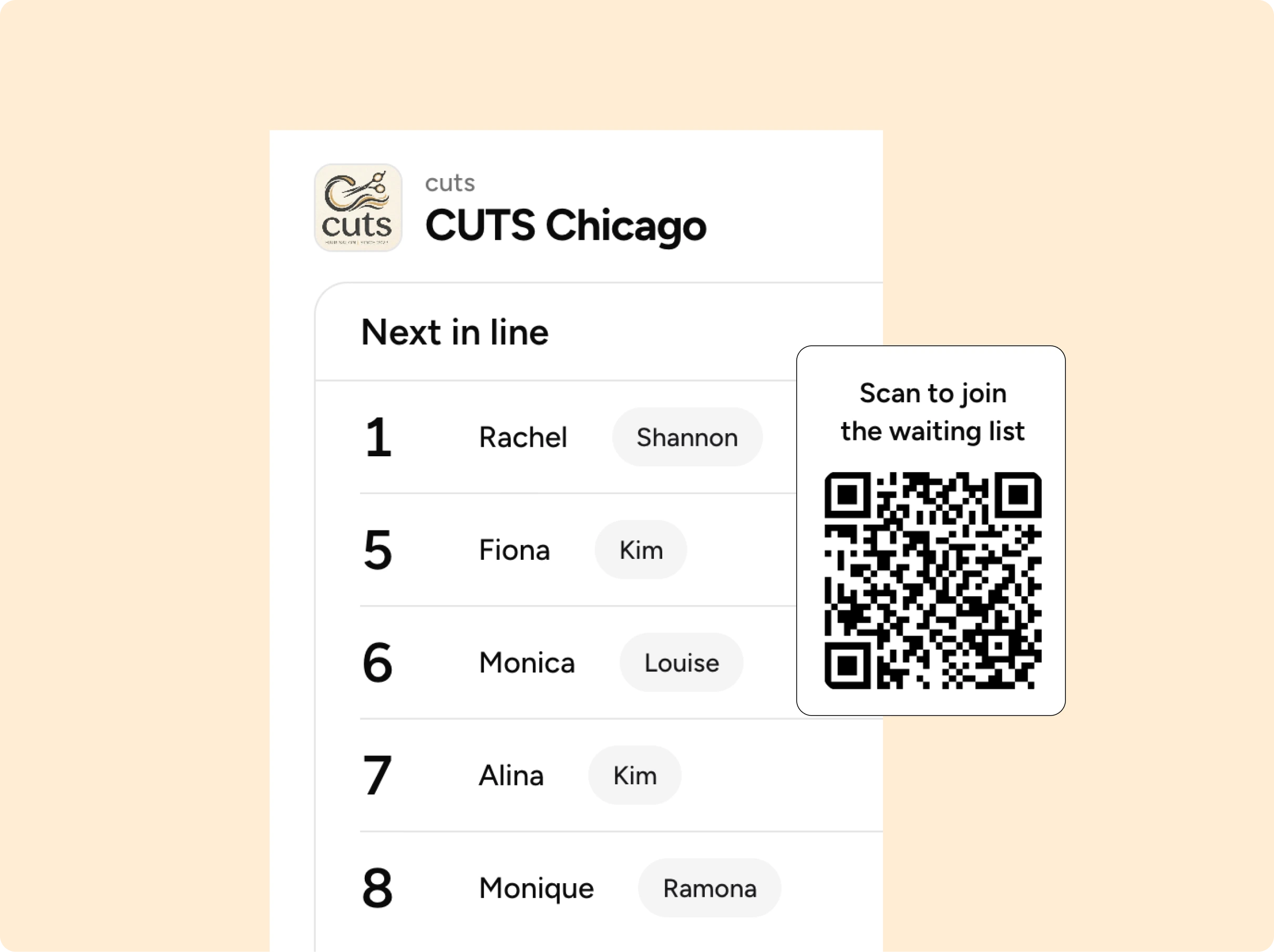
Self check-in removes the front-desk bottleneck entirely. Instead of every walk-in waiting to speak to a receptionist, clients add themselves to the queue via a QR code at the entrance or a tablet near the door. They enter their name and service, and they're in the queue in under 30 seconds.
Your receptionist stops being a check-in clerk and focuses entirely on managing the floor and calling clients through. During a rush at a barbershop or busy nail bar, that shift in focus makes a significant difference to how quickly the queue moves.
Self check-in via QR code requires no app download for the client. They scan, fill in two fields, and they're done. It works on any smartphone and takes nothing away from the front-desk experience for clients who prefer to check in with staff directly.
Does letting clients wait outside actually help?
Yes, and it's one of the most underused tactics in beauty business wait time management. When clients have to stay near the front desk to avoid missing their turn, your waiting area fills up fast. A crowded lobby feels chaotic, makes the wait feel longer, and puts pressure on staff to rush.
Automated SMS and WhatsApp notifications change this completely. When a client joins the queue, they get a confirmation message. When their stylist or barber is ready, they get notified.
The best part is: they don't need to be in your business at all until it's their turn. They can wait in their car, grab a coffee next door, or browse nearby shops. Your lobby clears, your staff can breathe, and the wait feels shorter to the client even when the actual duration stays the same.
How a live queue display cuts interruptions
Your clients keep asking “how much longer”… because they don't know. And uncertainty is more frustrating than the wait itself. Studies show a shorter-than-expected wait boosts satisfaction 1.6 times more than a longer-than-expected wait hurts it, which means the framing of the wait matters as much as the duration.
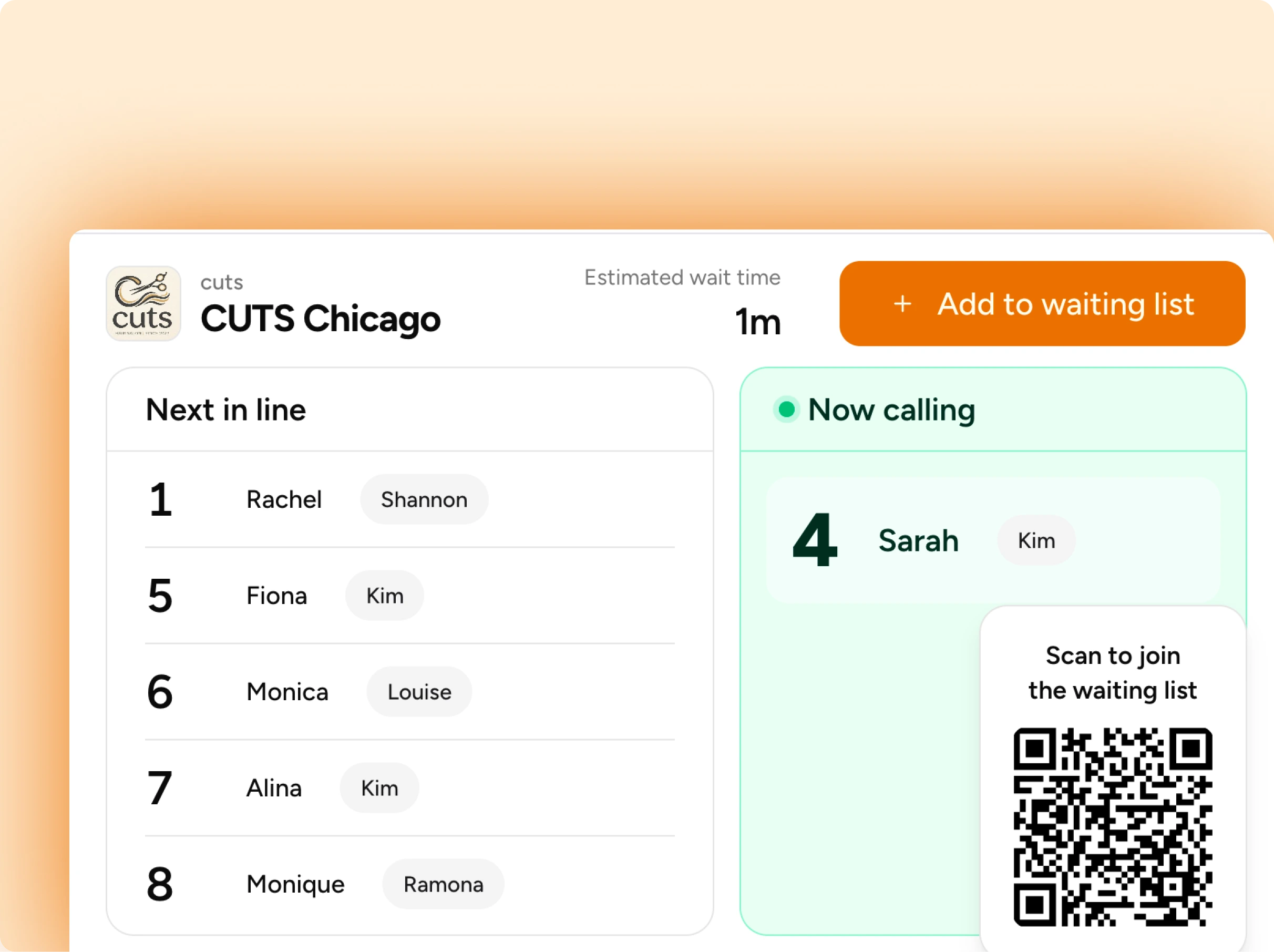
A live queue display on a TV or tablet near the entrance shows clients their position in real time. They can see the queue moving. They know they're third, then second, then next. That visibility removes the anxiety that drives interruptions, and it removes the interruptions that slow your staff down.
Ideally, you want to position the display where it's visible from the entrance so clients know the current wait before they even check in.
Managing walk-ins alongside appointments without chaos
The beauty businesses that handle this best treat walk-ins and bookings as two separate streams rather than one mixed queue. Appointments run on schedule. Walk-ins fill the gaps.
A few tactics that make this work in practice:
Build buffer time between bookings. A 10 to 15 minute gap between appointments gives you room to absorb a quick walk-in or recover if a service runs long. Without buffers, one delay cascades through the entire afternoon — at a barbershop running back-to-back cuts, that compounds fast.
Assign a dedicated walk-in operator per shift. One team member handles all incoming walk-ins while everyone else runs their appointment schedule. It protects the flow for booked clients and gives the walk-in role a clear, focused owner. Rotate the assignment across the team so it stays fair.
Set realistic wait time estimates from the start. A digital waitlist tracks how long each client has been waiting and calculates estimates based on the current queue, not a guess. When your estimate is accurate, clients trust it and wait. When it's wrong, they leave.
For a full breakdown of walk-in policy options and scheduling tactics specific to hair salons, the guide to handling walk-in clients covers the operational side in detail.
What does wait time data tell you about your beauty business?
Most salons and barbershops have no idea what their average walk-in wait time actually is. They rely on feel: "Saturdays are bad" or "we get backed up around noon." That's not enough.
The best waitlist software solutions include wait analytics tracks wait times shift by shift, so you can see exactly where slowdowns happen and when. If your average Saturday wait is 22 minutes but climbs to 35 between 11am and 1pm, that's a staffing or scheduling problem you can act on. Without the data, you're reacting. With it, you're adjusting before clients start walking out.
Over time, patterns emerge that help you set accurate estimates, make better staffing decisions, and spot problems before they show up in your reviews.
How WaitQ reduces walk-in wait times at beauty salons
WaitQ gives beauty businesses the full system: self check-in via QR code or kiosk, a live digital queue, automated SMS and WhatsApp notifications, a public wait time display, and shift-level analytics. Everything runs on devices you already own.
Clients join without downloading an app. Staff manage the queue from any device on the floor. Setup takes minutes, and most businesses are live the same day they sign up.
Start your free 14-day trial and see how your next busy Saturday feels different.
Conclusion
Reducing walk-in wait times at a beauty salon or barbershop doesn't require more staff or a bigger waiting area. It requires removing the friction that makes waits feel longer than they are: manual check-in, no visibility, clients hovering, staff fielding constant questions.
Self check-in, live notifications, a queue display, and real wait data address all of it. Each change is small on its own. Together, they change how your business feels to walk into on a busy day.