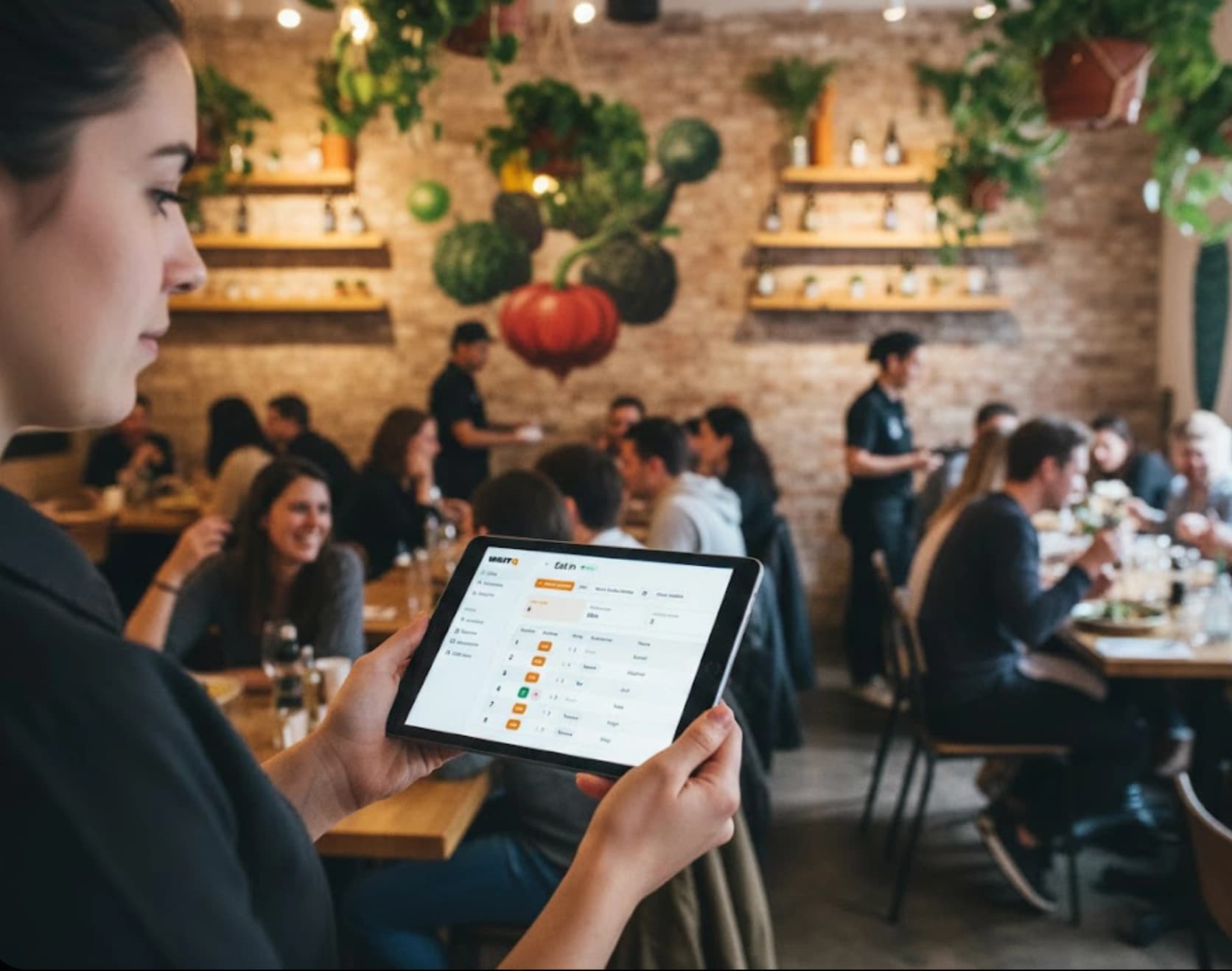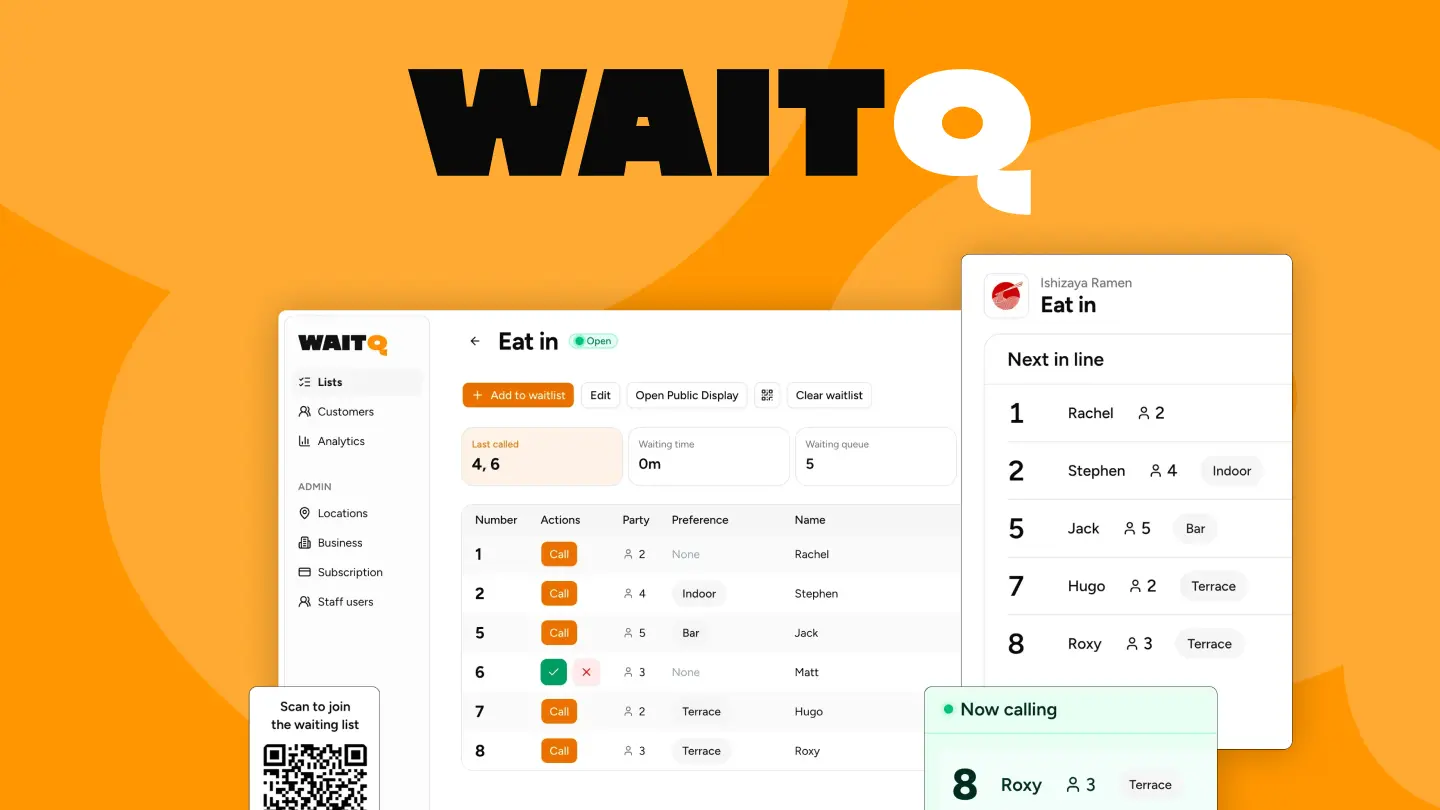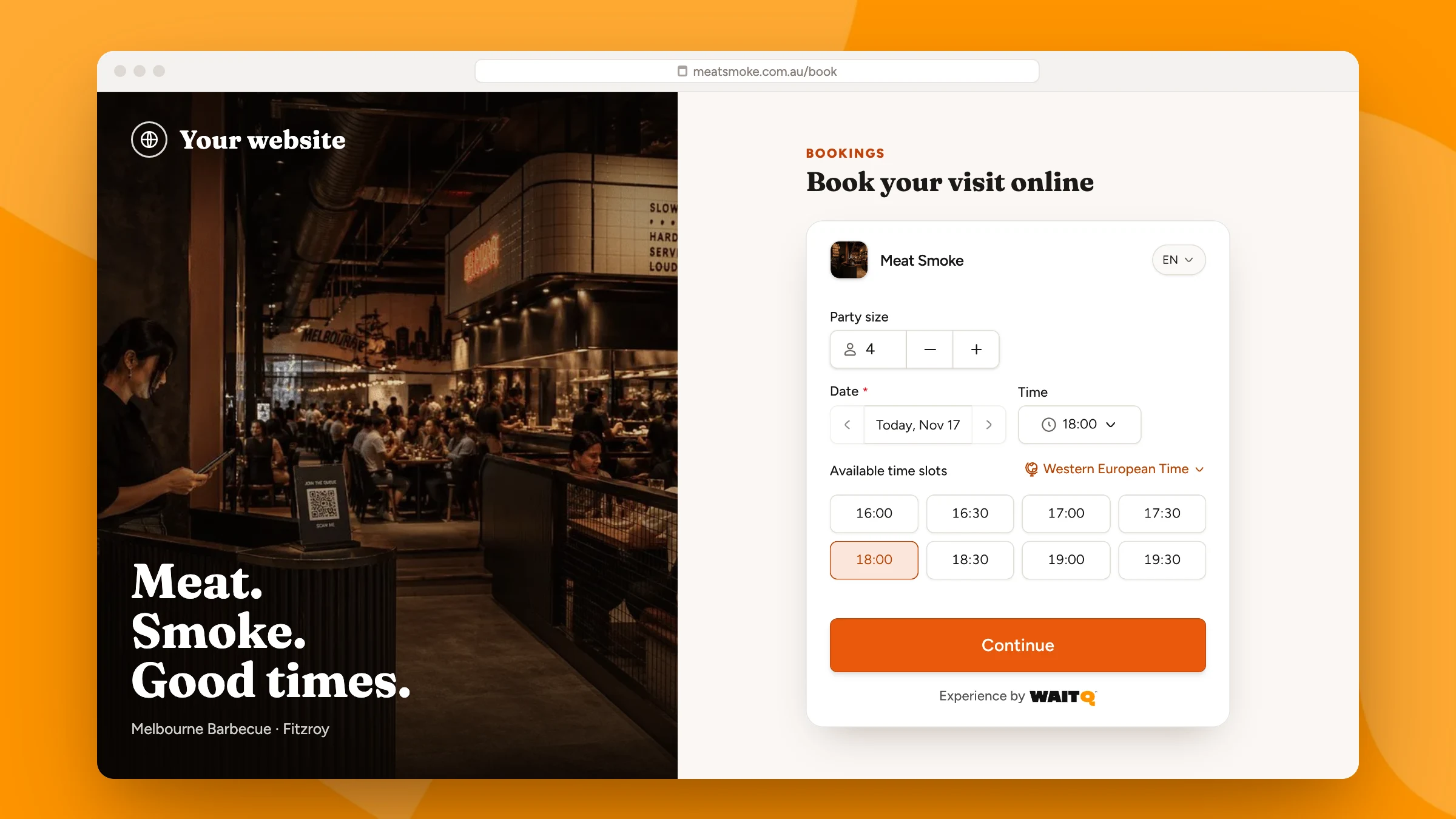
Introducing the WaitQ website embed: your queue and bookings on your own site
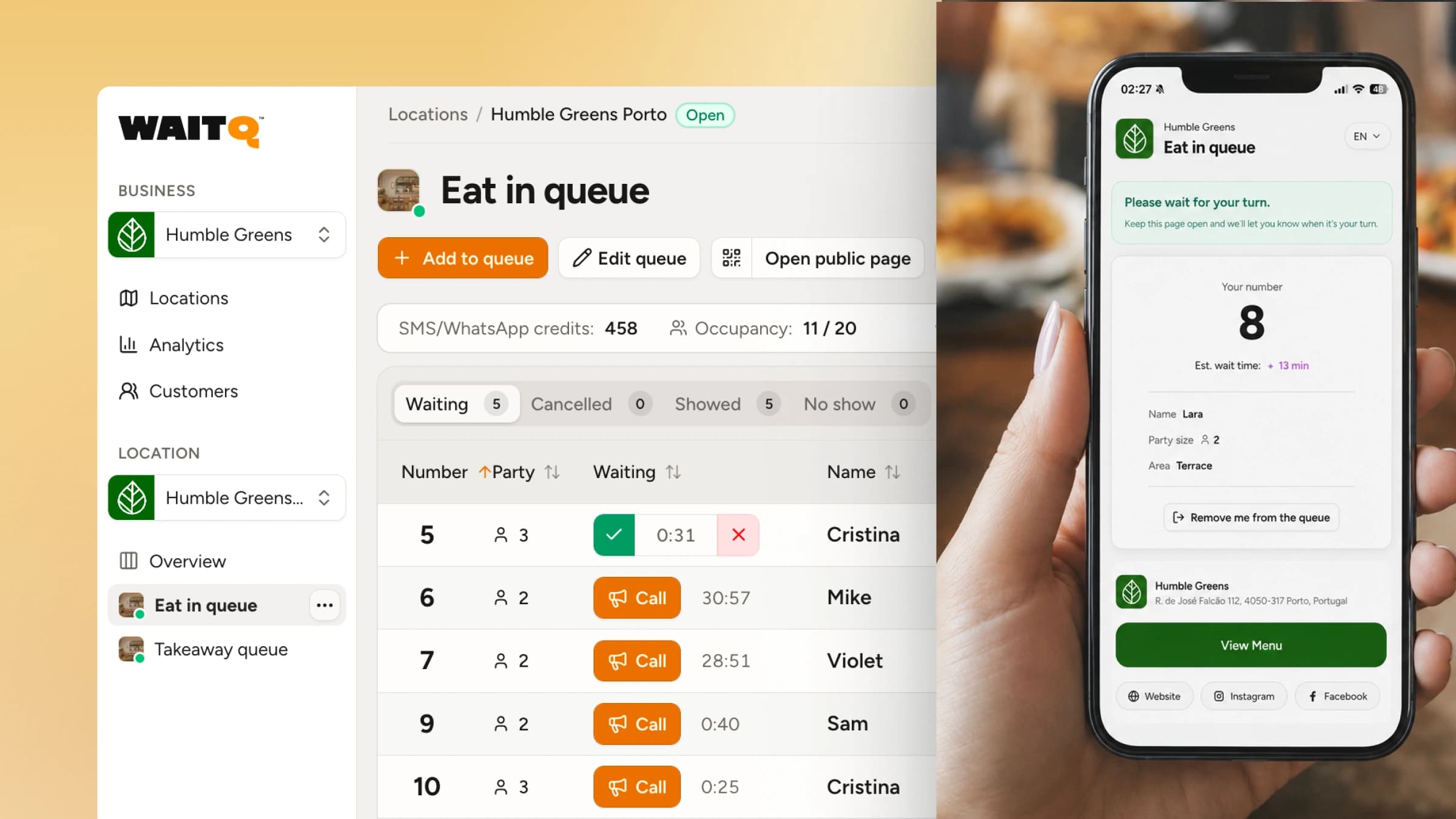
Guests can now join your queue, order or book straight from your website, with a floating button or a form in a page. One line of code, on any site, on every plan.
Practical playbooks for queues, bookings and guest flow management, tailored for busy businesses.

Guests can now join your queue, order or book straight from your website, with a floating button or a form in a page. One line of code, on any site, on every plan.

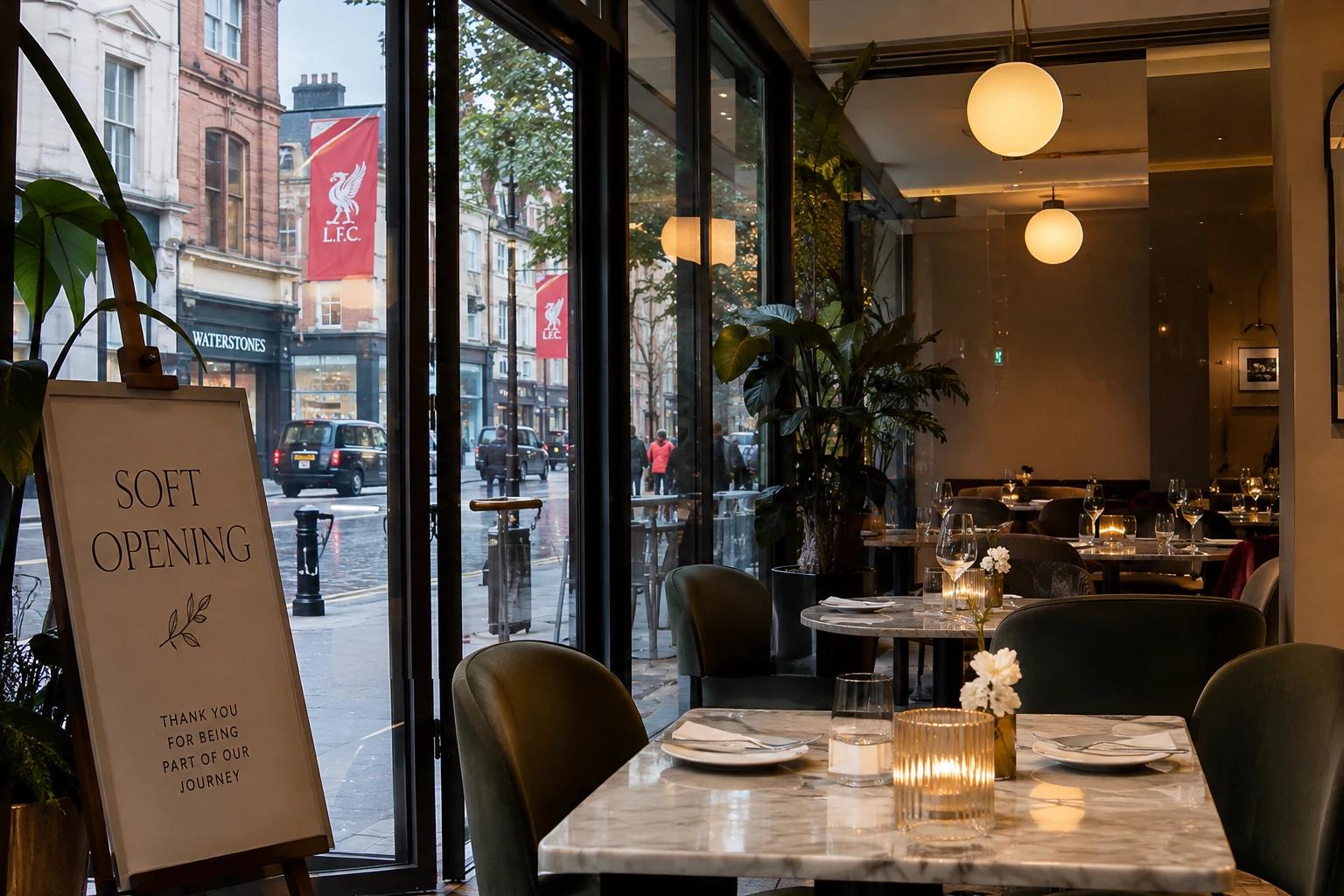
Most soft opening guides cover the menu and the invite list, and few say what happens at the door. This plan covers seat budgets, arrival windows, check-in, uninvited walk-ins and how to open to the public in stages.

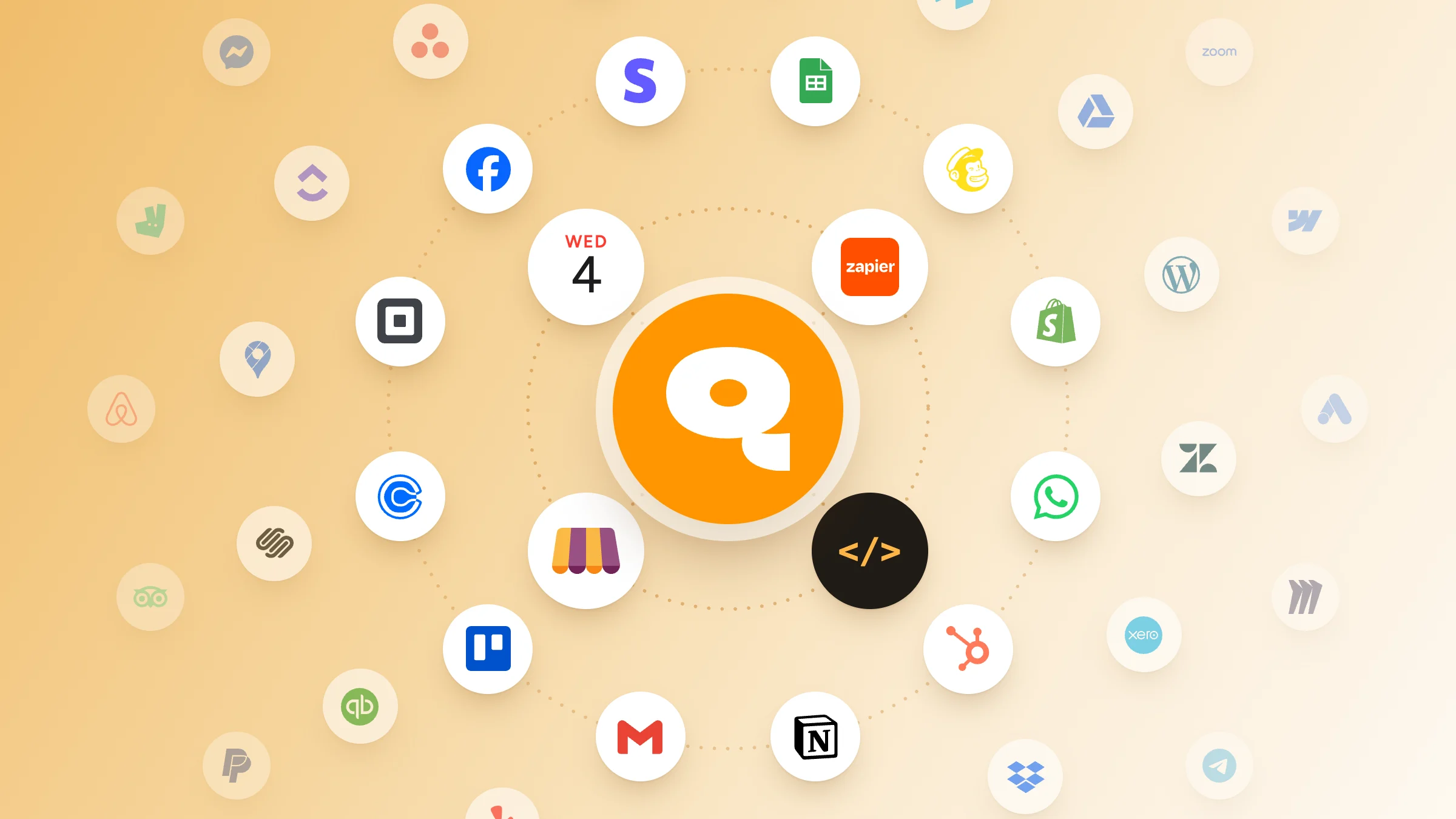
WaitQ now connects to the tools you already use. Send guests and bookings to thousands of apps with Zapier or Make, see bookings in your calendar, and build your own integrations with the API.

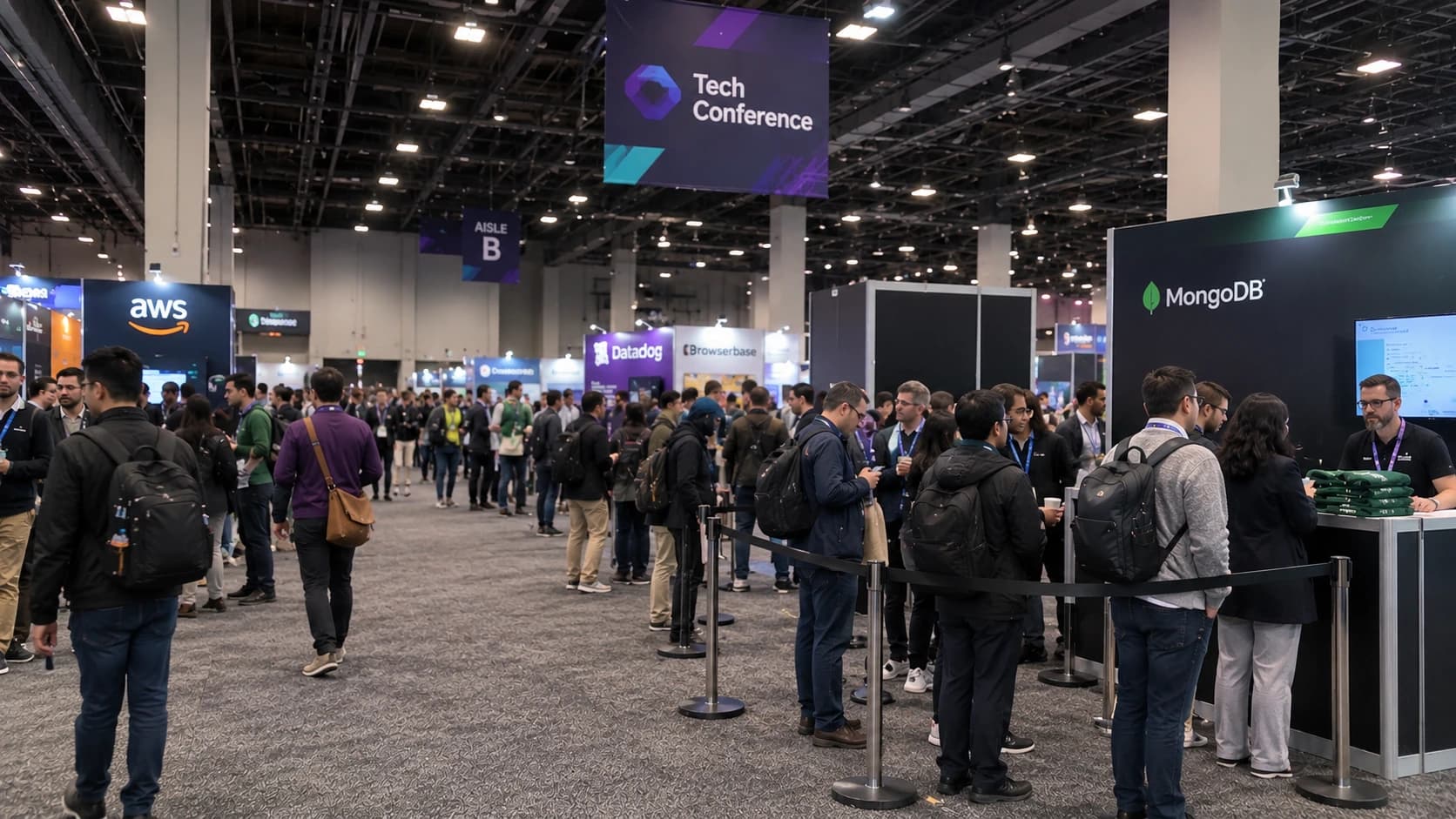
This guide sets out which events suit each of guest lists, tickets or registrations, what each one does at the door, how free sign-ups skew your headcount, and what to plan once people are inside.

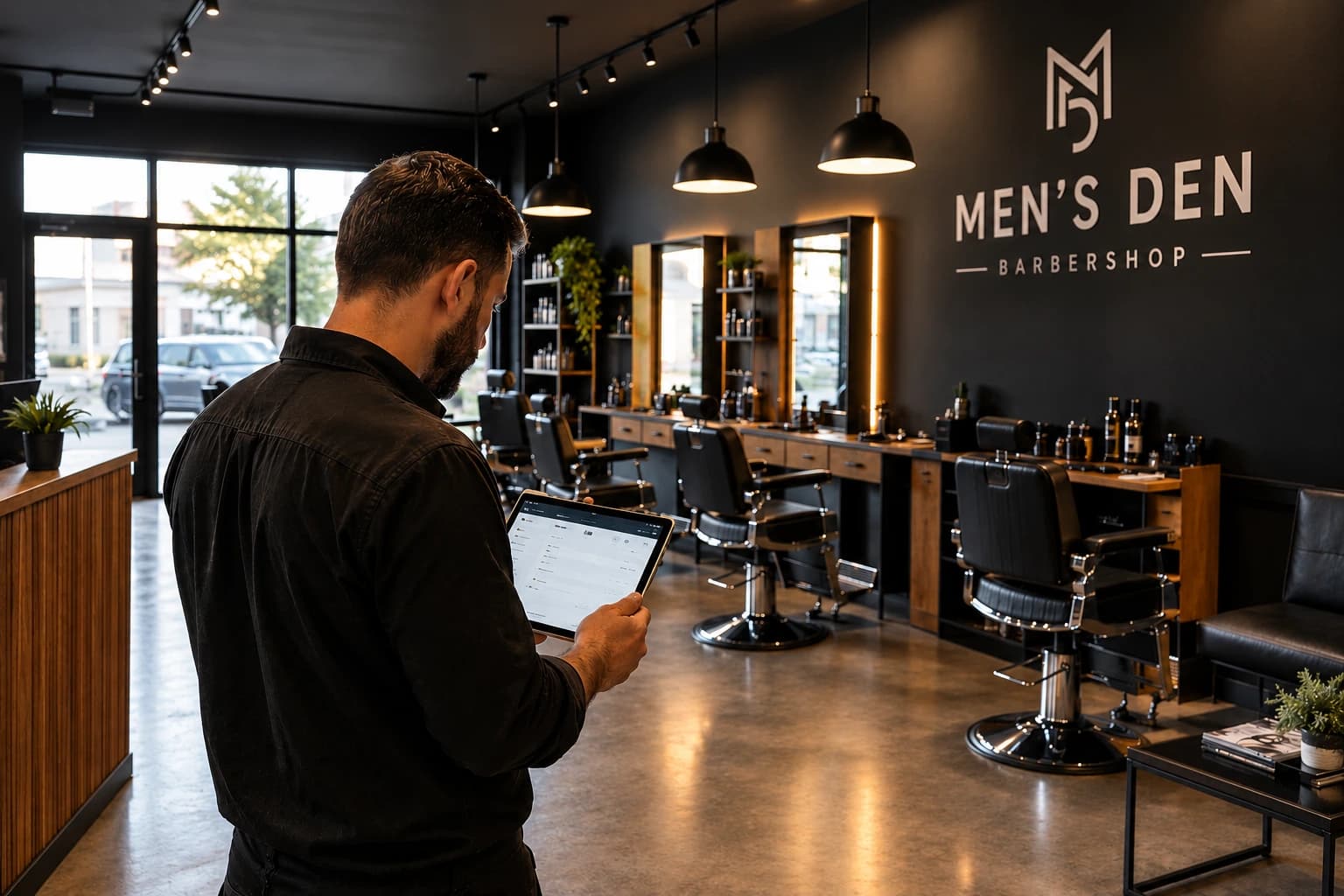
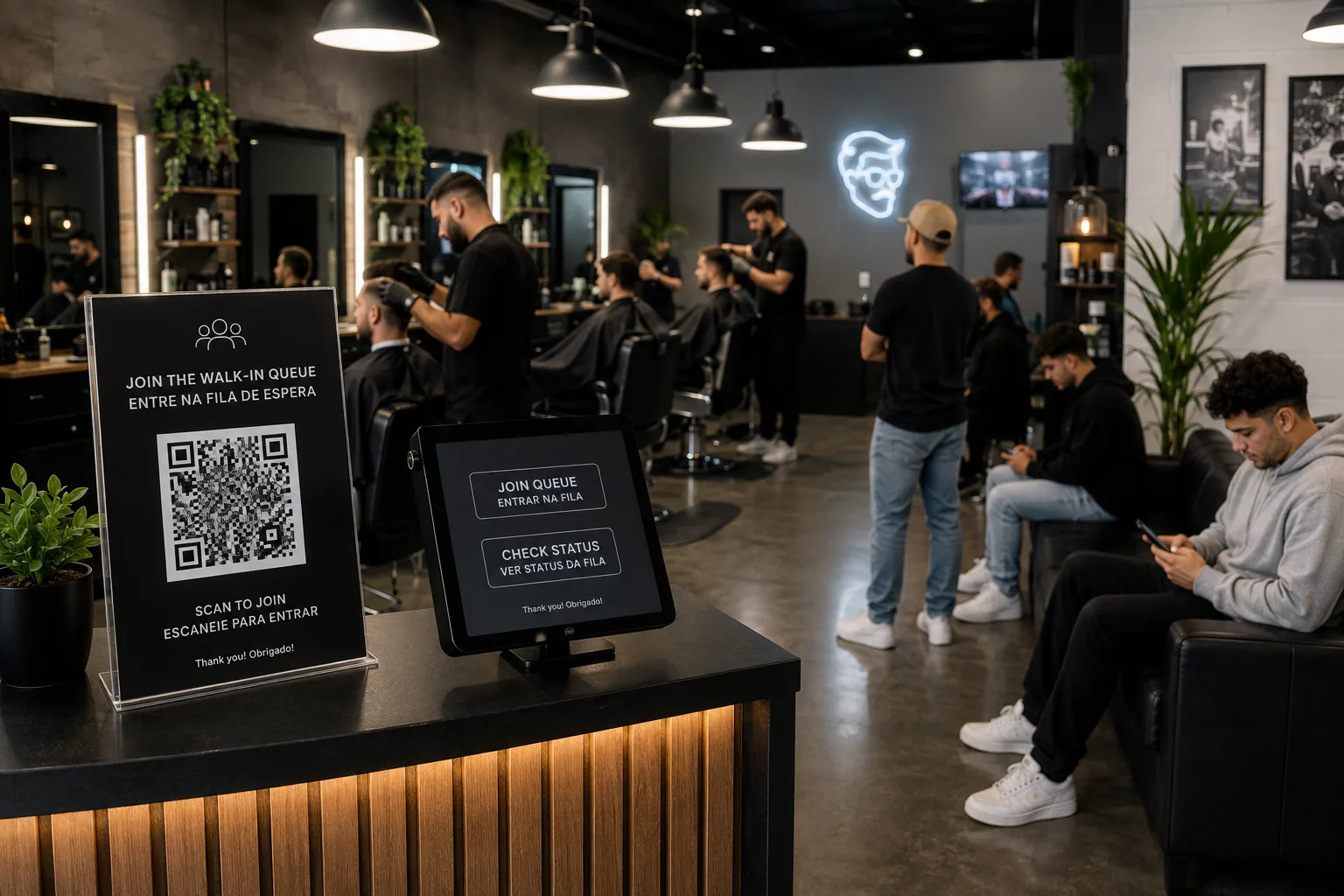
This checklist covers the setup decisions that shape every client first visit at the front door: sign-in, queue structure, barber rotation, wait updates, notifications and the exceptions to plan for.

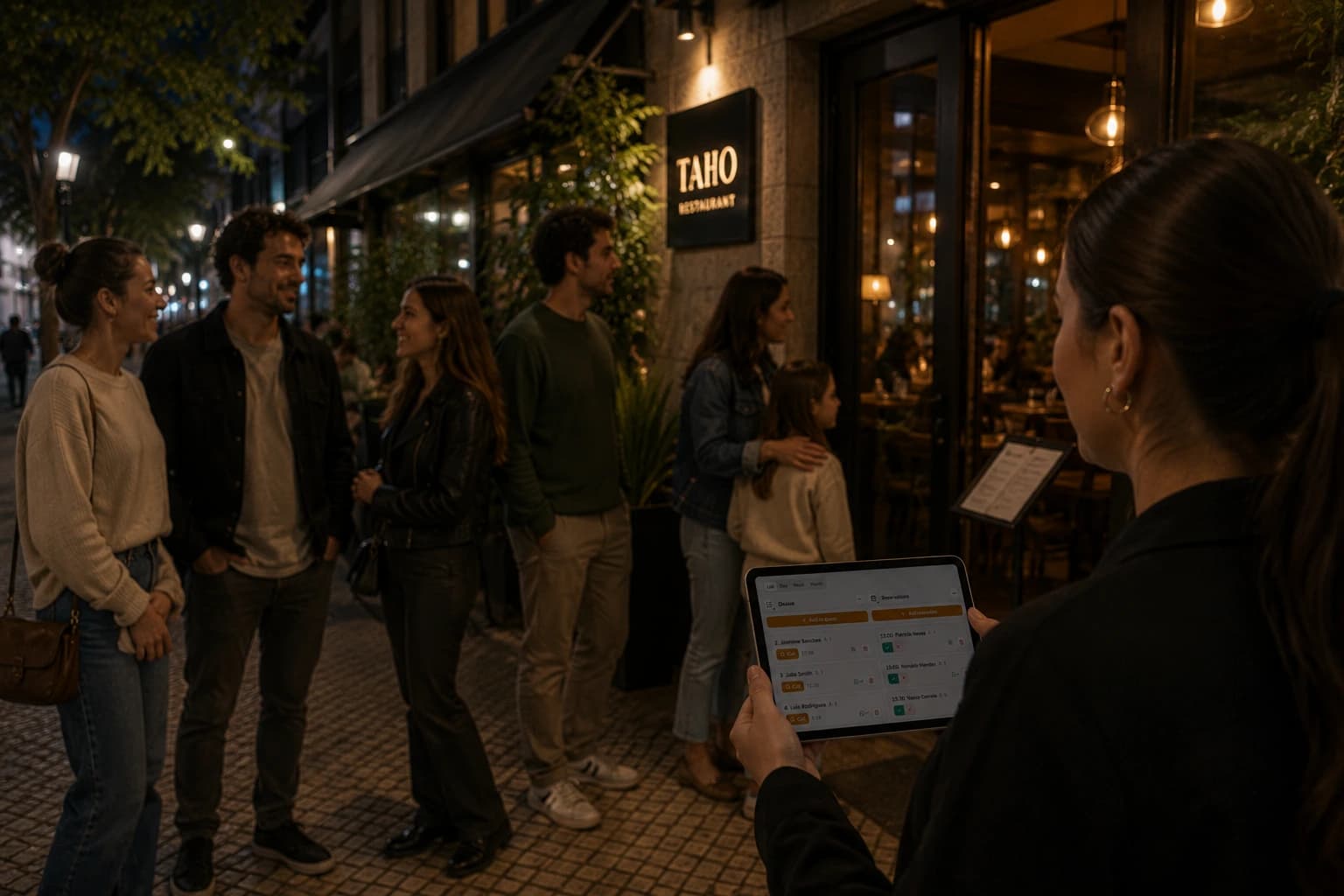
This guide covers three ways to manage the peak at the restaurant door, how guests can join from their room, how to call them down, and the priority rules for groups and outside diners.

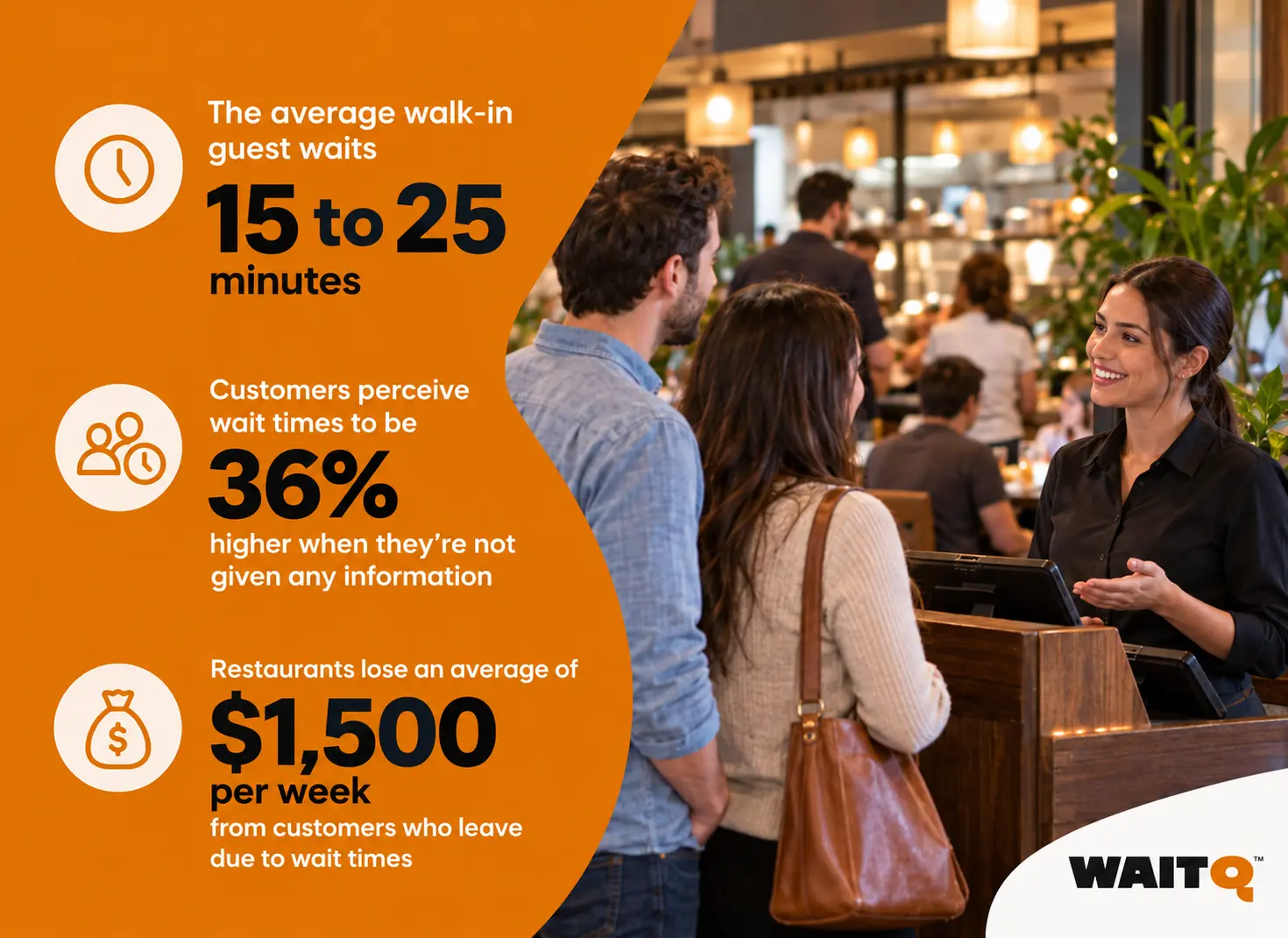
The minutes before service starts shape how customers judge the whole visit. Drawing on decades of research and operator reviews, this guide shows businesses how to run a digital queue that customers trust.

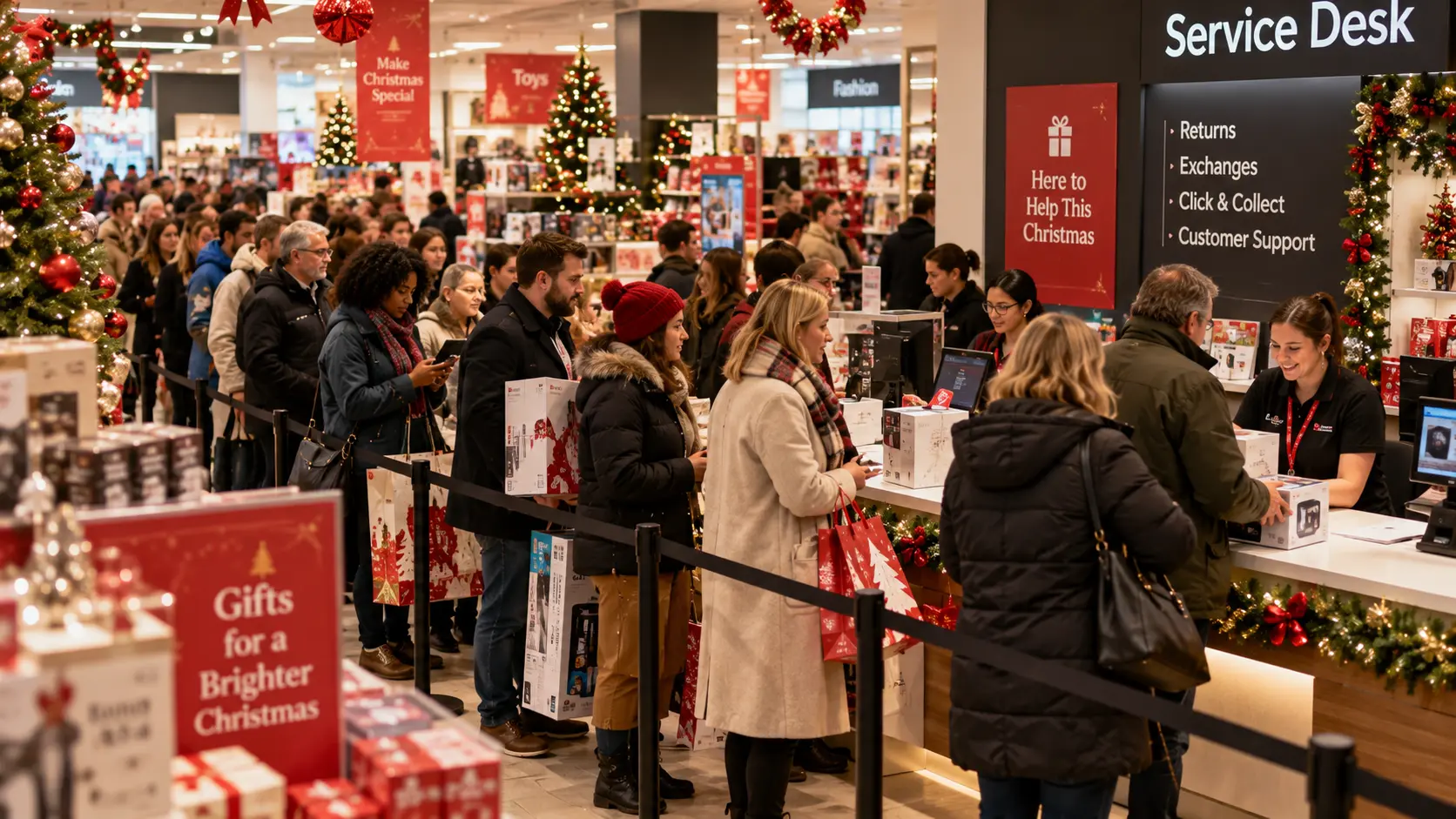
Black Friday week brings pickups and gift wrapping, and the weeks after Christmas bring returns and repairs. This plan gives each service counter its own virtual queue so shoppers keep browsing while they wait, and covers setup, messages, metrics and what to keep after January.

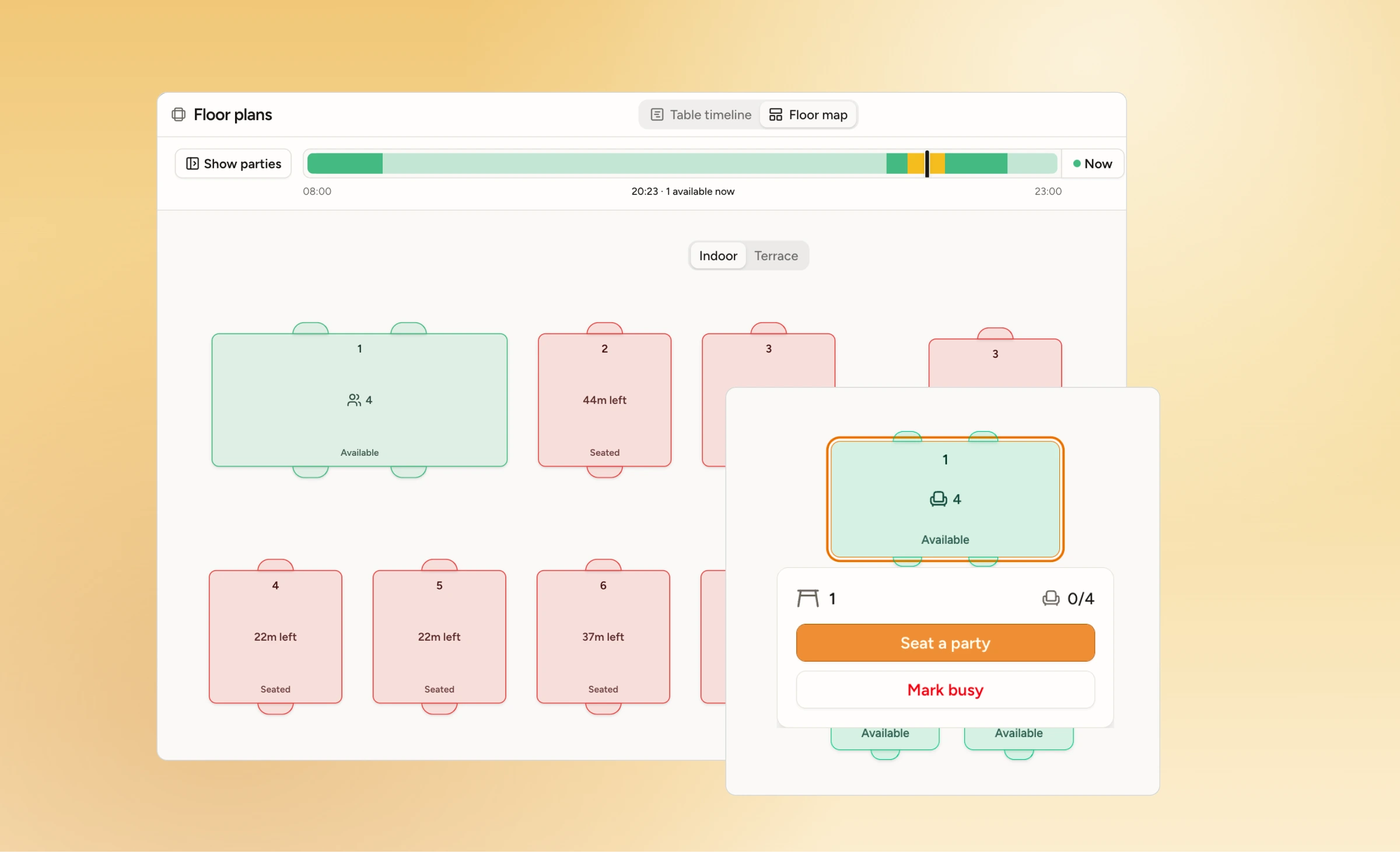
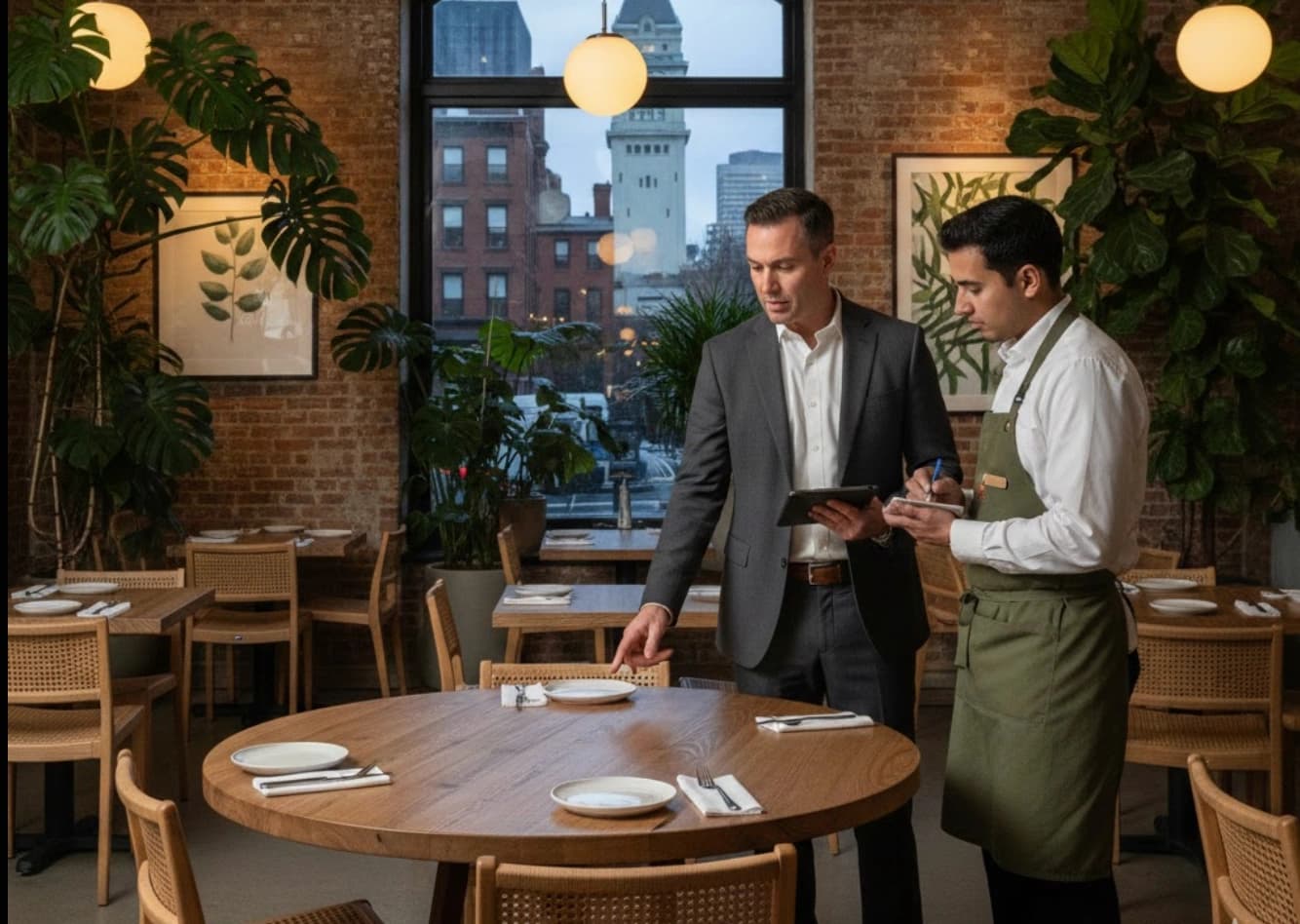
Every WaitQ restaurant dashboard now includes a real floor plan. Build your dining room table by table, assign parties straight from the queue or a reservation, and see which tables are open at a glance.

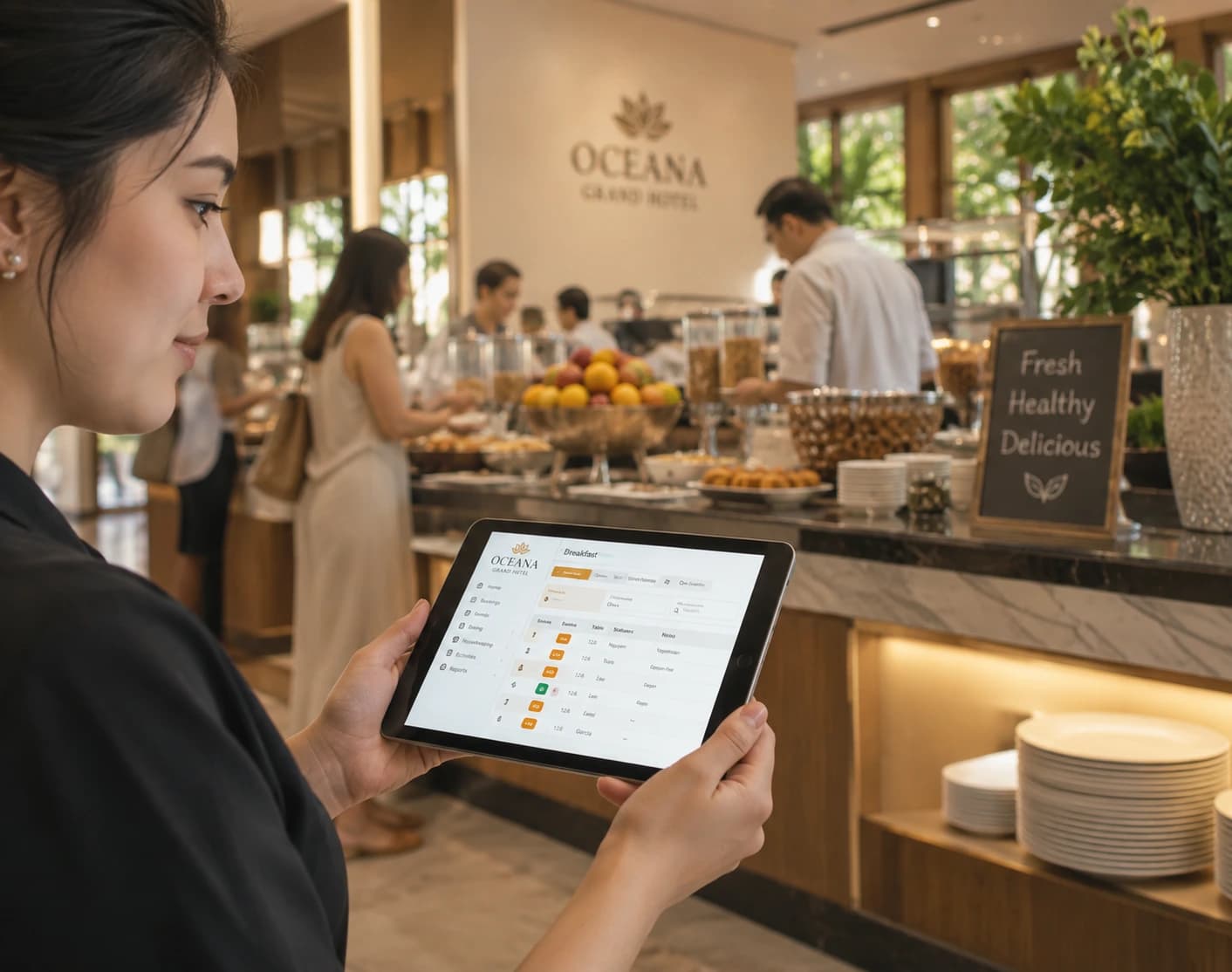
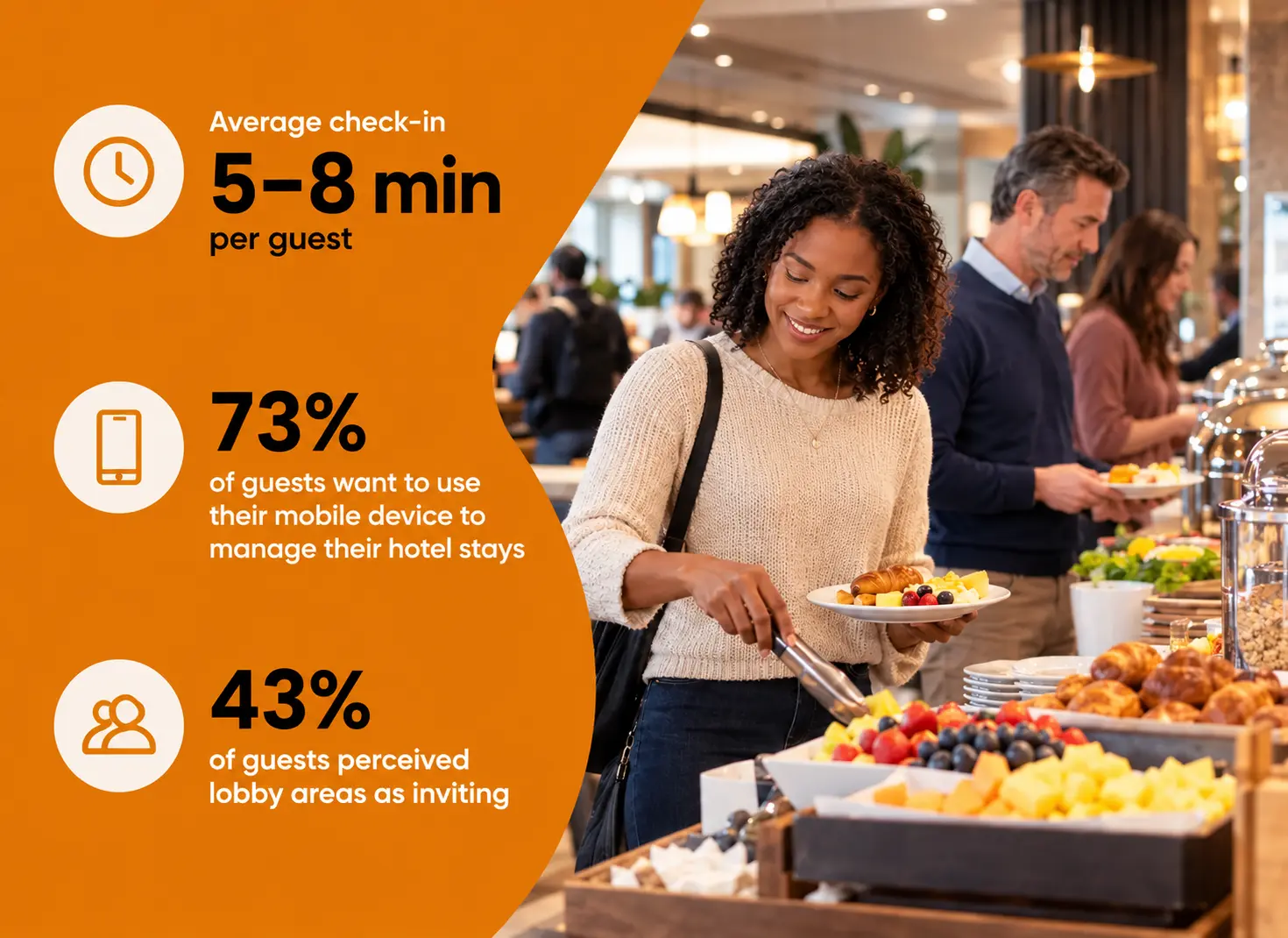
A hotel stay is a chain of waits, from the arrival queue and the room that isn't ready yet to the breakfast peak and the last-minute spa booking. This roundup gathers the data on each of them.

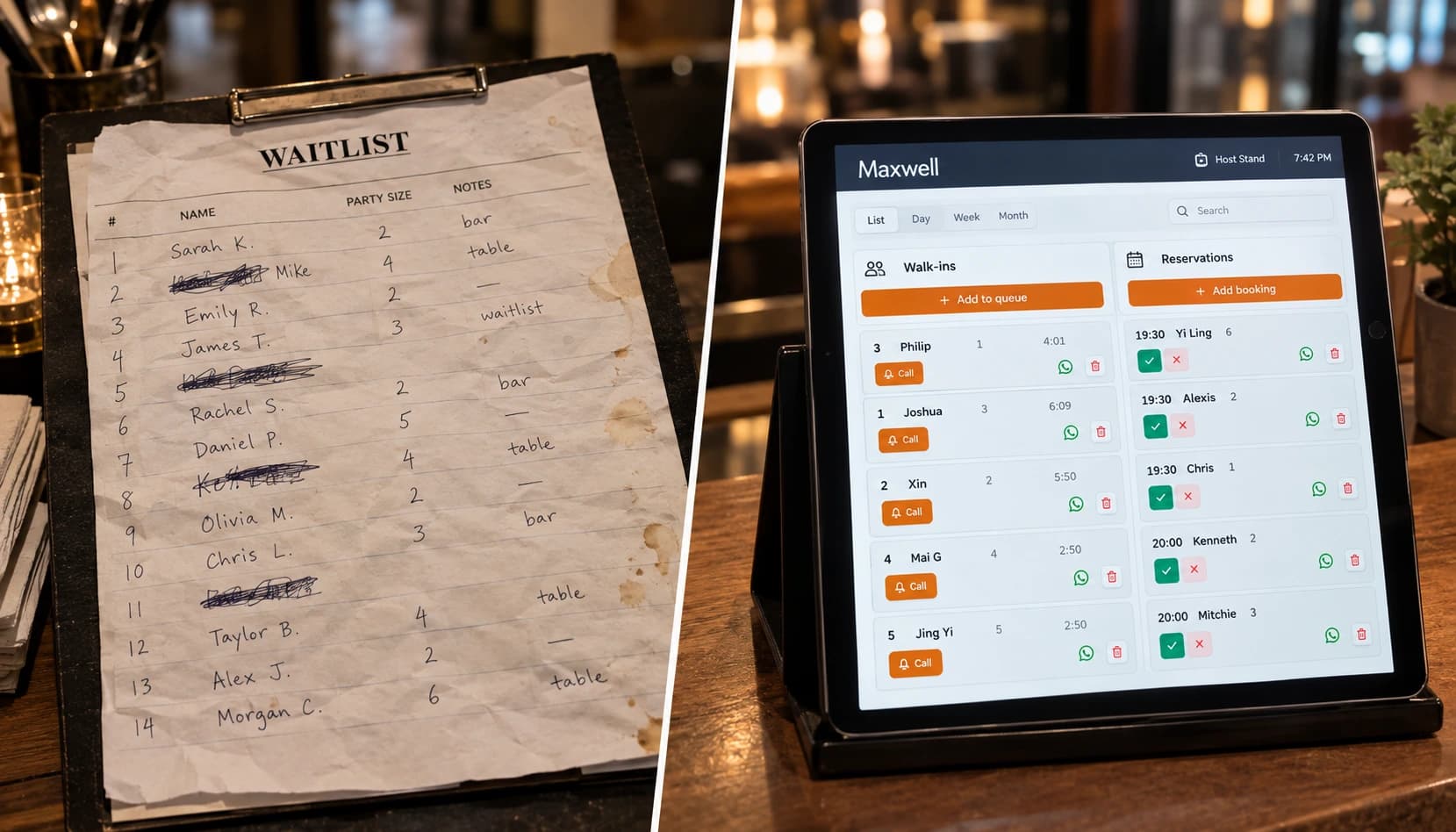
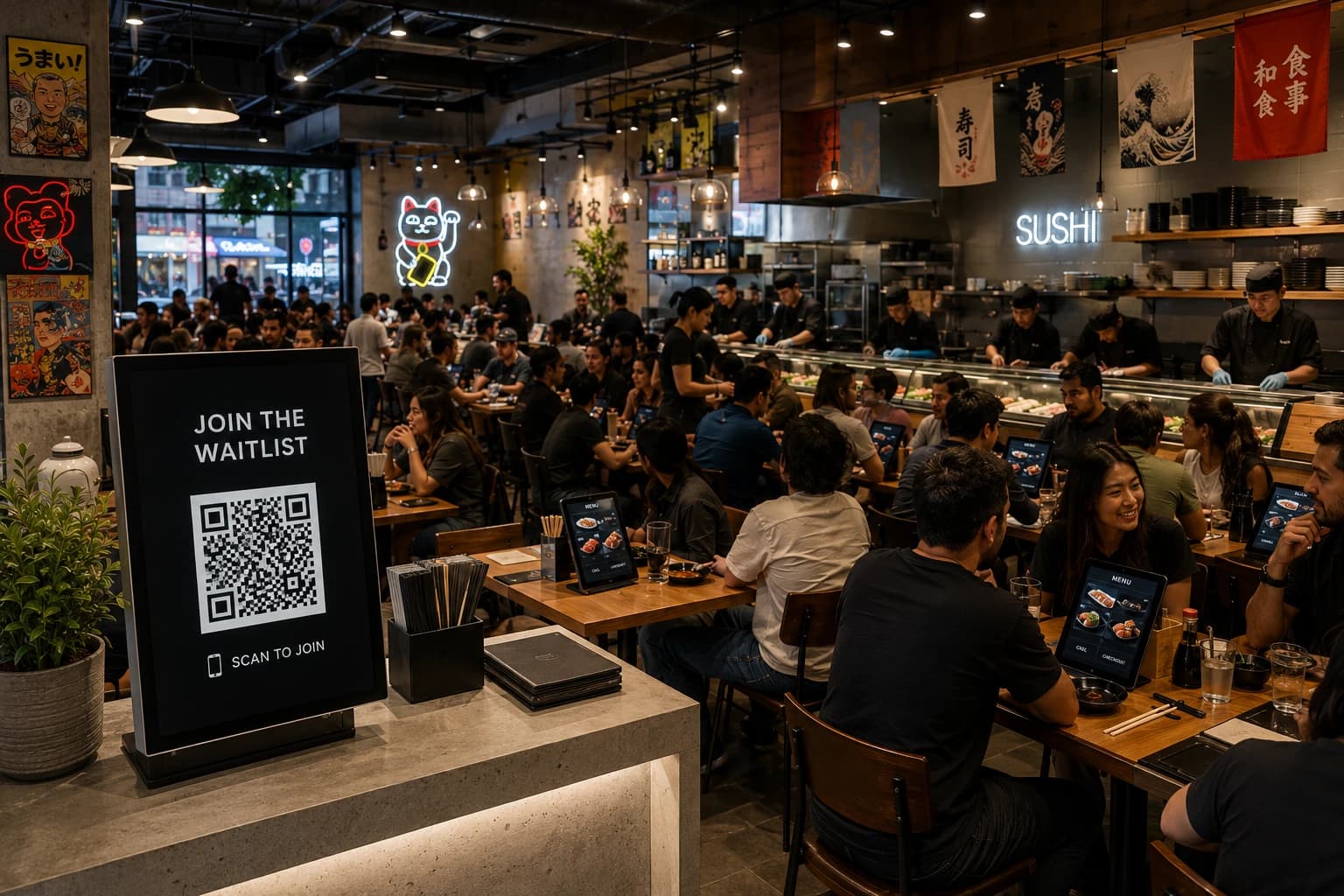
A paper waitlist works until a busy shift, a lost clipboard, or an unanswered "how much longer" breaks it. Here's how paper and digital waitlists actually compare, and 6 signs paper is already costing you customers.

We evaluated restaurant waitlist systems across several criteria: pricing, customer check-in friction, notification channels, and multi-location support. Pricing and features were checked against each provider in September 2026.

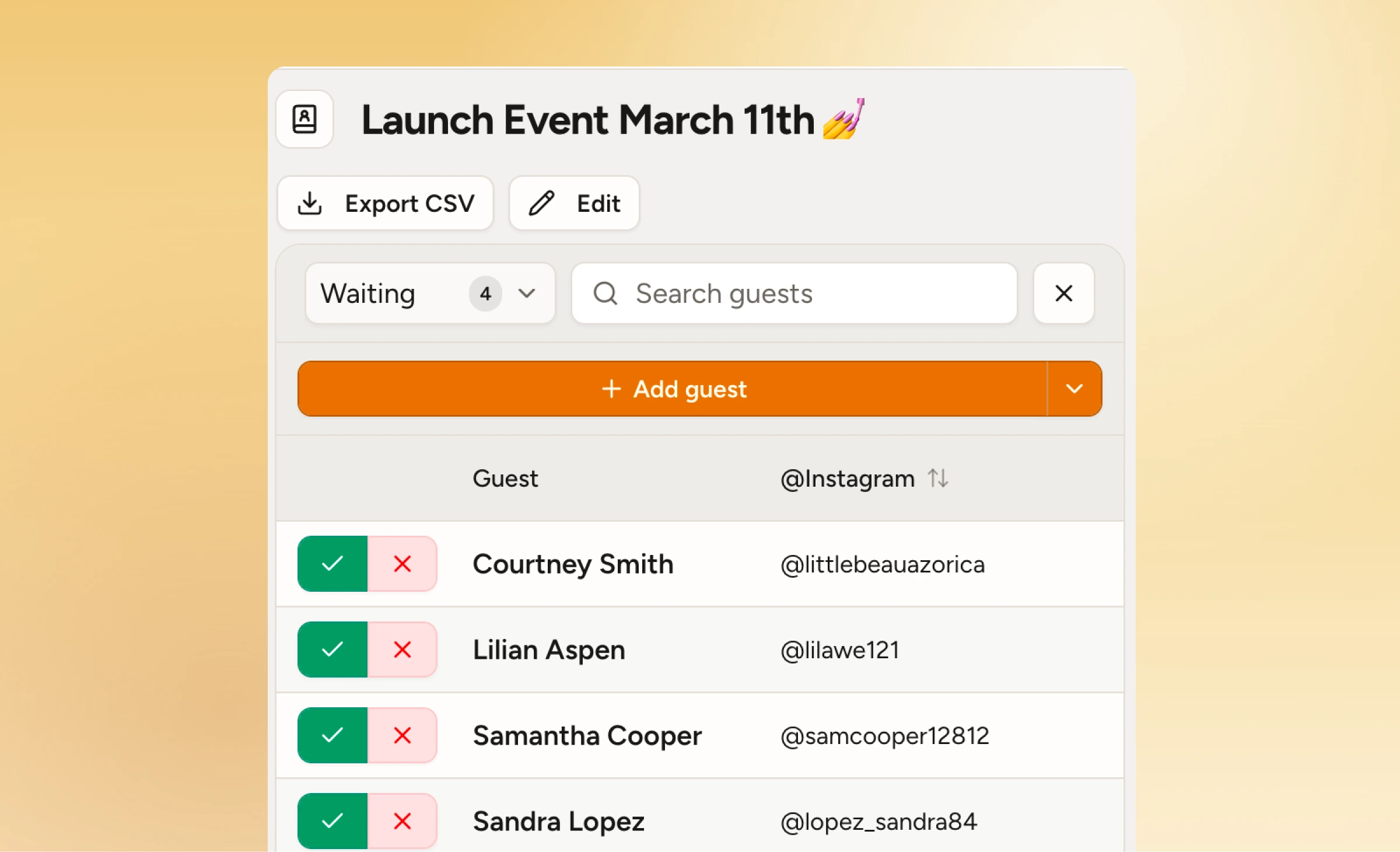
Guest lists are live on WaitQ. It's a way to pre-register people for an event, opening, or private session and check them in on arrival, no queue number or scheduled slot required.

A queue management system earns its cost back in different ways, and most ROI breakdowns only price one of them. Here's the total picture.

This guide breaks the stack into the categories that matter, shows how the mix changes as a restaurant grows, and covers what to budget and where things typically go wrong.

A complete barbershop menu guide: 40+ service ideas, tiered pricing for the US, UK, and Australia. It breaks down how to categorize your menu, what to charge for each tier, how to design add-ons and memberships.

A setup guide for running walk-ins and reservations from one shared system, so every table's status stays accurate and double-booking stops being a regular problem.

A practical guide to the parts of a restaurant wait that are in your control, from table allocation and turn routines to booking pacing and call-backs, using the tables and team you already have.

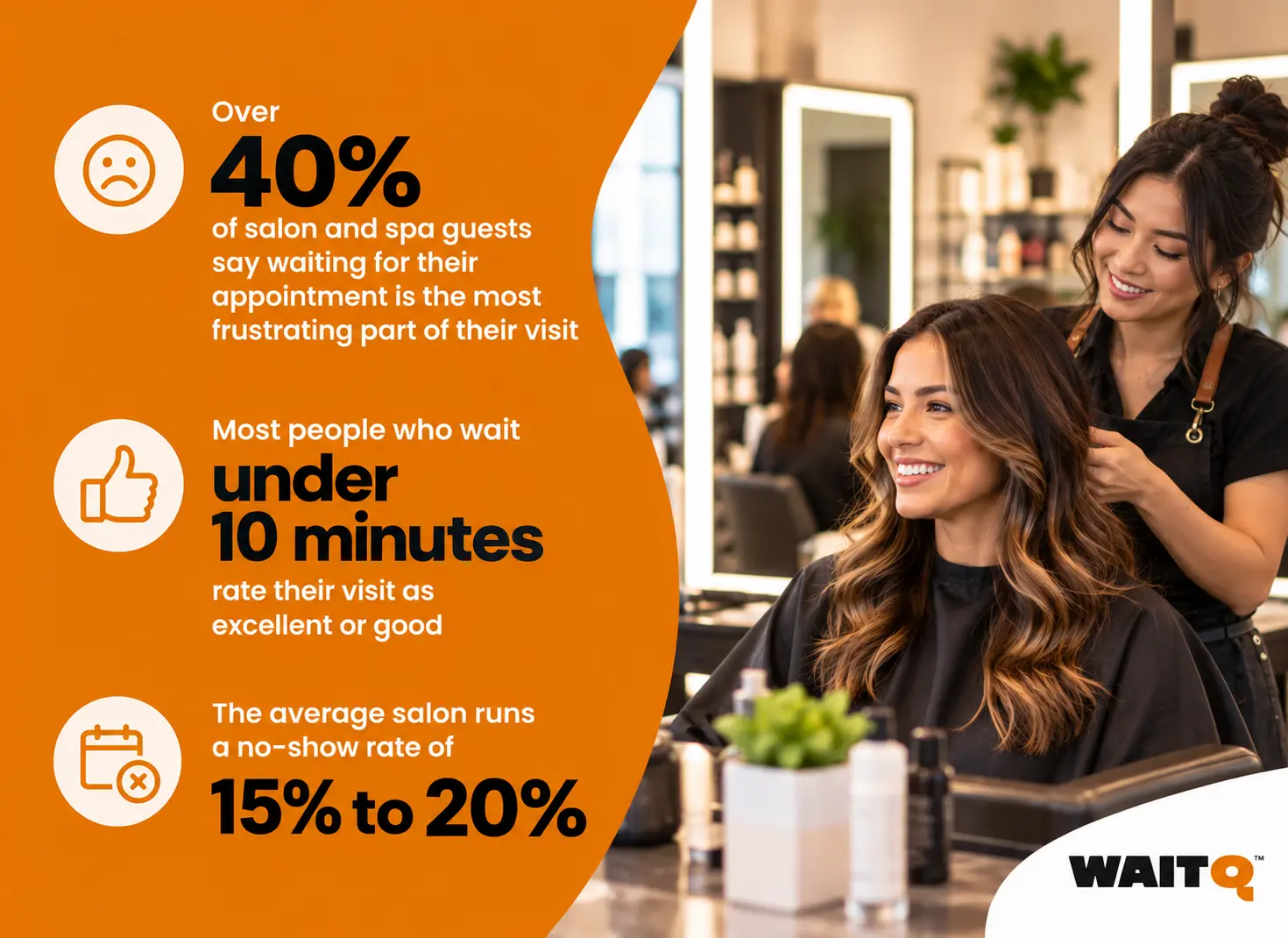
This report breaks down what the data says about wait times, booking patterns, and revenue across hair, nail, and beauty salons, with a takeaway after each section.

We evaluated 9 queue management systems across five criteria: pricing transparency, customer check-in friction, notification channels, setup time, and multi-location support. This guide covers the tools that matter for small businesses such as retail shops, restaurants, beauty salons, barbershops, hotels, and more
.webp&w=3840&q=75)
A practical comparison of queue management systems for UK walk-in businesses, from cloud-based tools for small operations to enterprise queueing platforms, plus what to check before you buy in each situation.

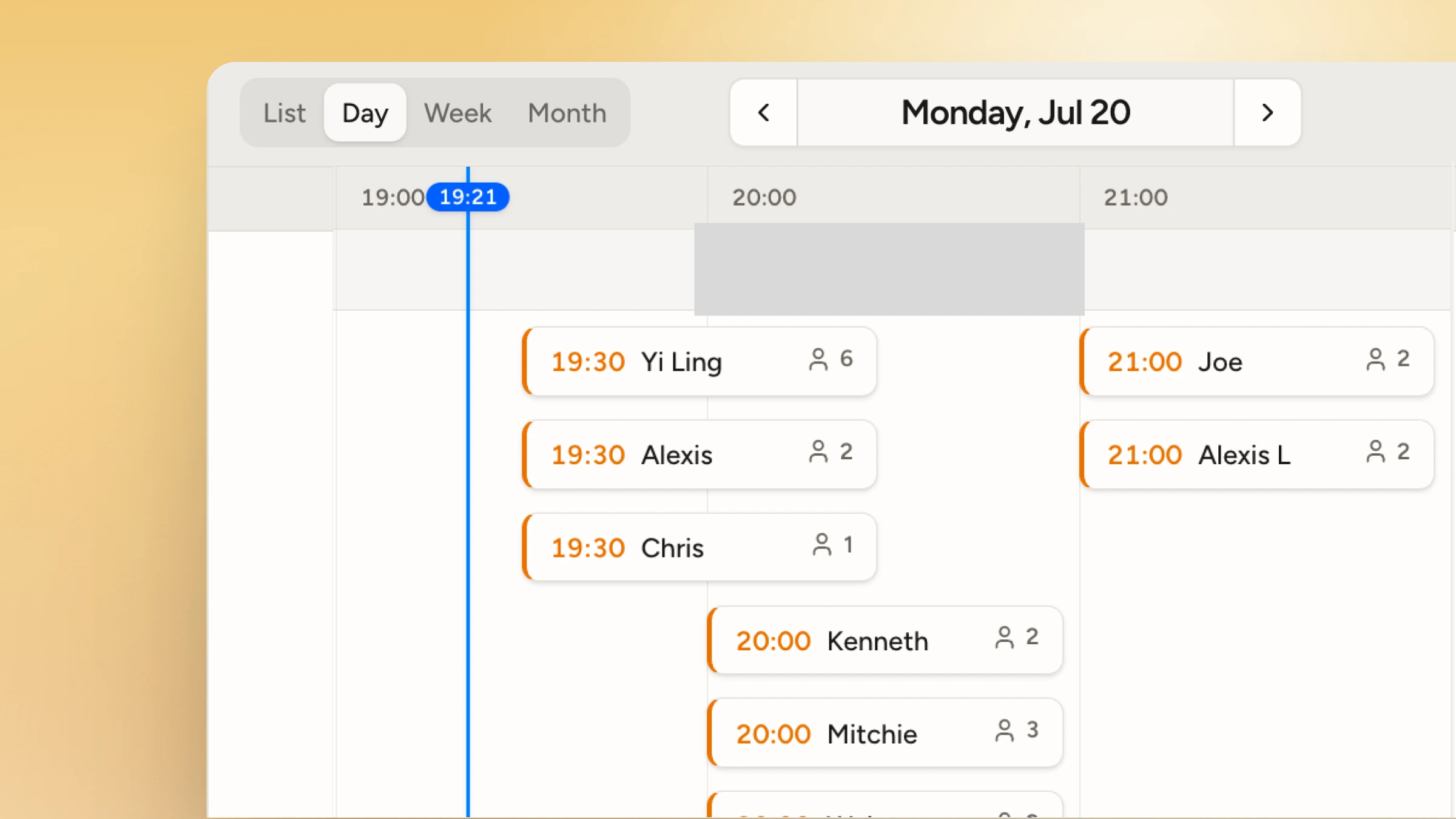
Appointments are live on WaitQ. Customers can book ahead online or join your walk-in queue, and your team manages both from the same screen.

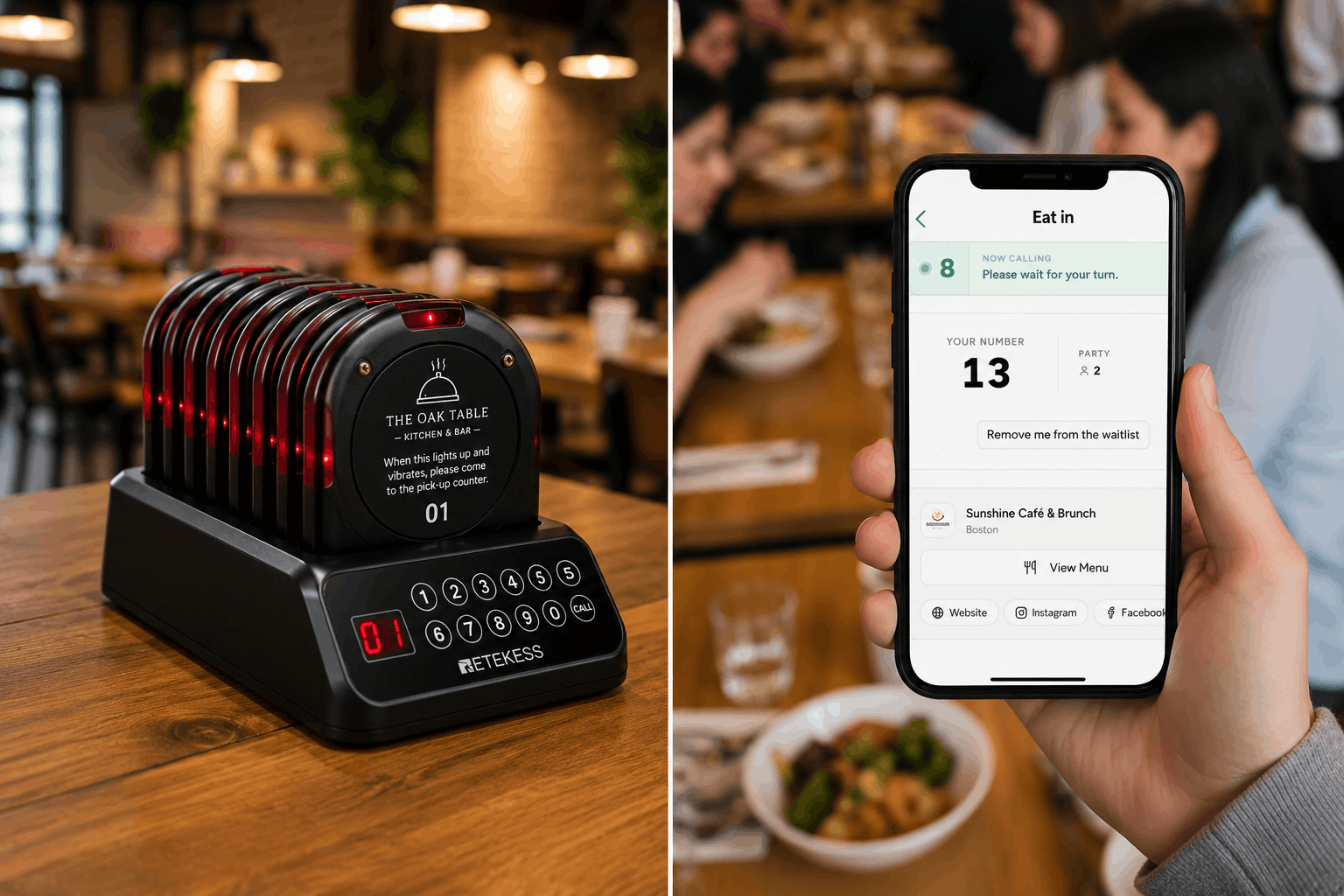
Compare digital queues to restaurant pagers and buzzers on cost, range, communication, and data, and see when a pager system is still the right call. Here's the full comparison.

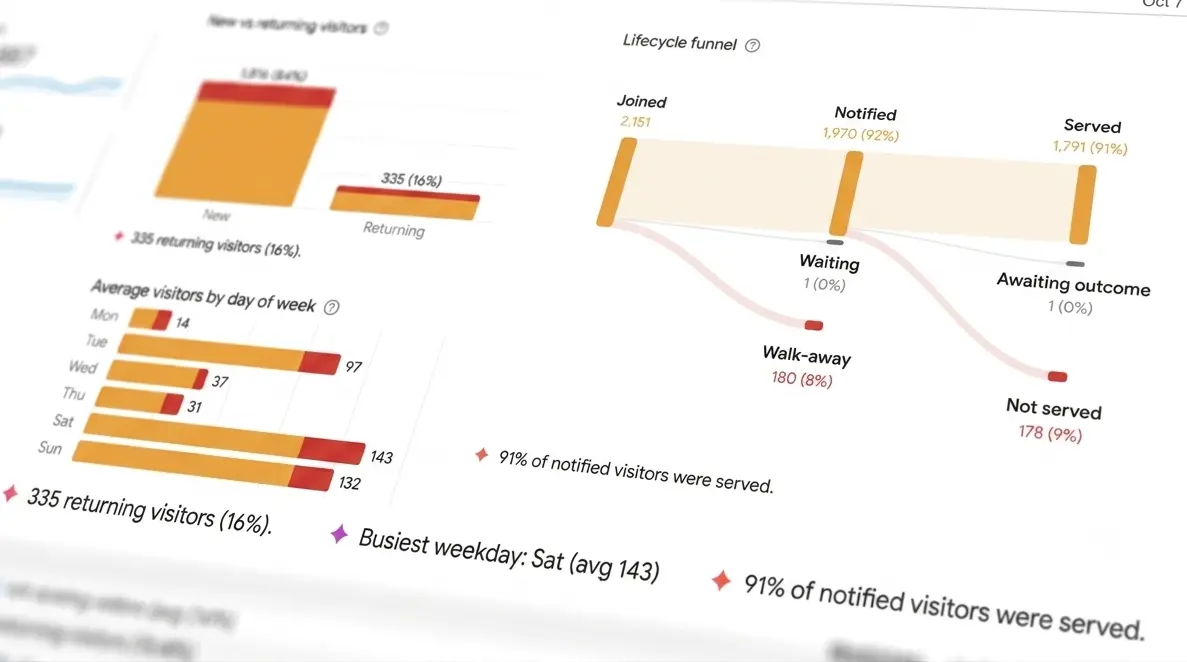
These are the KPIs to track when managing queues and waitlists and what each one actually tells you about how your operation is running.

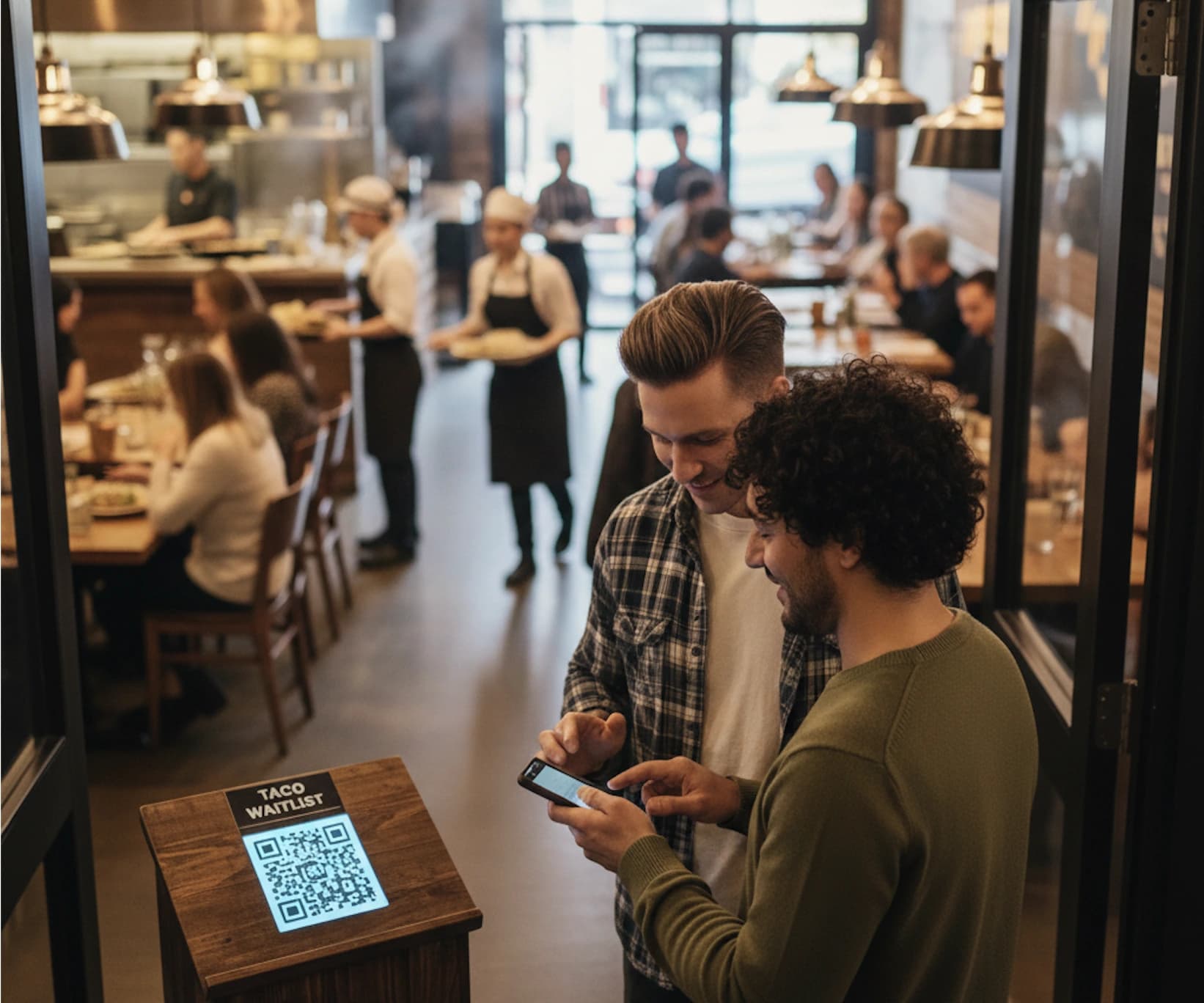
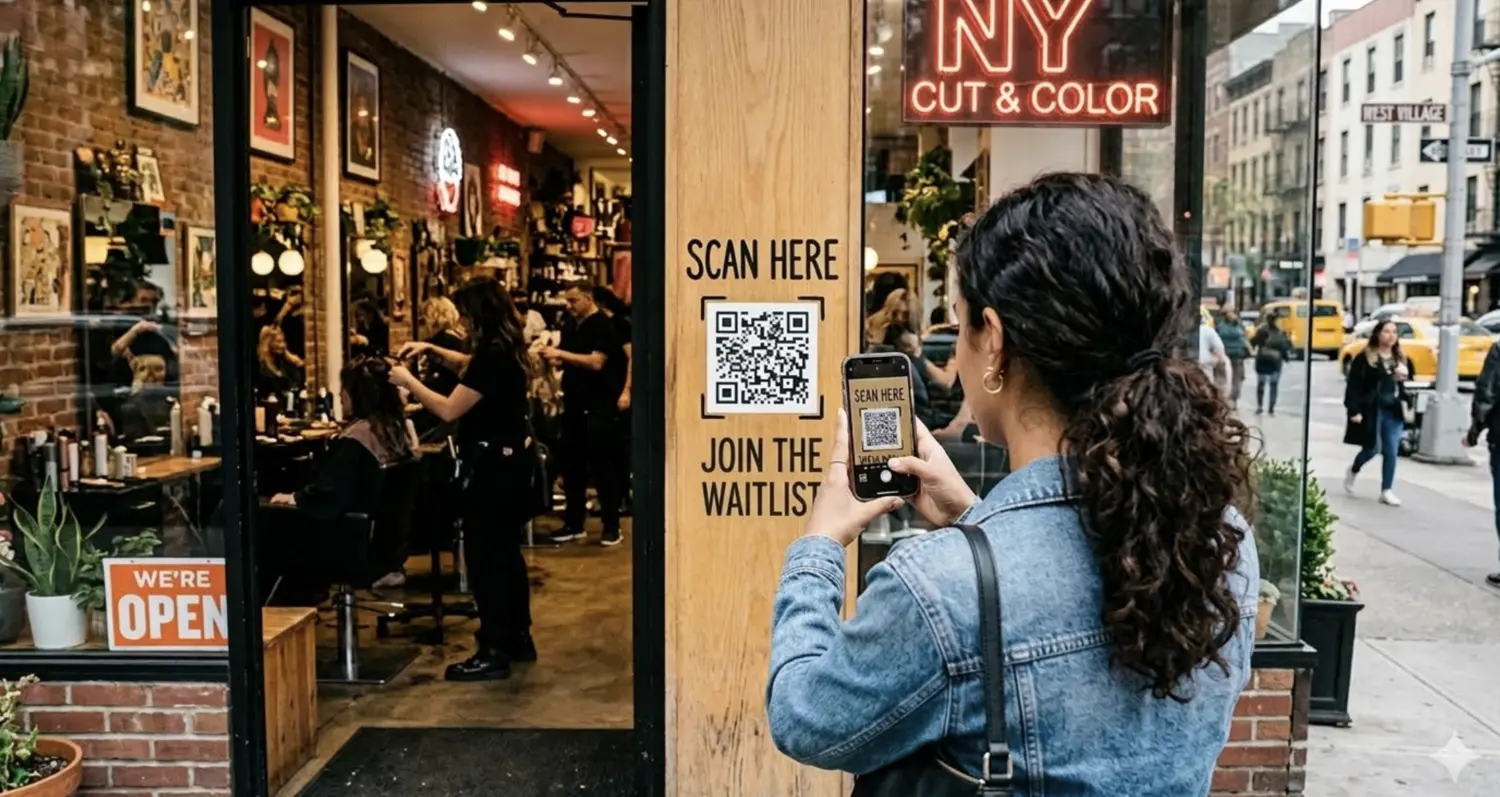
How QR code check-in works, how the main platforms compare, how to choose the right one, what to put on the check-in form, where to place your code, and the mistakes that quietly kill adoption.

A step-by-step guide to setting up a barbershop digital queue: one queue per barber, real service durations, a short check-in form, notifications and a 10-minute arrival window, QR codes where clients find you, and a test day before going live.

We evaluated 9 queue management systems across five criteria: pricing transparency, customer check-in friction, notification channels, setup time, and multi-location support. This guide covers the tools that matter for walk-in businesses such as retail shops, restaurants, beauty salons, barbershops, hotels, and more.

Why customers respond so well to queue notifications, what the research says about waiting psychology, and what to look for if you're choosing a SMS system for a walk-in business.

This page compiles the most complete set of publicly available barbershop statistics on global market size, customer wait behaviour, booking trends, walk-away rates, and regional patterns, drawn from industry research, platform-level data, and consumer surveys.

I compared the top tools that handle walk-in queue management for barbershops. If your shop runs primarily on walk-ins, these are the platforms worth evaluating.

How to handle walk-in clients in barbershops smartly, from operational basics to per-barber queue logic and digital tools for shops that run at volume.

This guide covers what a QMS actually is, the four types available, how to choose the right one for your business.

This guide covers what to expect about switching to a digital queue and how exactly to go live even before your next service.

This guide covers where retail queues form, what research says they cost in lost sales, the tactics that reduce them, and how a digital queue lets customers keep shopping while they wait.

A practical guide for hair and beauty salons on walk-in clients. It covers what drives them out the door, how to estimate the revenue lost, which walk-in policy fits your salon, and how to run the queue so clients can step away until their stylist is ready.

Queue management systems in Singapore range from enterprise hardware platforms to lightweight browser-based apps.

This guide compiles the most complete set of publicly available data on restaurant no-shows: rates by segment, revenue math, geographic patterns, behavioral drivers, and what the research says actually works to reduce them.

Waitlists or reservations? This guide breaks down how each system works, when to use which, and what features actually matter when choosing software for your restaurant.

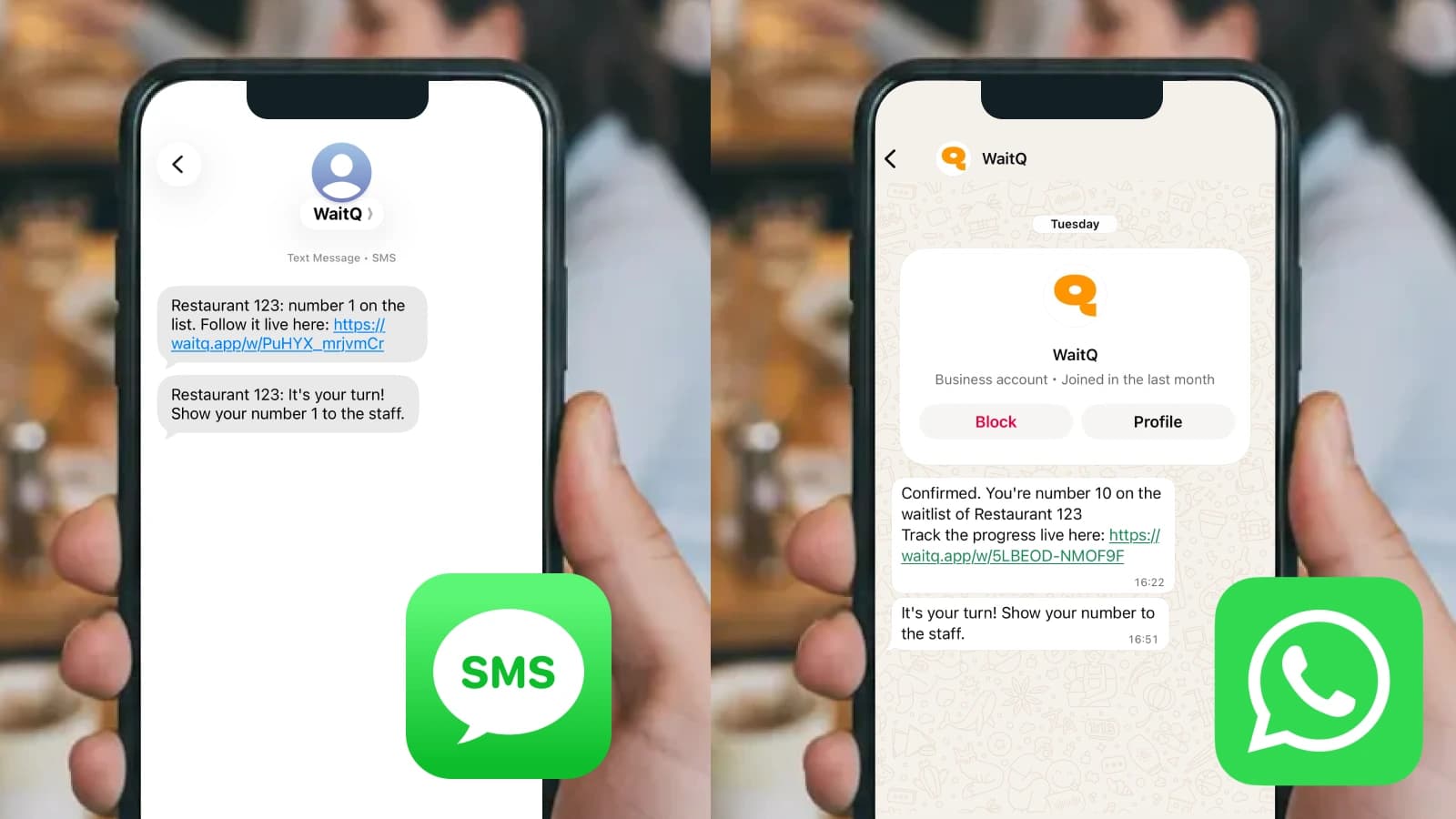
This article explains how WhatsApp queue notifications work, what messages the system sends automatically, and how they compare to SMS in markets where WhatsApp is the dominant channel.
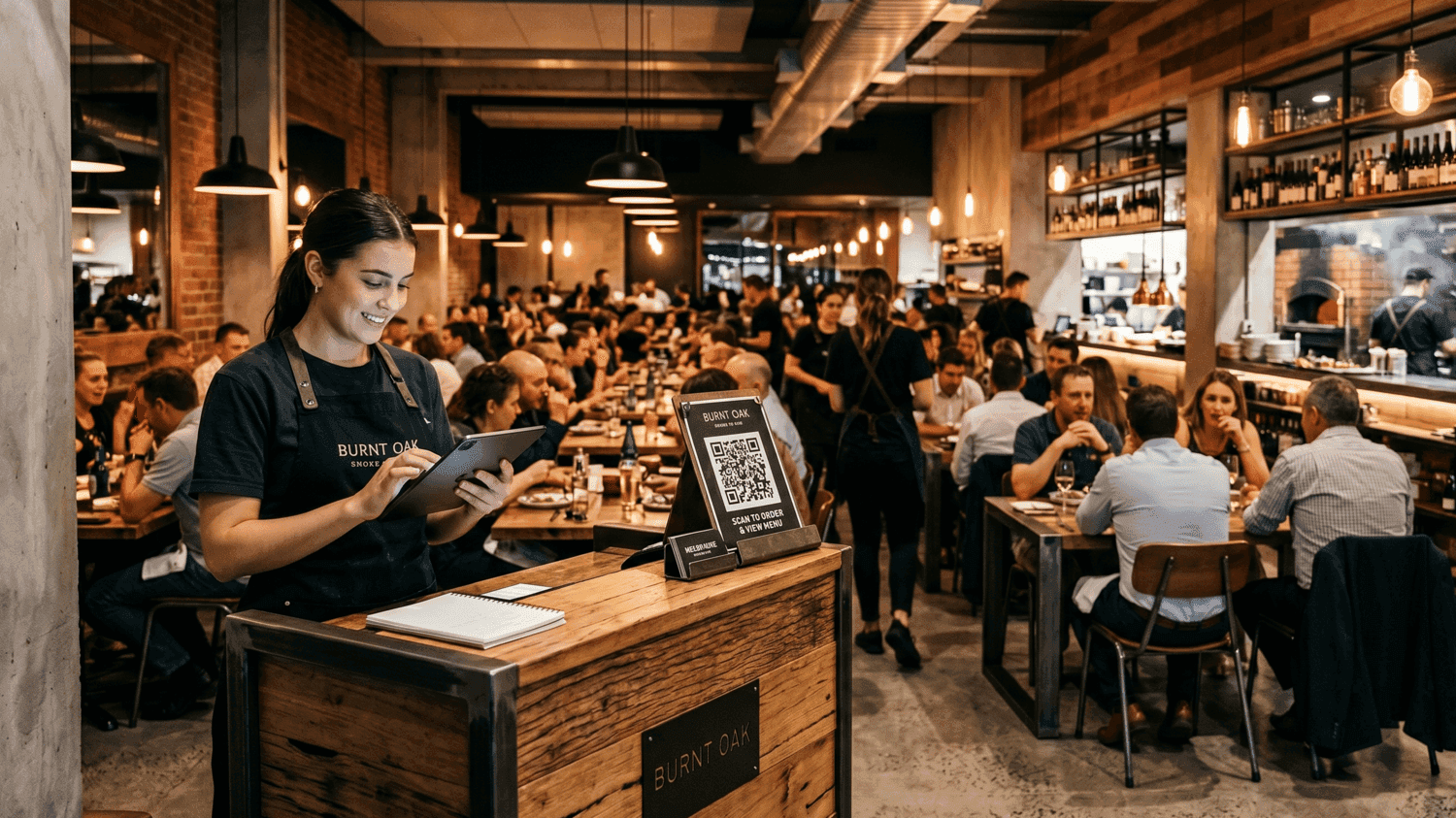
The key to solid restaurant waitlist management is trust. Here are 8 practical changes, from ditching paper to tracking walk-aways, that cut down on empty tables.

This guide covers what causes walk-aways, how long guests realistically wait before leaving, and six fixes: accurate estimates, visible queue position, self check-in, SMS alerts, and walk-away tracking.
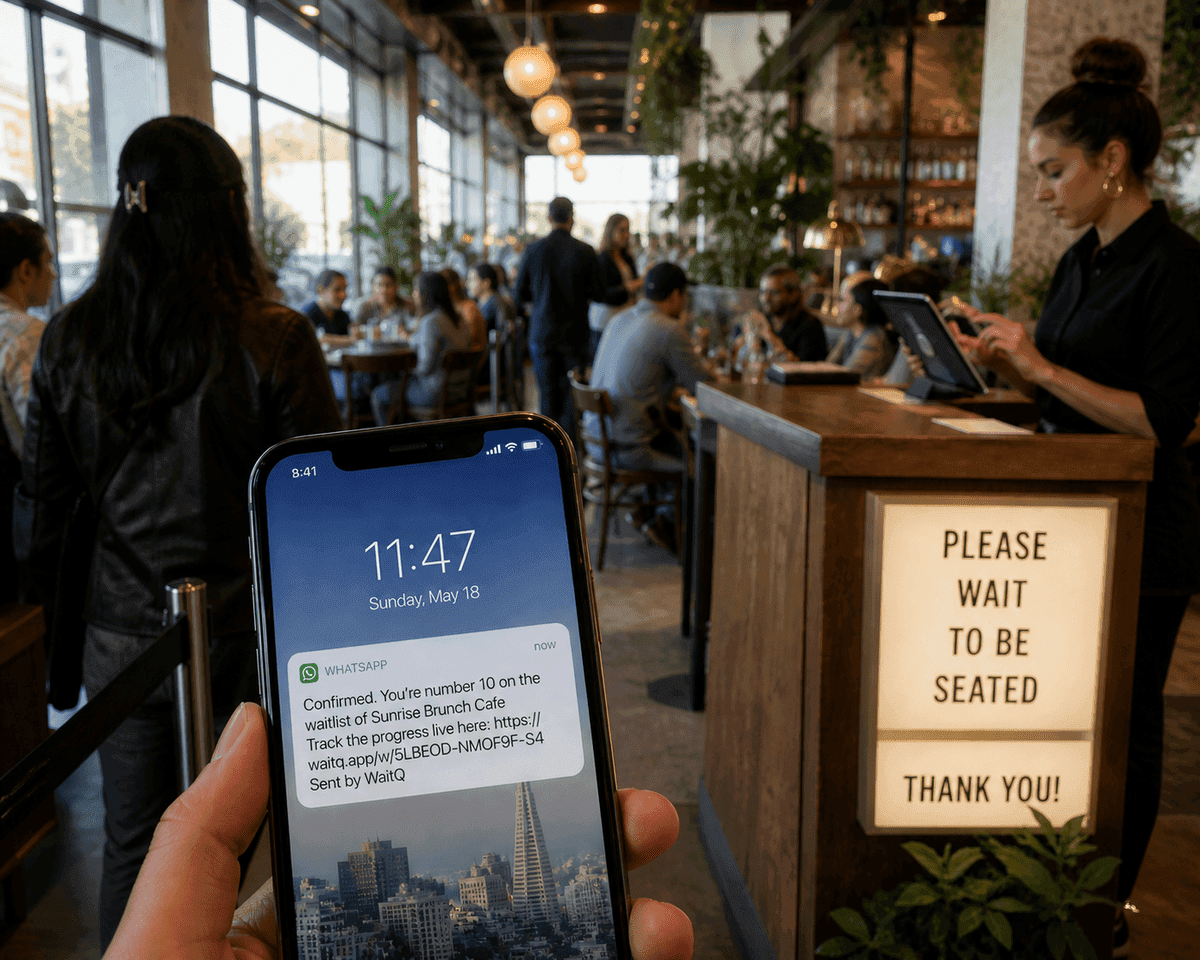
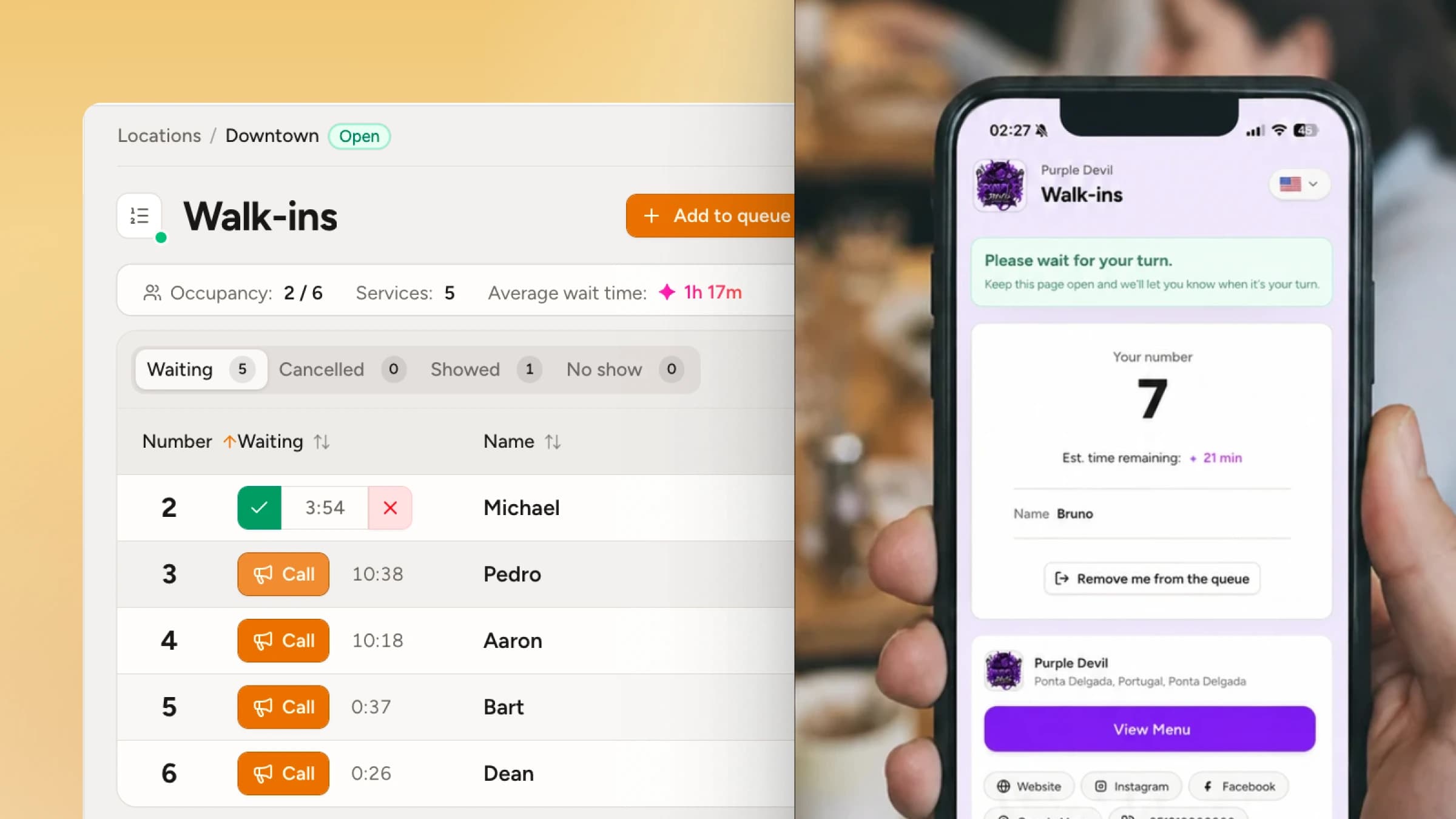
WaitQ is a modern virtual waiting software that reduces perceived wait times and keeps guests informed. Here’s exactly what we’re building and why it matters.

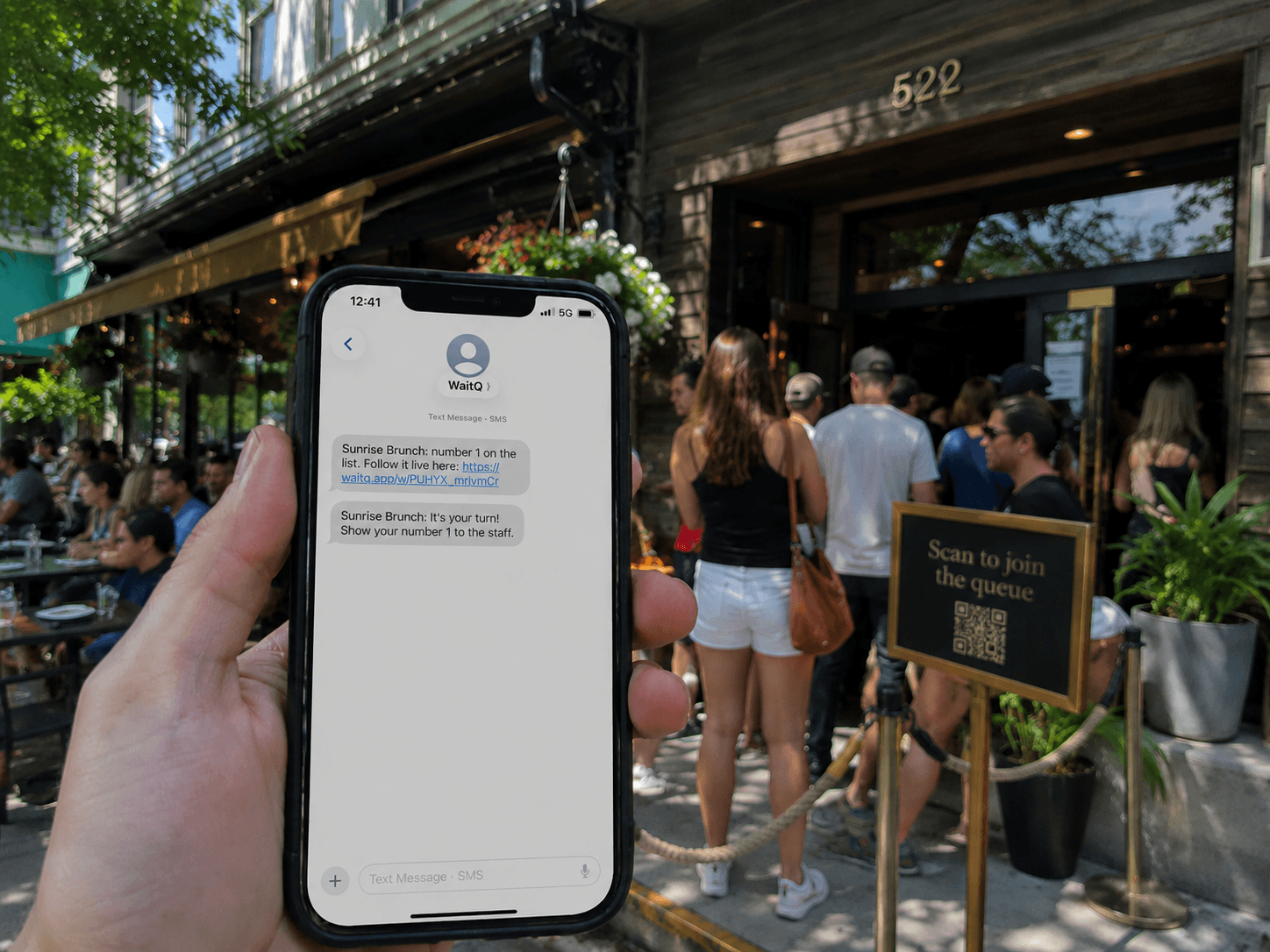
This guide includes ready-to-use text message templates for every stage of the wait, from initial confirmation to table ready alerts, plus tips for automating the entire process.
Looking to purchase? See how WaitQ compares.
Improve revenue, reviews, and repeat visits with a modern booking and queue system.