

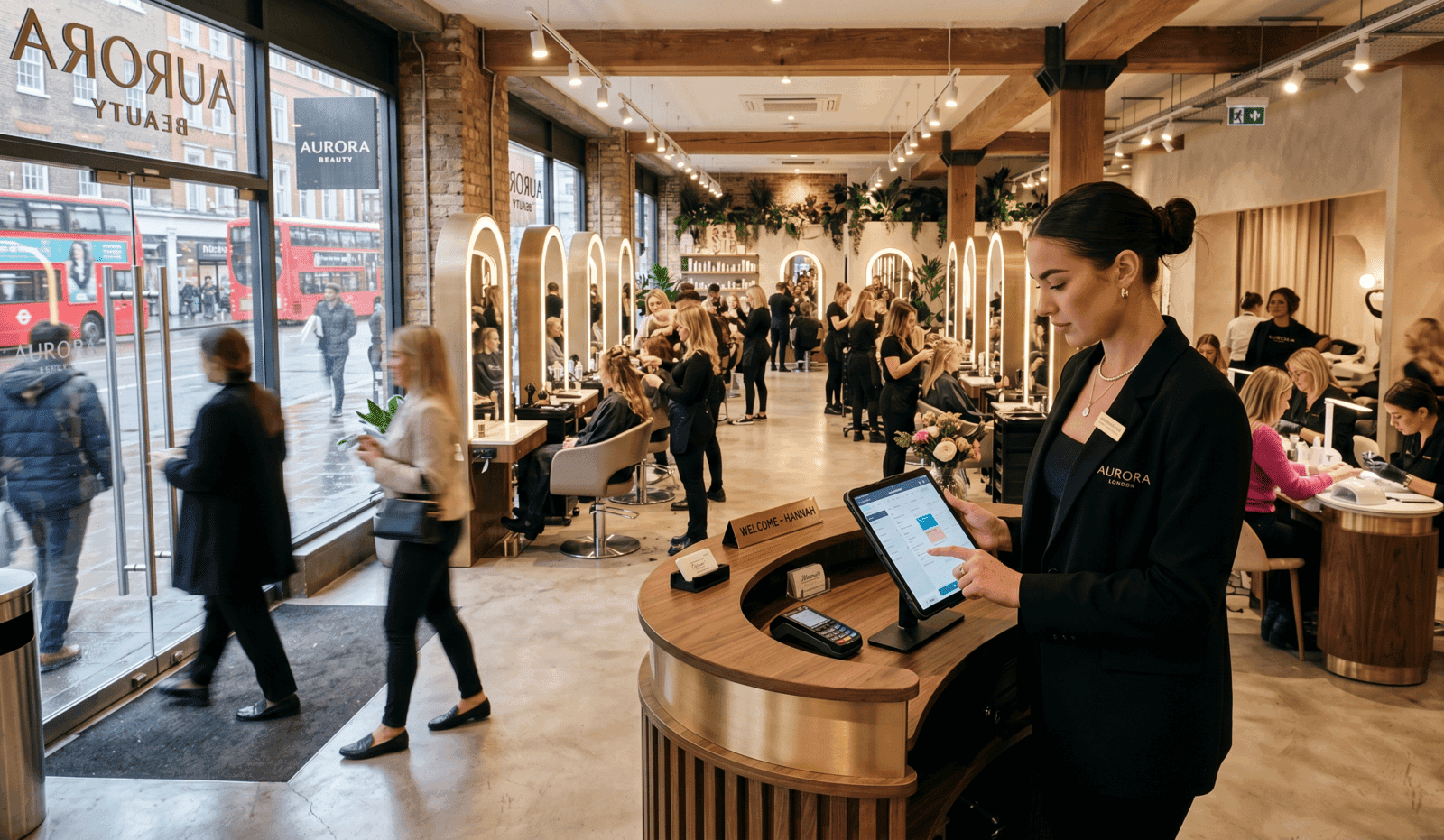
A client just arrived, your chairs are full, and your receptionist is fielding three "how much longer?" questions at once. This is the moment that separates salons with smooth operations from those losing revenue out the front door. Walk-ins represent real opportunity for salons, but only if you have systems to handle them without creating chaos.
Why walk-ins matter for hair salons
A walk-in client is someone who shows up without a pre-booked appointment. Managing them well typically involves using a digital queue system to reduce lobby crowding, setting specific walk-in hours during slower periods, and limiting services to quick, high-margin options like trims.
Just like what happens in barbershops or restaurants, walk-ins often become your most loyal regulars. A first-time visitor who stops by on a whim for a quick trim, has a great experience, and pre-books for years after is a common story in salons that handle arrivals well. Walk-ins also fill empty chairs during slow periods, turning downtime into actual revenue.
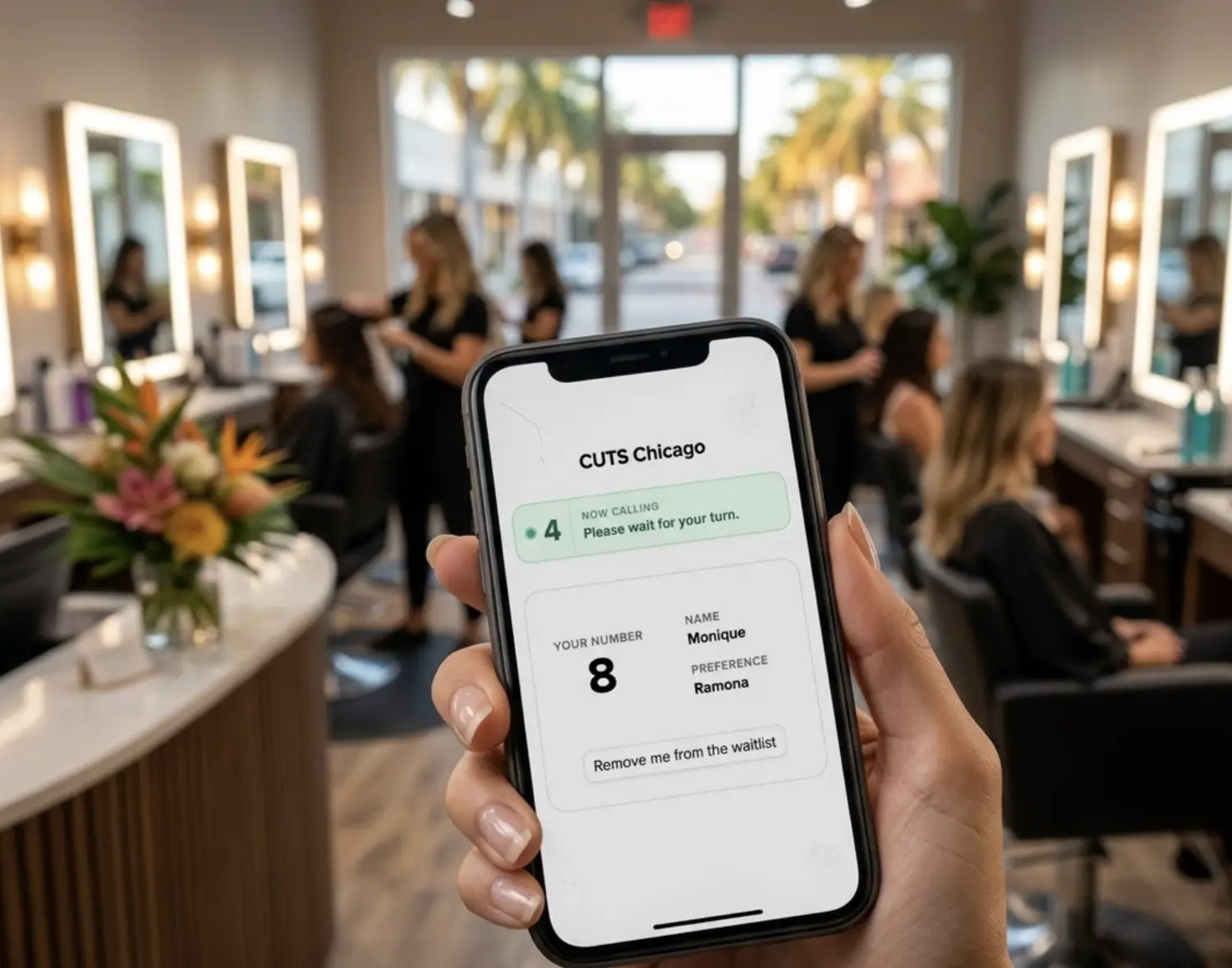 WaitQ's digital queing system at a salon.
Walk-in policy options for hair salons
Walk-ins and appointments aren't competing categories at a salon, they're two entry points into the same chair. A walk-in policy is a clear set of rules defining when and how your salon accepts clients without appointments. Even if your policy is simply "we don't take walk-ins," having one prevents inconsistent decisions that frustrate both staff and clients.
| Policy type | Best for | Trade-off |
| No walk-ins | Fully booked salons with loyal clientele | Misses new client opportunities |
| Limited walk-ins | Salons balancing regulars and growth | Requires clear communication |
| Open walk-ins | High-traffic locations or newer salons | Can overwhelm staff without systems |
No walk-ins policy
An appointment-only policy means you decline anyone who hasn't booked ahead. It protects your stylists' schedules and works well for established salons with full books. The trade-off is missing clients who discover you spontaneously, whether walking past or browsing nearby.
Limited walk-ins policy
A limited policy accepts walk-ins only during certain hours or for specific, quicker services, and by default use appointments. It's the most common approach because it balances predictability with flexibility. You might accept walk-ins only on Tuesday afternoons or only for services under 30 minutes.
Open walk-ins policy
An open policy means you accept anyone who walks through the door, whenever they arrive. It works well for high-volume, quick-service salons in busy locations. Without strong waitlist management though, it quickly creates chaos at the front desk.
Ways to handle walk-ins in salon scheduling
Scheduling is where walk-in management either succeeds or falls apart. These tactics help you fit walk-ins into your day without disrupting booked appointments.
1. Set specific walk-in hours
Walk-in hours are dedicated time blocks reserved for non-appointment clients. Start by looking at your booking data to identify your historically slower periods, then advertise those windows as your walk-in times. Weekday mornings between 9 and 11 a.m. or the last two hours before closing are common choices.
Tip: Post your walk-in hours on your front door, website, and Google Business profile so clients know exactly when to stop by.
2. Limit services for walk-in clients
Offering only quick services to walk-ins protects the time reserved for complex appointments. A 15-minute bang trim fits easily into a gap between bookings. A full balayage does not.
- Services to include for walk-ins: Trims, bang cuts, simple blowouts, beard trims
- Services to exclude for walk-ins: Color, balayage, perms, extensions, complex treatments
This distinction keeps your schedule predictable while still capturing walk-in revenue.
3. Assign a dedicated walk-in stylist
Designating one team member per shift to handle all incoming walk-ins protects the appointment flow for everyone else. It also gives newer stylists valuable chair time and client-building opportunities. Rotate the assignment so the responsibility stays fair.
4. Build buffer time between appointments
Buffer time is a short gap, typically 10 to 15 minutes, scheduled between regular bookings. Without it, one late client can derail your entire afternoon.
Buffers create flexibility in two ways:
- Squeeze in quick walk-ins: A 10-minute gap can accommodate a bang trim or a quick consultation
- Recover from delays: If an appointment runs long, the buffer absorbs the overflow instead of pushing back your next client
How to manage the waitlist during busy hours
Does telling walk-ins their wait time actually help?
Yes, significantly. Walk-ins are far more likely to leave when they don't know how long they'll wait. Studies show a shorter-than-expected wait boosts satisfaction 1.6 times more than a longer-than-expected wait hurts it, which means giving a specific number, even if it's not perfect, always beats a vague answer.
A digital waitlist tool calculates and displays wait times automatically. This cuts the constant "how much longer?" interruptions that pull your staff away from clients in the chair.
Let walk-ins check themselves in
Self check-in lets clients add themselves to the waitlist using a tablet, a digital kiosk, or by scanning a QR code on their phone. It removes the front-desk bottleneck during rush periods and frees your receptionist to focus on clients ready to be seated.
With WaitQ, clients check in without downloading an app. They scan a code, enter their name and service, and join the queue. The whole process takes about 30 seconds.
Display the queue publicly
A public display showing the current waitlist keeps clients informed and reduces waiting anxiety. When someone can see their place in line on a TV screen or tablet near the entrance, they feel comfortable stepping outside, grabbing a coffee, or browsing nearby shops without worrying about missing their turn.
It also cuts the number of times clients approach the front desk for an update. Instead of fielding the same question repeatedly, your staff can focus on managing the flow.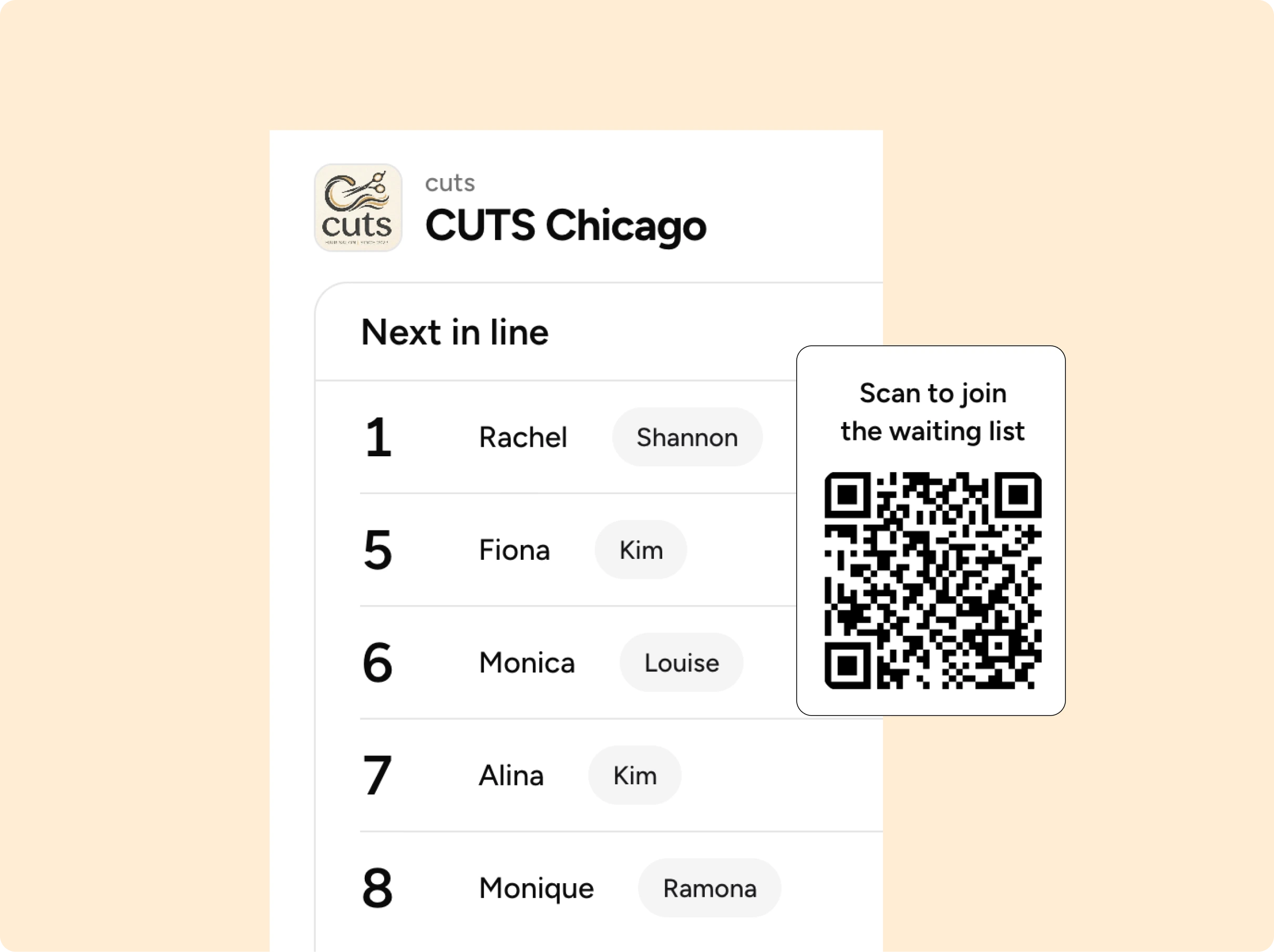
Technology to manage salon walk-ins
Modern waitlist tools that replace paper sign-in sheets can transform how you handle walk-ins. Three are worth knowing about.
Digital waitlist systems. A digital waitlist system tracks who's waiting, their place in line, and their estimated wait time. Look for real-time updates, SMS and WhatsApp notifications, and analytics to track performance over time.
Notifications. Text message and WhatsApp alerts let clients leave the waiting area and return just before their turn. Instead of crowding your lobby, they can wait in their car, run an errand, or sit at the café next door. With most modern systems, no app download is required. The client receives an SMS or WhatsApp message when their turn is approaching.
Scheduling software. An appointment booking tool that shows same-day availability at a glance helps your front-desk staff quickly spot open slots where a walk-in can fit. Pair it with a dedicated waitlist system: the scheduling tool handles booked appointments, the waitlist tool handles the queue of people who showed up without one.
How WaitQ helps salons handle walk-ins
WaitQ gives salons a single system to manage the full walk-in workflow. Clients check in via QR code, kiosk or a fully on-brand check-in page, join the live queue, and receive an SMS or WhatsApp notification when their stylist is ready. A public display shows the current wait so no one has to hover near the front desk.
Everything runs on your existing phone, tablet, or TV. Setup takes minutes, no hardware required, and clients don't need to download anything.
Start your free 7-day trial and see how your next busy Saturday feels different.
How to turn walk-ins into loyal clients
Every walk-in is a client acquisition opportunity. These steps help you convert one-time visitors into regulars who pre-book.
- Make a strong first impression. Even for a quick walk-in, the consultation matters. Greet them warmly, offer a drink, and take a moment to understand what they want before you start. Explaining what you're doing during the service builds trust and demonstrates expertise, making clients more likely to return.
- Manage the wait experience. Research shows 1 in 3 customers won't return after just one bad experience. A chaotic, crowded lobby with no information colors the entire visit, even if the service itself was excellent. A calm, organised entrance sets the tone for everything that follows.
- Book the next appointment before they leave. The end of the service is the best time to convert a walk-in into a regular. Clients who book online retain at roughly twice the rate of walk-ins, so offer to lock in their next visit right on the spot while they're still happy with their result.
- Encourage referrals. Word-of-mouth from a happy walk-in often carries more weight than advertising. Ask directly: "If you loved your experience, we'd really appreciate you telling your friends." A small referral incentive, like a discount on their next visit, can amplify the effect significantly.
A calmer door means more clients
Managing walk-ins well means less chaos at the front desk, fewer frustrated walkouts, and more revenue for your salon. The right system keeps your entrance calm, your clients informed, and your staff focused on the chair rather than fielding questions about wait times.
When walk-ins feel welcomed and informed from the moment they arrive, they're more likely to stay, enjoy the experience, and come back.
