

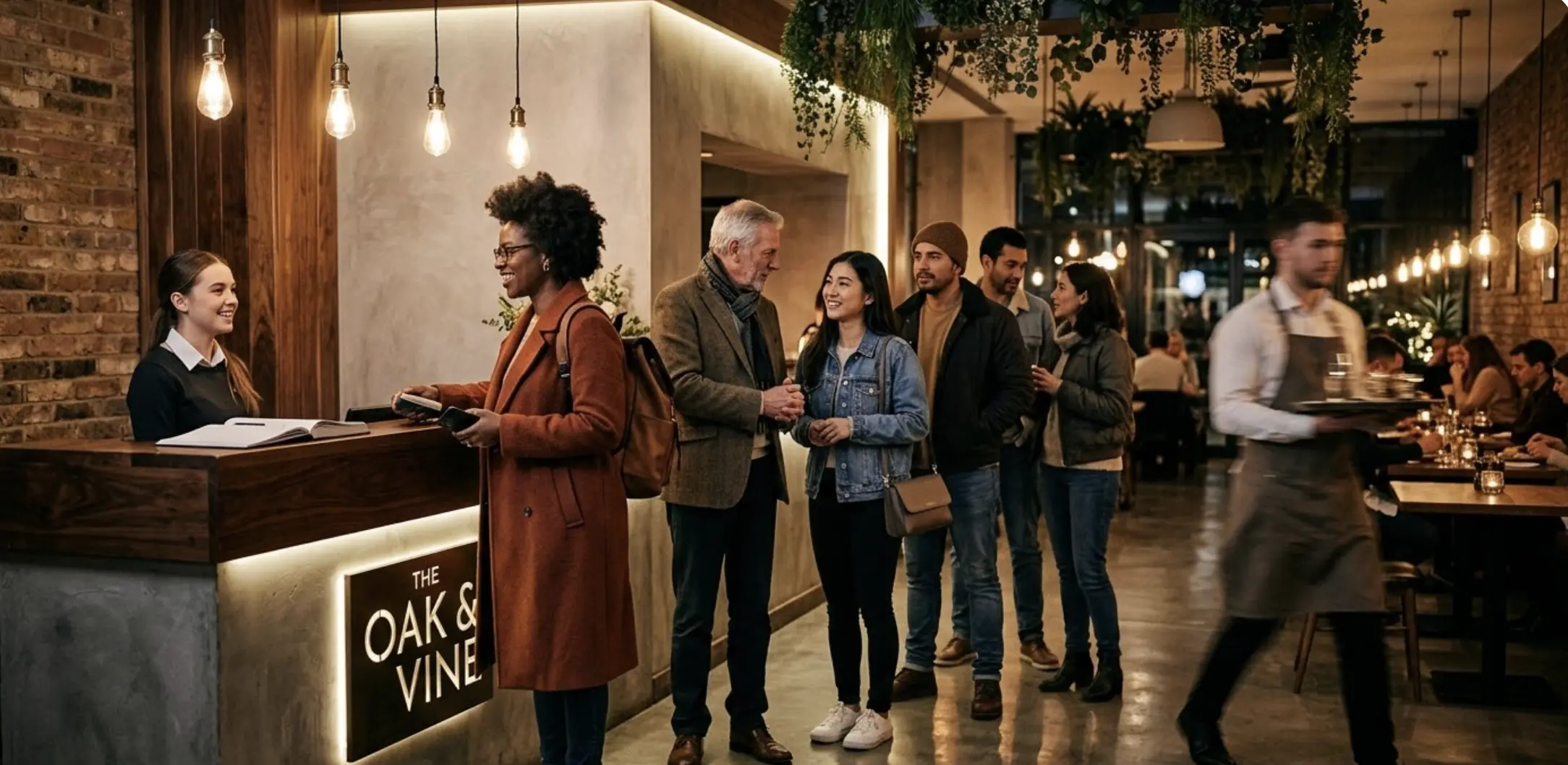
A walk-away happens when a guest leaves before being seated, usually because the wait feels too long or too uncertain. During peak hours, restaurants can lose 20 to 30% of walk-in guests this way, and every one of them is a table sitting empty while a paying guest walks toward a competitor.
The wait itself is rarely the actual problem. A guest who knows they have a 20-minute wait and can watch their position move up the list usually stays put. A guest staring at a clipboard with no updates starts wondering if somewhere nearby could seat them faster. Research on waiting psychology backs this up: uncertain, unexplained waits feel far longer than waits guests can track and understand, even when the actual time is identical.
What causes restaurant walk-aways?
Restaurant walk-aways happen when guests can't tell how long they'll wait, can't see their position in the queue, and have no comfortable place to wait besides a crowded entrance. It's the missing information that pushes people to leave, not the wait itself.
Three conditions show up again and again in restaurants with high walk-away rates:
- No visible wait estimate, or one that feels like a guess
- No queue position, so guests can't tell if progress is happening
- No way to wait elsewhere, which means guests stand in a crowded entrance with nothing to do
Fix those three conditions and most walk-aways stop before they start.
How many restaurant guests actually walk away?
Restaurants typically lose 20 to 30% of walk-in guests during peak service hours, based on industry wait time data. For a restaurant seating 200 walk-in parties a week with a 10% walk-away rate, that adds up to roughly 1,000 lost covers a year. This is ignoring potential repeat visits.
The cost doesn't stop at the lost table. Guests who leave frustrated by a wait are far more likely to leave a review about it than guests who had a smooth experience. Academic research analyzing tens of thousands of restaurant visits found that wait-related complaints show up disproportionately in negative reviews, which means a bad wait experience keeps costing you long after the guest has walked away.
How long will a guest wait before leaving?
Guest patience depends less on the clock and more on whether they can see progress. 72% of diners say they won't wait more than 30 minutes for a table, but that threshold shifts a lot depending on what information guests have while they wait. Penn State's School of Hospitality Management found patience runs thin after about 15 minutes for uninformed guests, even when the actual wait would have been acceptable.
| Guest situation | Walk-away threshold |
| No estimate, no updates | ~10–15 minutes |
| Accurate estimate given | ~20–25 minutes |
| Visible queue position + estimate | ~25–35 minutes |
| Off-site waiting with SMS update | 30+ minutes |
The pattern holds across service types: guests don't mind waiting nearly as much as they mind not knowing.
Best practices to fix a high walk-away rate
1 — Give an accurate wait estimate upfront
An inaccurate first estimate is one of the fastest ways to trigger an early walk-away. If you quote 15 minutes and it turns into 35, guests don't just leave frustrated. They stop trusting every estimate you give them for the rest of the night.
Research on wait time accuracy shows that providing an accurate estimate reduces perceived wait time by up to 20%.
Quote conservatively and add a 10%-15% buffer to your estimate. If you think the wait is 20 minutes, quote 25 and seat guests a little early when you can. Avoid vague ranges like "15 to 30 minutes," since most guests anchor to the lower number and start counting from there.
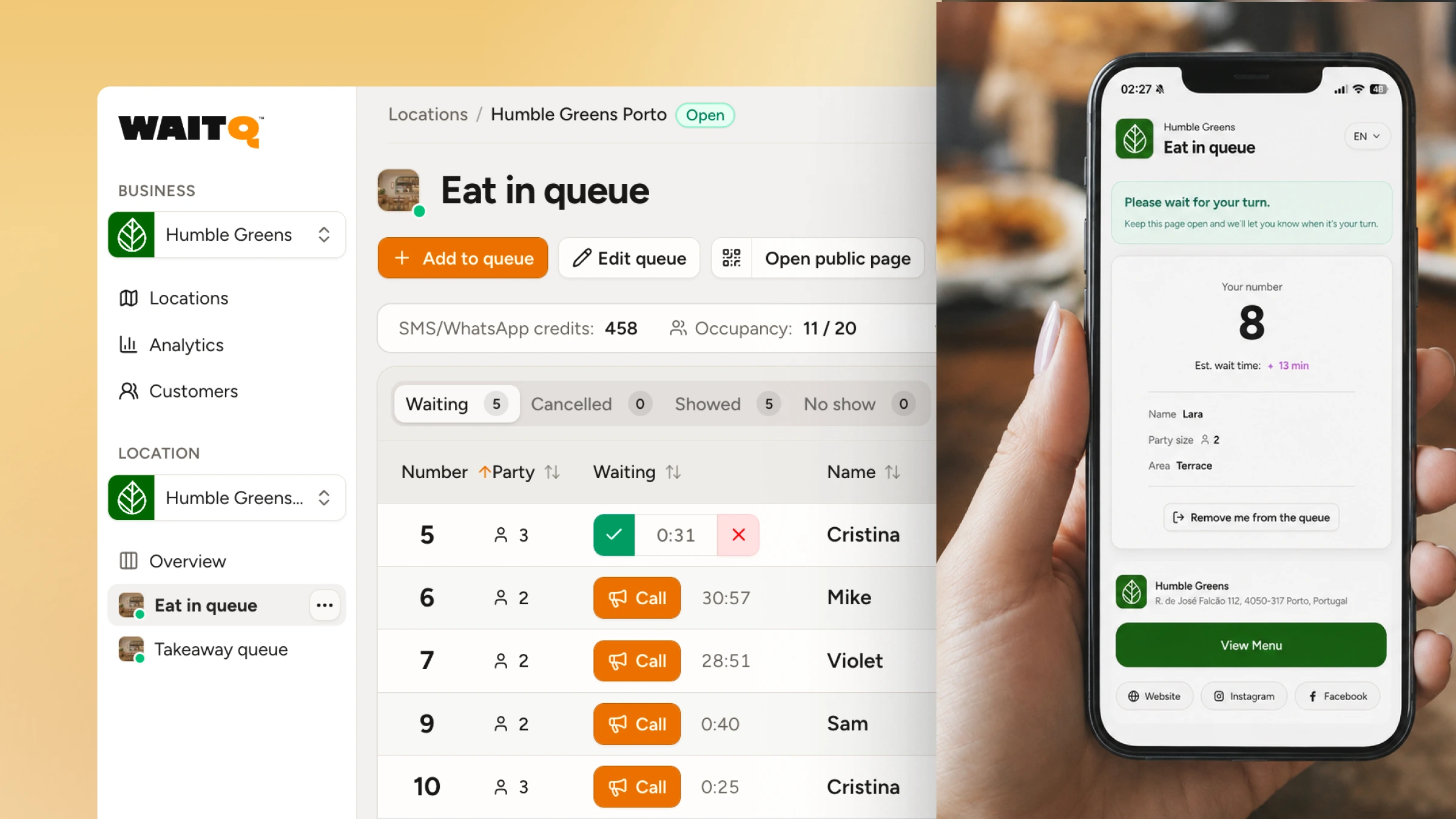
A digital queue system removes the guesswork by calculating estimates from live table-turn data and updating them automatically as tables open up, instead of relying on a host's gut feel during a rush.
2 — Show guests their queue position, not just a time
Watching your position move from 6 to 4 to 2 changes how a wait feels, even when the actual time hasn't changed. A guest with no updates has no way to know if they're forgotten or five minutes out, so anxiety builds the longer they stand there.
A few ways to make queue position visible:
- A public display screen near the entrance showing live positions
- A branded virtual waiting room guests can check from their own phone
- Letting guests wait off-site (in their car, at a nearby bar) while tracking their spot remotely
3 — Allow self check-in
A great move to improve customer experience and flow at your restaurant is to remove any bottleneck at the host stand. When guests are empowered to join without the need for staff, the first friction point that triggers walk-aways disappears.
What is self check-in and how does it reduce walk-aways?
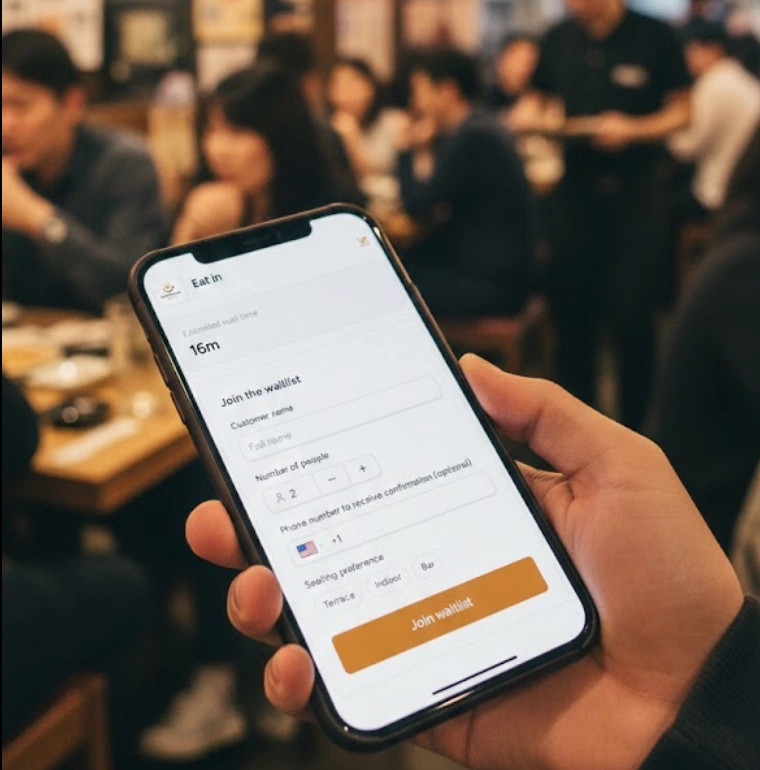
Self check-in lets guests join your restaurant queue without calling or waiting for a host. It's usually done through a QR code check-in displayed at the entrance that takes about 30 seconds to enter a name and party size.
An evolution of self check-in is pre-arrival check-in, when you allow guests to check in from the parking lot or before leaving home. You enable this by setting up a customer arrival/check-in page and sharing the link in your website, socials or Google Business profile. People that check-in this way don't experience the wait at all, which means there's no decision to leave.
For a closer look at how self check-in compares to a host manually adding every guest, see this comparison.
Set up a branded check-in page with WaitQ
See how you can deliver a modern customer experience from the first digital touchpoint.
4 — Send a text when the table is ready
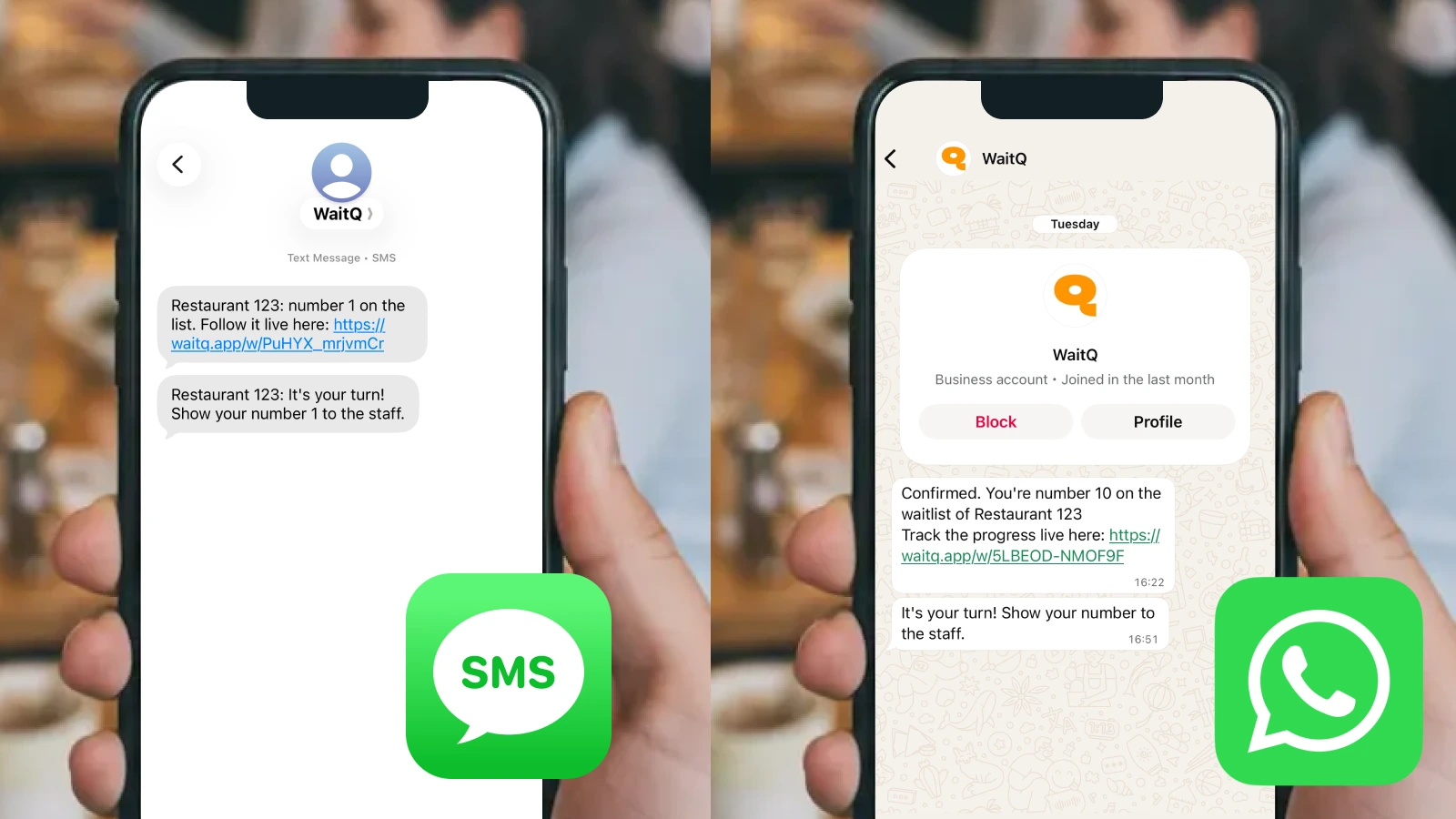
A text message lets guests leave the entrance area completely and wait in their car or next door without missing their turn. SMS open rates run close to 98%, which is about five times higher than email, so a text notification is close to a guaranteed read.
WhatsApp is also a reliable alternative in markets where it's the default text channel.
Automatic SMS and WhatsApp notifications remove the scattered, shouted announcements that happen when a host tries to track down guests by name across a crowded waiting area.
5 — Use wait data insights to find your walk-away pattern
Most restaurants know walk-aways happen. Almost none know when they happen, which parties are most likely to leave, or how the number changes week over week. That missing data is where the problem lives.
Wait analytics turn walk-aways from a vague feeling into a number you can act on, including whether a specific Friday shift needs another host at the door. Most digital waitlist software for restaurants are able to track this automatically.
How to find your restaurant's walk-away pattern?
You find your walk-away pattern by tracking how many queued guests leave before being seated, broken down by hour, day, and party size, so you can see exactly when and why people give up.
| What to track | What it tells you |
| Walk-away rate by hour | When the problem peaks |
| Walk-away rate by party size | Whether large groups leave faster |
| Quote accuracy | Whether your estimates are causing abandonment |
| Week-over-week trend | Whether your fixes are working |
Waitlist data also informs staffing decisions. If the data shows Friday 7–8pm has a 35% walk-away rate, that's an argument for a dedicated host in that window. Gut instinct says "Fridays are busy." Data says "add coverage from 6:45pm."
How WaitQ helps restaurants reduce walk-aways
WaitQ replaces the paper list and clipboard with a digital queue management system built around the exact things that stop walk-aways: live wait estimates, a visible queue position for every guest, self check-in, and automatic SMS and WhatsApp alerts when a table opens up.
Setup takes less than teb minutes on devices you already own, phones, tablets, or a screen at the entrance. No app downloads, and no proprietary hardware to buy. Every plan includes unlimited guests, so you can see your walk-away pattern accurately from day one.
Walk-aways are a measurement problem before they're a management problem
You can't fix a leak you haven't found. Most restaurants don't know their actual walk-away rate; they manage walk-aways by instinct because they have no system that counts them. Once you have that number, you can see how many guests you're losing, and when, you can test fixes and watch the number move instead of guessing.
Start with the estimate accuracy and queue visibility fixes above. They're the fastest to set up and tend to make the biggest first dent in your walk-away rate. From there, self check-in and SMS alerts close most of what's left.
Ready to stop bleeding guests? Start WaitQ for free right in time for your next busy shift. Setup takes just a few minutes, and your first 7 days are free.
