

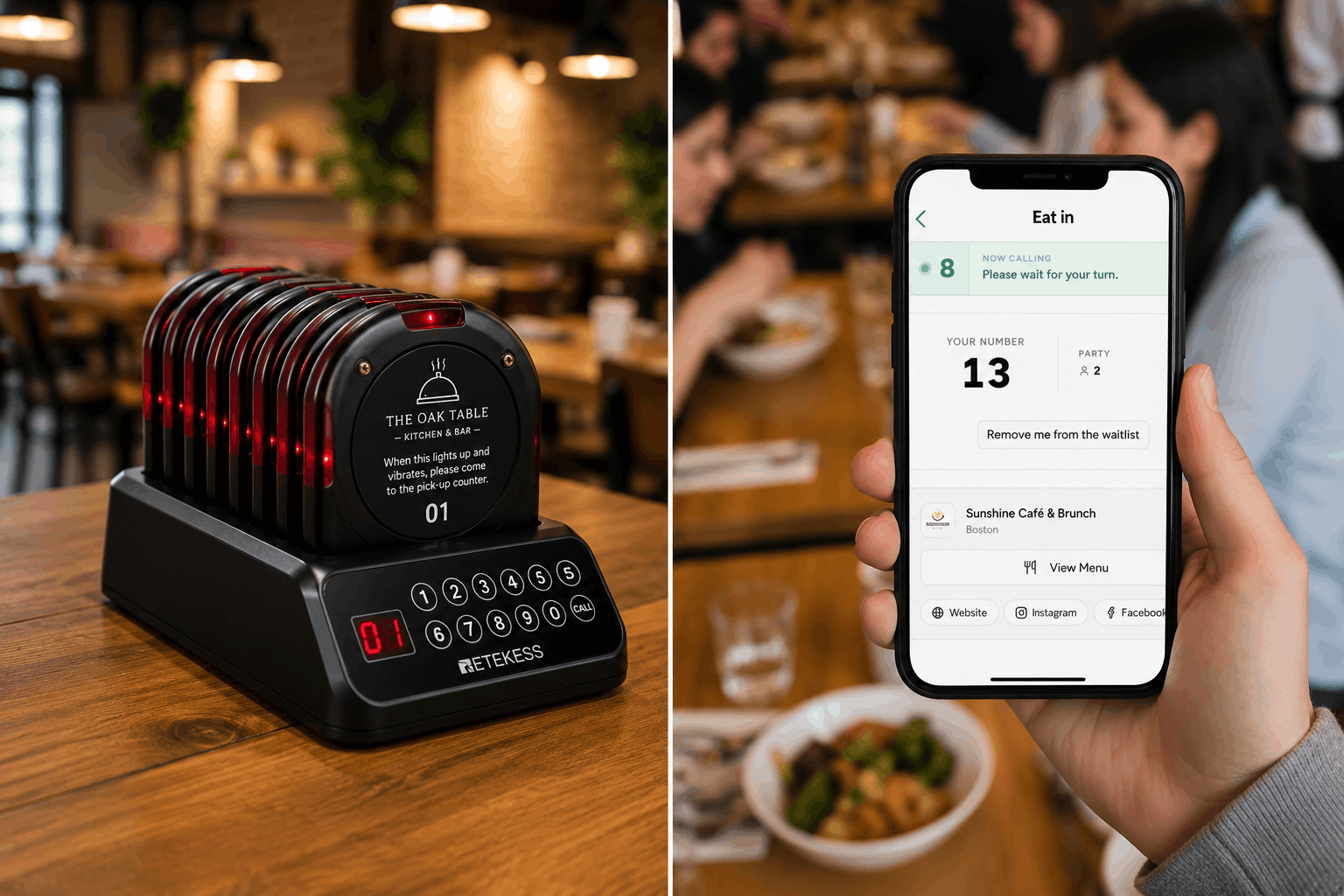
Digital queues vs. pagers and buzzers at a glance
| Digital queue | Pagers and buzzers | |
| Upfront cost | None. Browser-based, works on existing devices | $10-$60 per unit, more for bulk systems |
| Ongoing cost | Flat monthly subscription | Replacement units, battery/charging base upkeep |
| Range | Unlimited. Guests get an SMS or WhatsApp message wherever they are | Limited to the restaurant's transmitter range |
| Communication | Two-way. Guests can message back | One-way. Device buzzes, nothing more |
| Loss/damage risk | None. Nothing physical changes hands | Ongoing. Units get lost, dropped, or walk off with guests |
| Hygiene | No shared hardware | Requires disinfecting between uses |
| Data and analytics | Wait times, no-show rates, guest history tracked automatically | None |
| Setup | Live in minutes, no hardware to install | Requires purchasing, charging, and maintaining a hardware fleet |
Why restaurants are moving off pagers
Predictable cost
A basic 10-pager set runs somewhere between $100 and $300, and busier restaurants need more than 10 units on a Friday night rush. That's before accounting for the units that get dropped, drained, or never returned.
On the other hand, a restaurant queue management system runs on the phones, tablets, and computers a restaurant already owns, so there's no hardware to buy or replace. It's a flat monthly cost instead of a recurring hardware line item.
Pagers stop working the moment guests leave the block
Guest pagers rely on a short-range transmitter. Guests who wander too far, step into a store with thick walls, or head across the street lose the signal and risk missing their table.
A digital waitlist or queue sends an SMS or WhatsApp message instead, which works anywhere there's cell signal. Guests can shop, grab a drink next door, or wait in the car without worrying about range.
Pagers don't tell owners anything about how the night went
A pager's job ends the moment it buzzes. It doesn't record how long guests actually waited, how many walked away before being seated, or which nights run over quoted wait times. Access to wait analytics are one of the big advantages of having a queue management system.
A digital waitlist logs all of that automatically, turning a Friday night rush into data an owner can actually act on the following week.
Every lost or broken pager is a repeat cost
Pagers change hands constantly. Guests forget to return them, drop them, or walk off with them in a stroller bag. Each one lost is a unit the restaurant has to replace out of pocket. A digital waitlist has no physical component to lose, since notifications go straight to a guest's own phone.
Shared hardware means shared germs
Every pager handed out has already passed through dozens of other hands that day. Restaurants that take hygiene seriously have to wipe down every unit after each use, which adds a step to an already busy host stand. Digital waitlist software removes the shared object entirely. Guests join with their own phone via QR code, and updates arrive on that same phone.
Pagers add up to real electronic waste
Pager fleets wear out, and worn-out electronics don't disappear cleanly. Electronic waste is now the fastest-growing waste stream in the world, and most of it isn't recycled properly. A digital waitlist runs on hardware that already exists, so there's no additional device fleet to eventually throw away.
What guests actually want while they wait
Guests don't mind waiting as much as they mind not knowing how long the wait will be. Research on restaurant wait times shows that uncertainty, not the wait itself, is what drives guests to leave before being seated. A pager tells a guest nothing until it buzzes. An online queue can show a live position and an estimated wait the whole time, which is closer to what keeps people from walking away. WaitQ's own look at restaurant wait time data breaks down how much a poorly communicated wait actually costs a restaurant in lost covers.
When a pager system still makes sense
Pagers aren't obsolete everywhere. They can still be the right call for restaurants where a meaningful share of guests don't carry a smartphone, or where a physical device to hand over is part of the brand experience at the front door.
For most table-service restaurants working with a smartphone-carrying customer base, though, the cost, range, and data limitations of pagers or buzzers are hard to justify next to a virtual queuing system.
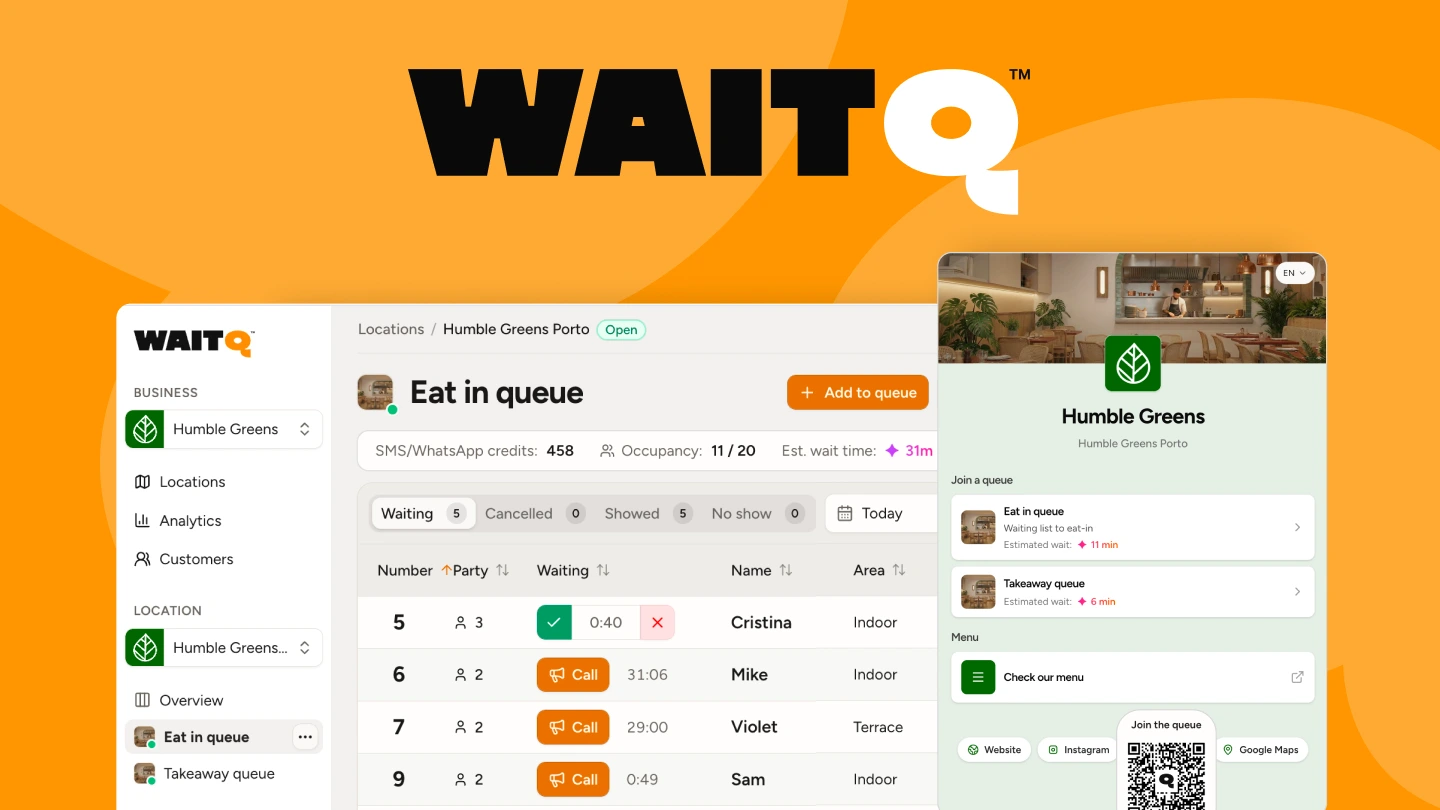
What to look for in a digital waitlist system?
Not every restaurant waitlist software covers the same ground. Before switching from pagers, check that a platform includes:
- QR code self check-in, so guests can join without a staff member entering their details manually
- SMS and WhatsApp notifications, not just SMS, since WhatsApp has stronger reach in a number of markets
- A public queue display option for the entrance or waiting area
- Wait time and no-show analytics built in, not sold as an add-on
- Ideally, a browser-based staff interface that works on any phone, tablet, or kiosk without having to buy hardware
- Unlimited guest visits with flat monthly pricing, so a busy month doesn't come with a surprise bill
Why restaurants choose WaitQ over a pager system
WaitQ is a queue management and appointment system designed for busy restaurants. It includes QR code check-in, push, SMS, WhatsApp and email notifications, a public queue display, and wait time analytics on every plan.
There's no hardware to buy and no visit caps or per-visit fees on any plan, so pricing stays flat no matter how busy a night gets. Setup takes about 5 minutes, and staff can run the whole waitlist from any phone, tablet, or kiosk they already have. Try for free with a 7-day trial.
