

Walk-away Cost Calculator
Every long line has an exit. This tool estimates the walk-away revenue you lose when customers give up and leave before they are served.
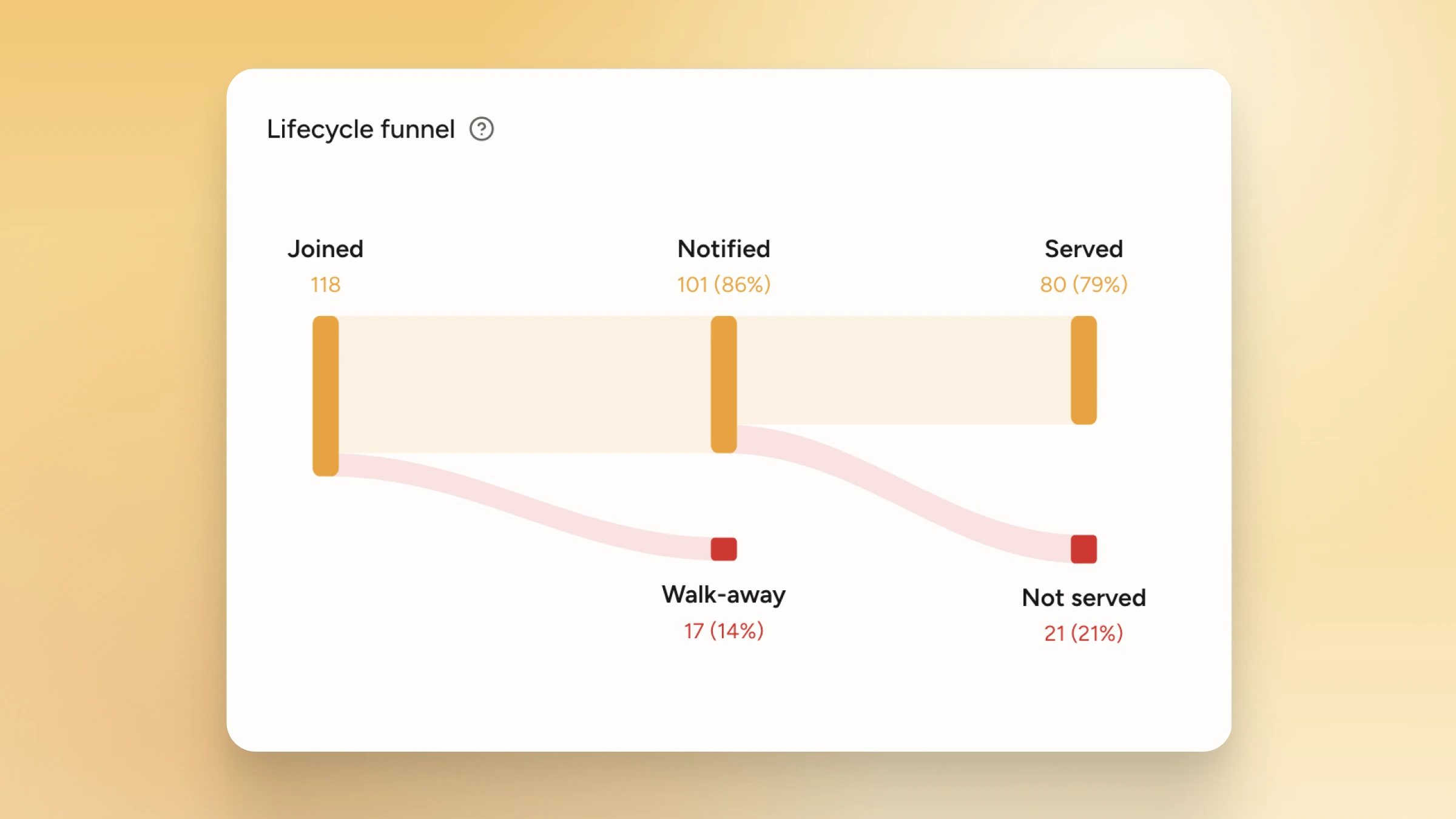
Queue management systems have other benefits
Your walk-away loss is the number you can calculate today. Here are the three gains that don't show up in it.
Staff time
Every minute a staff member spends running the line by hand is time you pay for. If a host saves even 30 minutes a shift, that adds up to $1,500 to $2,100 a year.
Reputation
Shorter waits mean fewer bad reviews and more people coming back. Harvard Business School research found that one extra star on a restaurant's Yelp page is linked to 5 to 9 percent more revenue.
Real data
Every check-in feeds your data on peak-hour staffing, average wait by day, and walk-away rate by shift. This makes running operations easier instead of just guesswork.
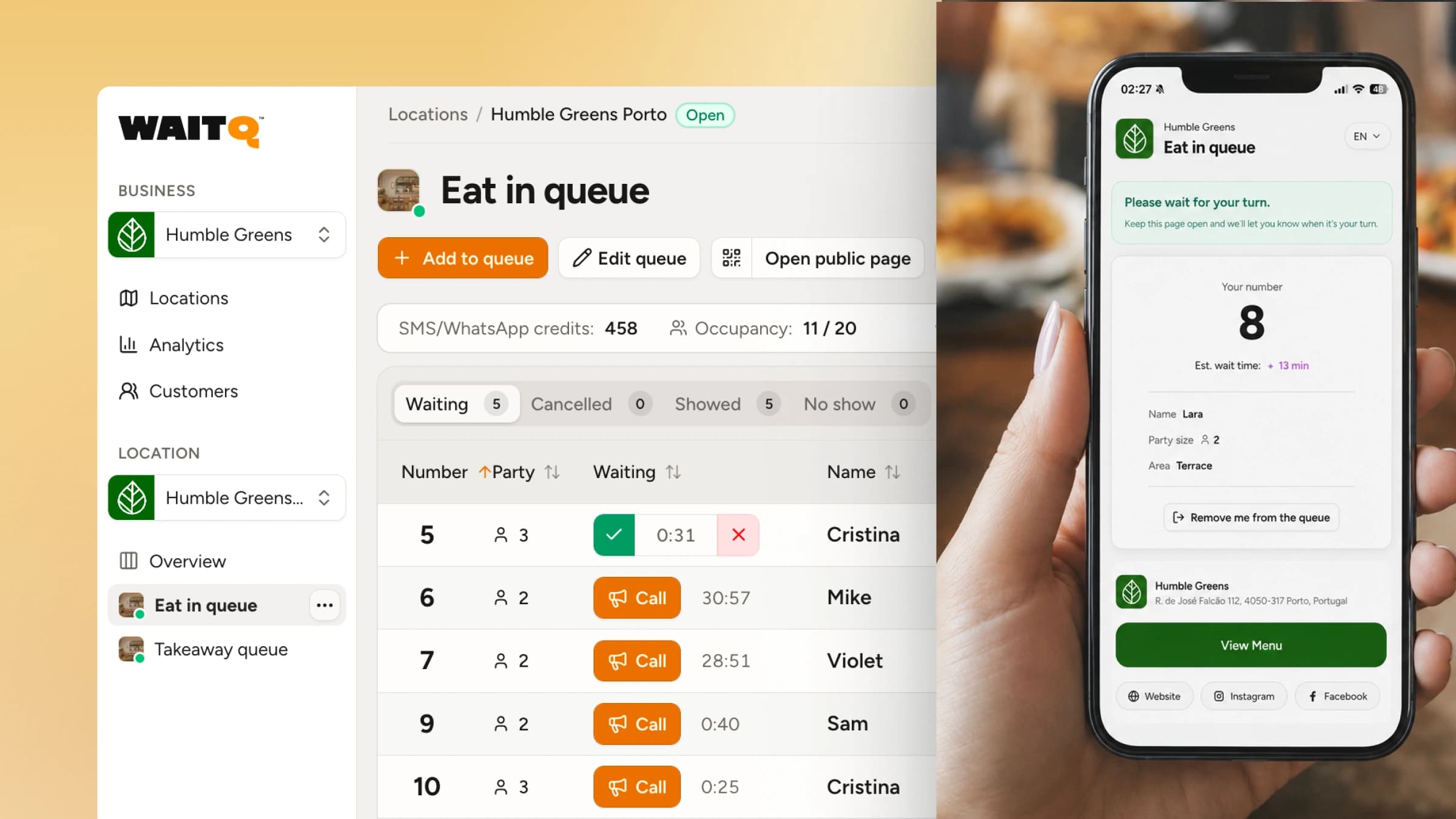
You've seen the number. Here's the fix.
WaitQ replaces the paper list with a QR check-in your customers scan in seconds. They get a live wait time on their phone, you get a queue that runs itself.
- Cut walk-awaysCustomers see their position and stay nearby instead of leaving
- Free up your staffNo more running the line by hand or calling names across the room
How we calculate this
yearly walk-away revenue = customers per week × walk-away rate × average customer value × 52
We take how many customers you get in a week, the share who leave before they are served, and what an average customer spends. Multiply those together, then multiply by 52 weeks. Payback in calendar days = monthly plan price ÷ (yearly walk-away revenue ÷ 365). This assumes all lost visits are recovered evenly throughout the year; actual recovery may be lower. Revenue is not profit.
Clinics: revenue per visit varies a lot, so that field is optional. Leave it blank and the calculator shows missed visits a year, using an illustrative $100 per visit for the payback line only.
Restaurants, about 10%: a well-run waitlist holds near 10%, and industry data puts the average closer to 18%, so roughly 82% of waitlisted parties get seated. Sources: Tablein, Wisely.
Retail, about 11%: around 11% of shoppers drop a purchase for good when a line is too long, and about a third leave a line after five minutes. Sources: eMarketer, NACS.
Salons and barbershops, about 15%: salons average near 15% and barbershops run 10 to 15%, higher without reminders. Sources: Goldie, Bookwize.
Clinics, about 19%: the primary-care no-show rate is commonly put at 18 to 20%, with a wide range by specialty. Sources: Curogram, Dialog Health.
Walk-ins shouldn't walk-away
Set up your queue in a few minutes and start keeping the customers who used to walk.