


How much revenue does a queue management system actually save?
A queue management system, also known as waitlist management system, earns its cost back in different ways:
- Recovered revenue from walk-aways - we've already priced it in detail for restaurants and barbershops.
- Staff time. The wage of whoever's running your line, multiplied by the minutes they spend managing it by hand instead of serving customers.
- Reputation. A better waiting experience means fewer bad reviews and more repeat visits, and reviews carry a measured revenue effect of their own.
- Access to data. A digital queue captures a customer database and operational numbers a paper list never produces, turning staffing and marketing decisions into planning instead of guesswork.
Here's what changes once you take into account everything and why the real ROI number usually runs higher than anticipated.
Reducing walk-aways
Long lines don't just delay a sale. They kill it, and faster than most people would guess.
Restaurant guests who can see their position in a queue and receive a status update stay significantly longer than guests handed no information at all. This is valid from single-location restaurants all the way to brands with multiple branches.
In retail, American shoppers are likely to abandon a checkout line entirely after an eight-minute wait, leaving the store with no purchase, while British shoppers hit that same breaking point closer to six minutes. More than ¾ of Americans in the same study said a bad wait experience made them less likely to return to that store again, which turns one walk-away into a longer-term customer loss.
The formula behind this lever is simple: how many customers you see, multiplied by your walk-away or no-show rate, multiplied by what an average customer is worth.
Walk-away lost revenue = Number of customers x Walk-away rate x Average customer value ($)
How much are walk-aways actually costing you? 💸
See how much revenue your business could be recovering right now.
Optimizing staff time
Every minute a host, stylist, or front-desk agent spends calling names off a paper list instead of serving the next customer costs real wages. That cost sits right next to the revenue lever, and yet it's the angle most ROI breakdowns skip entirely. The formula runs differently from the one above: the wage of whoever's running your line, multiplied by the minutes they spend managing it by hand instead of serving customers.
We price this out by business type below, starting with restaurants, where it turns out to be easier to quantify than most owners assume.
Staff time lost revenue = Hourly wage ($) × minutes spent managing queue manually
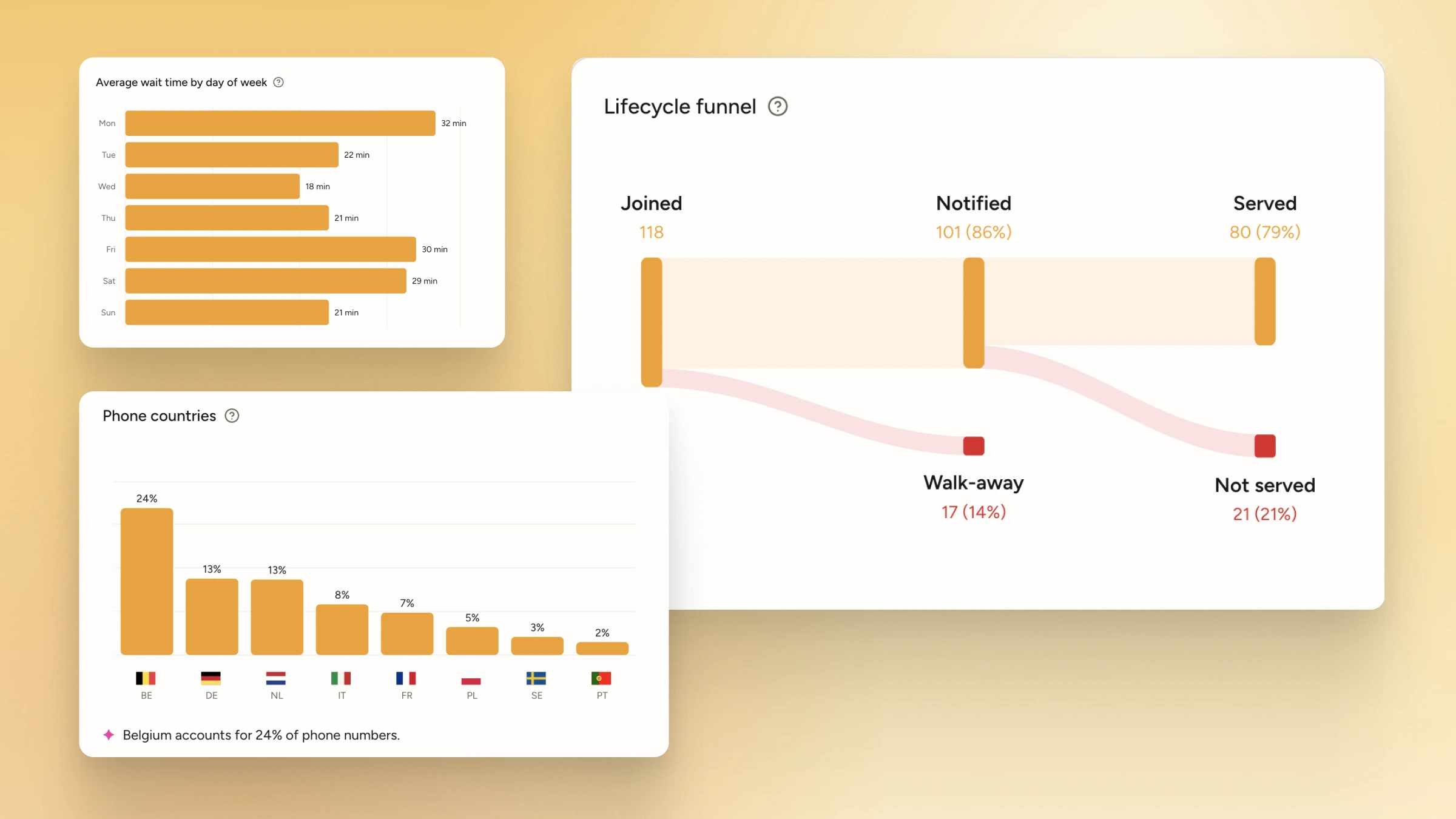 WaitQ allows you to see deep analytics on your queues and customers, improving operations on the long-term.
Improving reviews and reputation
A long or unpleasant wait is one of the more visible reasons a customer leaves a bad review, and reviews carry a measured price tag: a one-star increase in a restaurant's Yelp rating leads to a 5-9% increase in revenue, according to a Harvard Business School study, an effect driven mostly by independent restaurants rather than chains.
Think about the long-term chain here too. A long wait lowers satisfaction, lower satisfaction lowers the odds a customer comes back.
Getting access to data
A paper list or a whiteboard produces nothing you can use afterward. On the other hand, a digital queue produces two things at once: a customer database and an operational improvements.
Every check-in captures a phone number or email, often the first structured customer list a walk-in business has ever had. That list carries real marketing value, separate from the three levers above.
On the operational side, a paper queue can't give you insights on peak hours, average wait, and no-show patterns by day and by service. Those numbers turn staffing and ordering decisions into planning instead of guesswork.
Which business types see the biggest ROI from a queue system?
The size of the return depends on which lever carries more weight for your business. Restaurants and retail draw from both staff time and walk-away revenue. Hotels lean on guest satisfaction and staffing capacity. Barbershops and salons lean almost entirely on the cost of a missed appointment.
| Business type | Primary ROI lever | What the data shows | Go deeper |
| Restaurant | Staff time reclaimed | A host's hourly wage sets the real cost of managing a line by hand, per shift | Restaurant wait time data |
| Hotel | Guest satisfaction and staffing capacity | Satisfaction can drop by 50 points once a wait crosses a nationality-specific threshold, as low as 5 minutes for US guests | See below |
| Barbershop | Walk-away revenue | A single walk-away can represent several visits worth of lost revenue over a year | Barbershop walk-in data |
| Salon | Walk-away and no-show revenue | Revenue leaks from both the door and the book | Salon statistics |
| Retail | Walk-away revenue and staff efficiency | Checkout and fitting-room queues cost sales and staff hours at once | Retail queue management |
| Clinic | No-show cost | The average no-show costs around $196 per missed visit | See below |
Restaurants: what a host's reclaimed time is worth
We've already priced the walk-away side of restaurant ROI in our restaurant wait time breakdown. The side that's harder to find good numbers on is staff time, and it's worth pricing properly.
Hosts and hostesses in the US earn between roughly $12 and $17 an hour at the 25th and 75th wage percentiles, according to Bureau of Labor Statistics wage data. A host spending even 30 minutes of a dinner shift calling names off a paper list or answering the same "how much longer" question is spending real, priced labor on a task a self-service check-in removes almost entirely.
Multiply 30 minutes across five dinner shifts a week and fifty operating weeks a year, and that's roughly 125 hours of a host's time annually. At the wage range above, that's somewhere between $1,500 and $2,100 a year in reclaimed labor cost, per host, before a single recovered cover gets counted. Restaurants running two or three hosts across peak shifts see that number multiply directly, stacking on top of the walk-away revenue already covered in our wait time data.
Hotels: why the lobby line costs more than guests let on
Hotel guest satisfaction doesn't decline slowly. Cornell's Center for Hospitality Research found that American guests' satisfaction index falls by 50 points once a check-in wait crosses five minutes, with Canadian guests reaching that same breaking point around seven minutes. A hit that size shows up in reviews and in repeat booking rates.
Staffing makes it harder to fix quickly. 65% of hotels surveyed by the American Hotel & Lodging Association report staffing shortages, so reclaiming even a few minutes per check-in through self-service isn't just a cost saving, it's what keeps a short-staffed front desk workable during a surge. A queue and check-in system gives guests an accurate wait or a self-check-in option doesn't just protect satisfaction scores, it keeps the front desk from becoming the bottleneck during a staffing gap.
Barbershops, salons, retail, and clinics
- Barbershops. A walk-in who leaves without being seen isn't just one lost visit. Regular clients return roughly seven times a year, so a single walk-away can represent a relationship worth far more than that day's ticket.
- Salons. Revenue directly leaks from two directions here: walk-aways at the door and no-shows on the book.
- Retail. Checkout and fitting-room queues cost retailers the same way they cost restaurants: lost sales on one side, staff hours spent managing the line instead of the floor on the other.
- Clinics. A multi-year study across ten clinics found an average no-show rate of 18.8% translated to a per-patient cost of about $196 once wasted prep time and an empty appointment slot are factored in.
How much are walk-aways actually costing you?
See how much revenue your business could be recovering right now.
How long does it take a queue system to pay for itself?
Overall, most businesses managing walk-ins recover the cost of a queue management system within a matter of days. In some cases, it takes just a single salvaged customer, who would otherwise walk away, to cover the investment done in platforms like WaitQ.
ROI breakdown example
Let's suppose a restaurant on WaitQ's Grow plan, $49/month. A customer joins the queue from their phone, walks off to browse nearby shops, and gets a text message the moment their table's ready. Instead of going elsewhere to eat, they come back, sit down, and spend $50 on their meal. That single customer already covers the entire month subscription.
Other more expensive enterprise-oriented tools can take longer, one to three months once revenue and staff-time savings are counted together.
Restaurants and retail tend to land at the faster end, since both levers apply immediately and stack on top of each other. Hotels and clinics often see staff-time and reduced-disruption savings show up first, since those are easier to isolate week to week. Guest satisfaction and patient retention gains tend to compound over a longer horizon, adding to the return past the initial payback period.
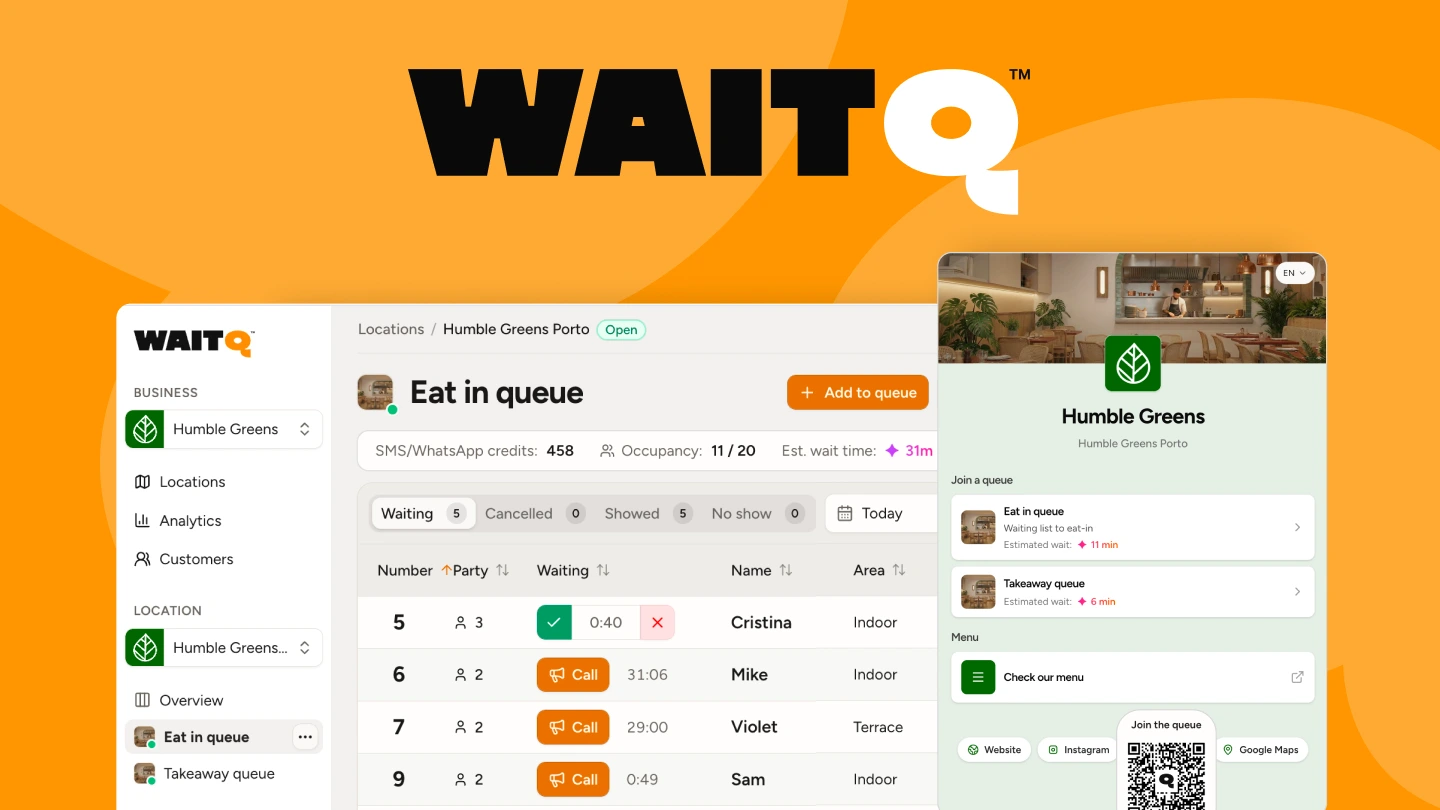
How WaitQ ties into all these four levers
Staff-triggered SMS and WhatsApp notifications call customers forward the moment their turn comes, which is the mechanism behind the walk-away recovery side. A browser-based staff interface replaces the paper list or spreadsheet, which is where the staff-time savings actually happen: no manual name-calling, no rewriting a queue by hand mid-shift.
The reputation lever benefits from that same mechanism: shorter, more predictable waits mean fewer of the bad experiences that turn into bad reviews. And every check-in feeds WaitQ's analytics, turning the customer and operational data covered above into something a business can act on instead of losing it the moment the line clears.
If you want to see ROI apply to your own business, from a single restaurant to a multi-location hotel group, WaitQ's plans are built around unlimited visits and bookings, so the math above doesn't cap out the moment the system pays for itself. Plans start from $27/month, with unlimited customer visits included on every tier.
The real ROI is bigger than most owners assume
The revenue lever gets most of the attention because it's the easiest one to picture: a guest who leaves is a sale you can practically watch disappear. Staff time, reputation, and the data a manual queue never produces are just as real, even though none of them show up as a single dramatic loss on a report.
Price all four together with real wage, satisfaction, and revenue data instead of a vendor estimate, and the ROI case for a queue management system gets a lot more concrete than "customers wait less."
