

How to run the door at a restaurant soft opening: an 8-step plan
Most soft opening guides cover the menu and the invite list, and few say what happens at the door. This plan covers seat budgets, arrival windows, check-in, uninvited walk-ins and how to open to the public in stages.

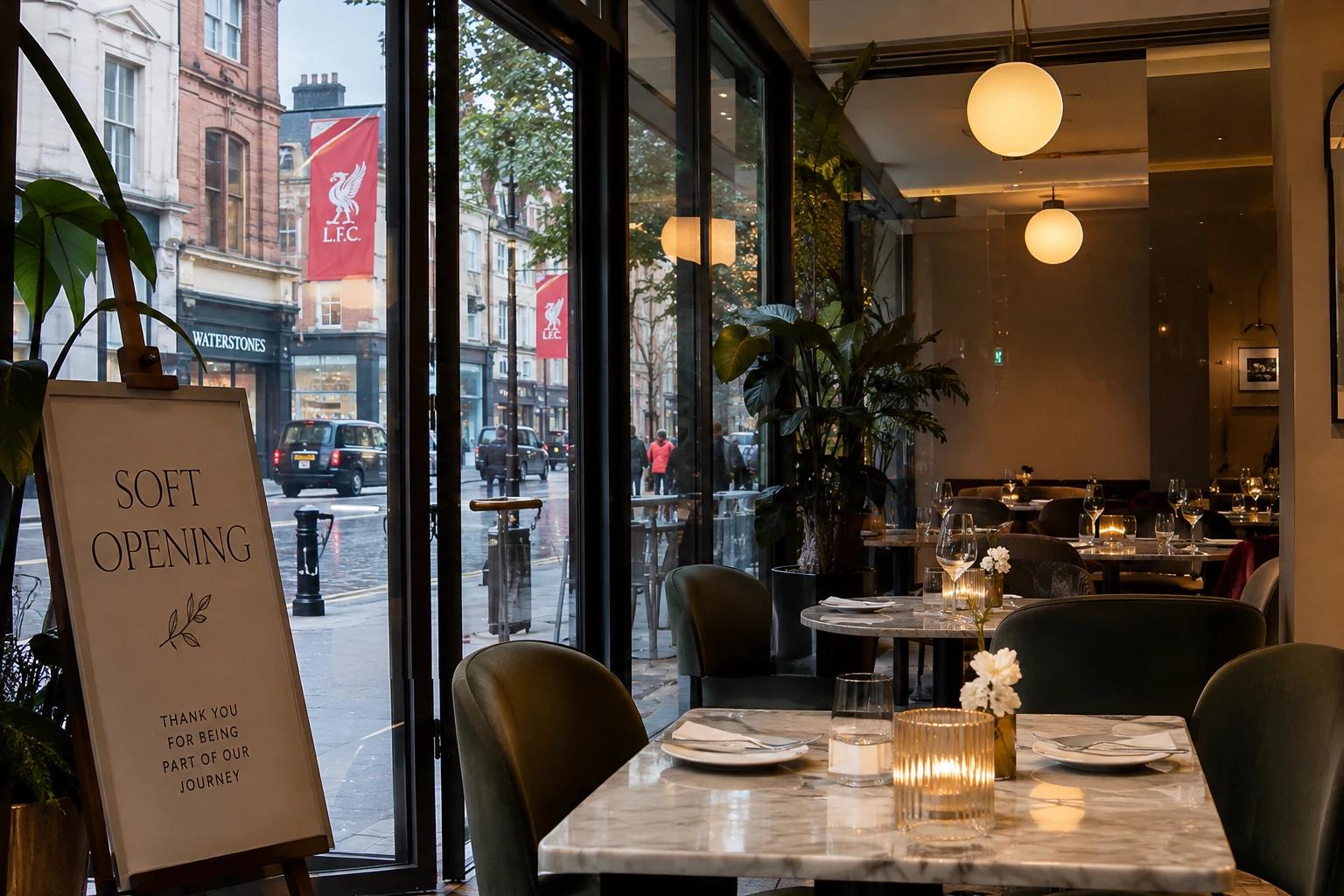
Soft opening plans tend to go deep on the menu and the invite list, then leave the door to whoever is hosting that night. We think that’s backwards. The door is usually the first thing to break.
The host is often working one of their first shifts, and the invitation gave everyone the same start time. So the whole room arrives within ten minutes, and the kitchen gets every order in one wave. Then the numbers drift. One restaurant planned for 30 guests a night and served 60, with the extra covers coming from walk-ins, guests who brought friends and an opening post on social media.
A written door plan fixes both problems before anyone gets an invite. Ours has these eight steps:
- Set a seat budget for every night
- Give every invite a seat count and an arrival window
- Load every expected guest before night one
- Set up one check-in point at the door
- Write the rule for walk-ins and extra plus-ones
- Rehearse the arrival journey with staff
- Measure the door after every service
- Open to the public in stages
The 8-step door plan for a restaurant soft opening
1. Set a seat budget for every night
Before a single invitation goes out, decide how many seats each service releases. Seats, not invites. One invite can easily turn into four people at the door.
Start well below capacity. It feels like wasting a night, and it isn't: a half-full room gives the kitchen and the host stand space to find a rhythm before they're tested. One operator held opening-night bookings to 60% of capacity so the systems could settle and servers could get comfortable. Each night you step up shows you where the team starts to strain.
| Service | Seats released | Goal for the door |
| Night 1 | About half the room | Every guest checked in and seated with no backlog |
| Night 2 | About two thirds | Arrivals spread evenly across the windows |
| Night 3 | Close to full | First table resets without guests waiting at the entrance |
| Public nights | Full room plus walk-ins | Walk-ins join a queue and get an accurate wait estimate |
These numbers are a starting point, not a rule. If night one runs clean, release more seats on night two.
2. Give every invite a seat count and an arrival window
A single start time on every invitation is the most common soft opening mistake, and the easiest to avoid. Every invite should say how many seats it covers and when that group should arrive. A hospitality management professor recommends exactly this: a fixed number of seats per invited group and a half-hour arrival window, so the kitchen gets a steady flow of tickets instead of the whole room ordering at once.
Be specific about seats. "You and one guest" leaves far less room for surprise plus-ones than "you and friends". Stagger 30-minute windows across the first 90 minutes of service, ask every guest to reply, and send the window, the address and the seat count again the day before. A confirmed count beats a guessed one every time.
The cleanest way to do all of this is to send the invitation as a booking link instead of a message. Give each 30-minute slot a seat cap, let guests pick the slot that suits them, and the slot closes once its seats are gone. Confirmations and reminders go out with the booking, so nobody on your team is chasing replies.
3. Load every expected guest before night one
Every expected group should be in your system before the first service: name, party size, arrival window and notes. Notes matter more than usual at a soft opening. Allergies, investors, suppliers and anyone from the press all deserve a heads-up for the server, and the host shouldn't be the one remembering them.
For a private evening where everyone arrives at the same time, a guest list with a party-size field works fine as the door list.
Keep public bookings closed until the soft opening has shown you what the kitchen can handle. Don't be tempted to open them early because the first night went well. One restaurant consultant puts it plainly: walk-ins are easier to absorb than booked guests with no table to sit at. If you're still weighing how much of the room to give to each, our comparison of waitlists and reservations covers the trade-off.
4. Set up one check-in point at the door
One place to check in, and one person who owns it during each arrival window. Two hosts checking guests in from two lists is how the same table gets promised twice.
That person needs a tablet or phone at the host stand with the day's bookings and notes on screen. Put a QR code at the entrance so guests can check themselves in on your branded check-in page. It frees the host to actually greet people. Some guests won't have a phone on them, so the host also needs to be able to search a name and check them in by hand.
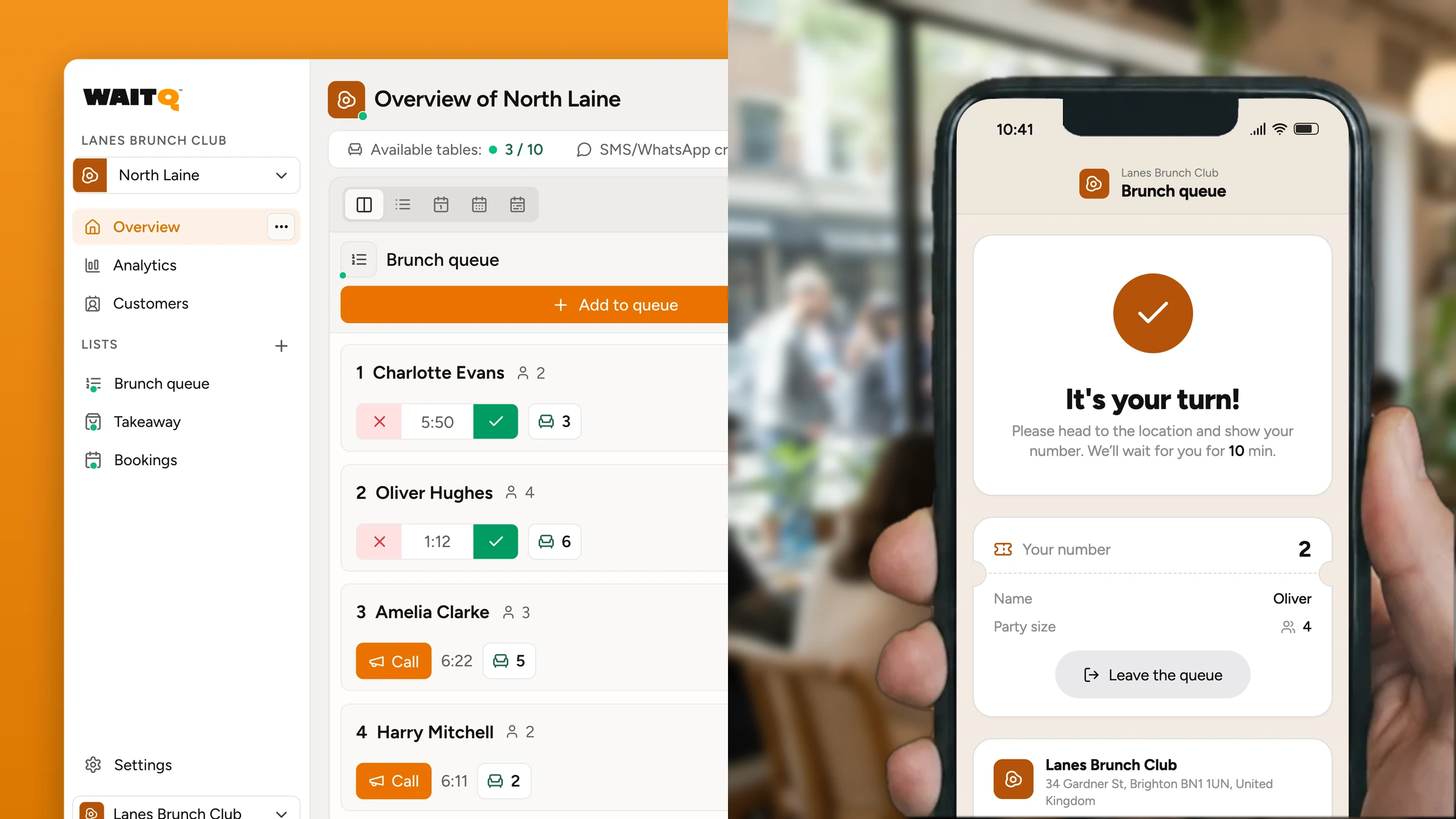
When a table isn't ready, add the party to a digital queue and notify them by push notification, text message (SMS & WhatsApp) or email once it's set. They can wait at the bar or step outside rather than standing in the doorway.
That doorway matters more than it looks. Research on supermarket queues found that customers decide whether to join mostly from how many people they can see waiting, and much less from how fast the queue moves. A crowded entrance on a preview night tells everyone walking past that the place is hard to get into. We go deeper on why visible waits feel worse in our guide to queue psychology.
5. Write the rule for walk-ins and extra plus-ones
People will walk in. A soft opening is invite-only on paper, but lights on and full tables draw curious neighbours every time. Decide what the host says before the first one asks, not while they're standing at the stand.
Pick one of these and tell the whole team:
- Invite them back. Offer a seat on a public night and take their contact details.
- Queue them for no-show seats. Hold a short queue and seat walk-ins when an arrival window ends with empty chairs.
- Seat them at the bar only. Keeps the dining room on budget while still letting them in.
If you're unsure, queue them for no-show seats. Some invited guests won't turn up, and an empty chair on a preview night teaches you less than a full one.
Extra plus-ones follow the same logic. Seat them if their window still has room, and queue them if it doesn't.
Give the host a two-line script so the answer sounds the same from everyone: "Tonight is a private preview for invited guests. We open to everyone on [date], and I'd love to add you to the list for that night." If you collect emails or phone numbers to invite people back, ask for marketing consent separately.
6. Rehearse the arrival journey with staff
Run the door once with staff playing guests before the first real service. Treat it like a usability test. One person times each step, another writes down every moment a "guest" has to stop and ask a question. Every question is a gap in the signage, the invite or the host's script, and it's far cheaper to find it now.
Test the awkward cases on purpose:
- A guest scans the QR code and checks in alone
- A guest arrives with no phone
- A party of six arrives 40 minutes early
- An invited guest brings an extra person
- A queued guest gets called and doesn't come back
- Two arrival windows overlap because the first ran late
Do the run-through on the same phones and tablets you’ll use on the night, after you’ve set up the digital queue, and test the customer journey from the guest’s side as well as the host’s.
7. Measure the door after every service
Five minutes after close, before everyone goes home, look at the numbers that decide tomorrow's seat budget:
- Arrivals per 15 minutes, compared with the windows you sent
- Time from arrival to seated, the clearest measure of the host stand
- Table turn time by party size
- No-shows per arrival window
- Walk-aways, once the public starts arriving
You can't get these from a clipboard at the end of a busy night. If check-ins, seating and queue exits are logged in one system, queue analytics explain what each metric tells you. Walk-aways get their own playbook in how to reduce walk-away rate.
Change one thing per night, such as seats released or window length. Change three and you won't know which one fixed the door.
8. Open to the public in stages
Don't jump from invited guests to the full public in one night. Move over a few services, changing the door rules at each stage. Many operators run two or three soft opening services and leave one day before the public opening to fix what came up.
| Phase | Who comes in | How guests arrive | Walk-in rule | What to measure |
| Invite-only nights | Friends, family, investors, local businesses | Arrival windows with a seat cap | Invite back or queue for no-show seats | Arrival spread, time to seat |
| Limited public nights | Invitees plus the public | A small number of bookings, most seats for walk-ins | Walk-ins join a digital queue | Turn times, accuracy of wait estimates |
| Grand opening week | Everyone | Bookings and walk-ins together | Queue with notifications | Walk-aways, no-shows, peak arrivals |
By the grand opening, the wait you quote should come from turn times you measured, not from a guess. The same goes for how many tables you hold back for walk-ins. An accurate quote also makes the wait feel shorter, by up to 20% according to the research, Running bookings and walk-ins in one system puts both on the same floor plan, so the host can see which tables are held and which are free.
Soft opening door checklist
Use this list for every service during the soft opening.
Before doors open
- Seat budget for tonight agreed with the kitchen
- Every expected group loaded with party size, window and notes
- QR code at the entrance and check-in device charged
- Host knows the walk-in and plus-one rule and the script
- One person assigned to the door for each arrival window
During service
- Check guests in as they arrive, by QR code or by name
- Add parties to the queue when their table isn't ready
- Seat walk-ins only under tonight's rule
- Note every question a guest had to ask at the door
After close
- Review arrivals, time to seat, turn times and no-shows
- Adjust tomorrow's seats or windows, one change at a time
- Send thank-you messages and any invitations for public nights
See how WaitQ runs bookings and walk-ins together
Before your first service
A soft opening trades realism for control, and that's worth being honest about. Capped seats and arrival windows protect the kitchen, but every door rule you add also hides a little of what a packed Friday will feel like. Stepping the seat budget up each night and opening to the public in stages is how you close that gap on purpose instead of finding it on opening night.
WaitQ keeps bookings with capped time slots, a walk-in queue and the floor plan on one screen, so the setup you test at the soft opening is the same one you run in opening week. It doesn't send invitations from your contacts or take deposits, so keep your current tools for those; our breakdown of the restaurant tech stack covers where each piece fits. Every plan includes unlimited visits, and pricing shows how many SMS and WhatsApp credits each plan includes.
So before you send a single invite: if 40 people walked in at 7pm tomorrow, who on your team would decide where they go?
Frequently Asked Questions
How many people should you invite to a restaurant soft opening?
Count seats rather than invites. Start at about half the room on the first night and step up to close to full by the third night. One operator held opening-night bookings to 60% of capacity so staff could settle in.
Should a restaurant take reservations during a soft opening?
Take bookings from invited guests only, and give each booking a seat count and an arrival window. Keep public bookings closed until the soft opening shows what the kitchen can handle, because walk-ins are easier to absorb than booked guests with no table.
Should you allow walk-ins at a soft opening?
Decide on one rule before the first night and brief the whole team. The common options are to invite them back for a public night, queue them for no-show seats or seat them at the bar only. If you're unsure, queue them for no-show seats, since some invited guests won't turn up.
What's the most common mistake at the door of a soft opening?
Putting one start time on every invitation. The whole room arrives within the same few minutes, the kitchen gets every ticket at once and the host has a crowd in the doorway. Give each group a 30-minute arrival window and spread the windows across the first 90 minutes instead.
How do you stagger guest arrivals at a soft opening?
Give each invited group a 30-minute arrival window, and spread the windows across the first 90 minutes of service. Sending invites as a booking link with a seat cap per slot handles this for you, since each slot closes once its seats are gone.
How long should a restaurant soft opening last?
Many operators run two or three soft opening services over a few days. Leave one day between the last soft opening service and the public opening to fix what came up.
Can WaitQ handle bookings and walk-ins at the same restaurant?
Yes. WaitQ shows bookings and the walk-in queue on the same floor plan, so the host can see which tables are held and which are free. Guests in the queue are notified by push notification, text message (SMS & WhatsApp) or email.
